Plants — 23,046 Species
Top Families in Plants
All Plants Species
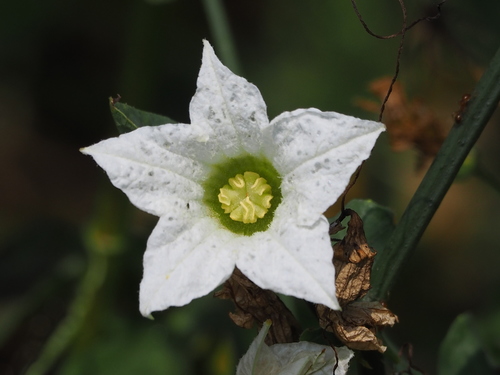
Coccinia grandis (L.) Voigt
Coccinia grandis (L.) Voigt
Coccinia grandis, or ivy gourd, is a dioecious perennial climbing plant native to Africa and Asia that is invasive in many introduced regions.
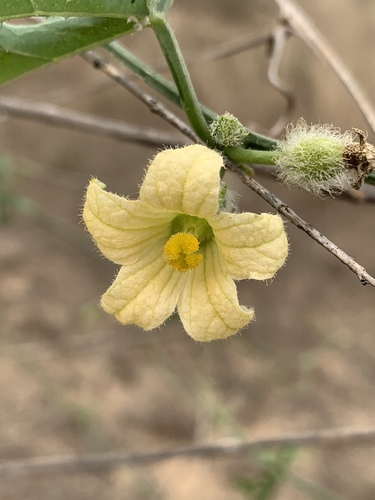
Coccinia rehmannii Cogn.
Coccinia rehmannii Cogn.
Coccinia rehmannii Cogn. is a perennial climber or creeper with stems up to 4 m, leaves with various shapes and trichome characteristics, male and female flowers with distinct features, and fruits that change color and appearance during ripening.
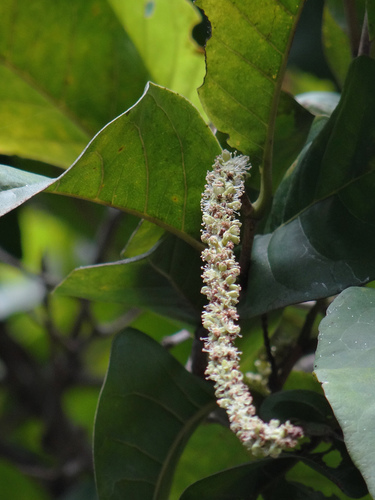
Coccoloba diversifolia Jacq.
Coccoloba diversifolia Jacq.
Pigeonplum (Coccoloba diversifolia Jacq.) is a small to medium salt- and drought-resistant tree with edible dark purple fruit.
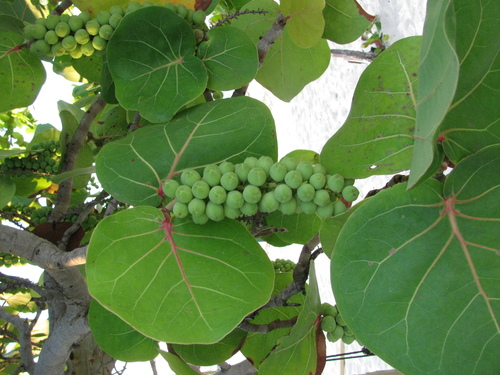
Coccoloba uvifera (L.) L.
Coccoloba uvifera (L.) L.
Coccoloba uvifera, or sea grape, is a salt-tolerant coastal dioecious tree with many ornamental, practical, edible, and medicinal uses.
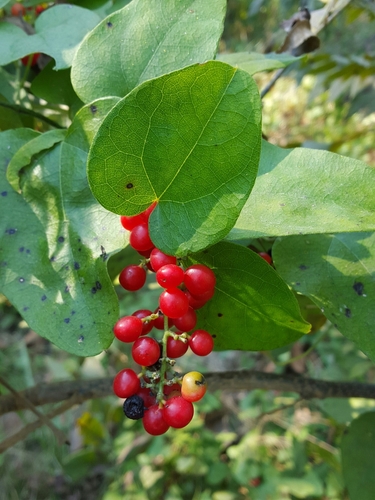
Cocculus carolinus (L.) DC.
Cocculus carolinus (L.) DC.
Cocculus carolinus is a weedy climbing vine native to the central and southeastern US and Mexico, grown ornamentally for its bright red fruits.
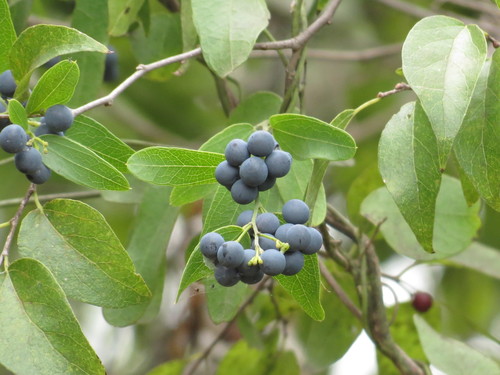
Cocculus diversifolius DC.
Cocculus diversifolius DC.
Cocculus diversifolius, also called sarsaparilla or correjuela, is a climbing vine native to the southwestern US and Mexico.
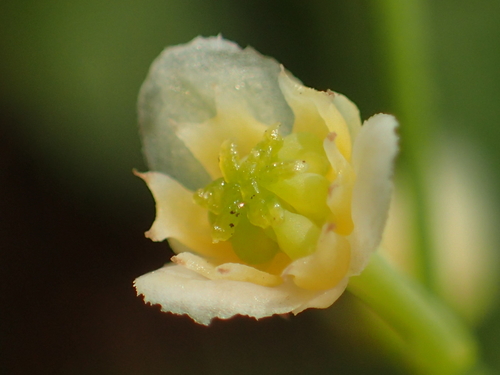
Cocculus orbiculatus (L.) DC.
Cocculus orbiculatus (L.) DC.
Queen coralbead (Cocculus orbiculatus, synonym Nephroia orbiculata) is a woody vine found from India east to Java.
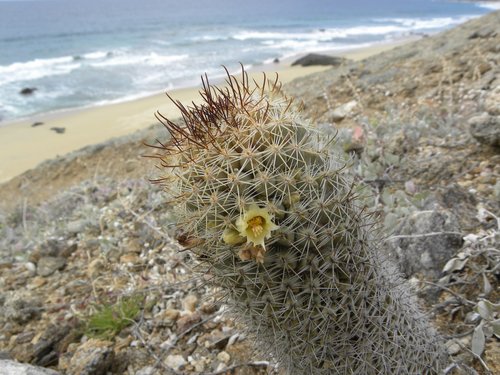
Cochemiea armillata (K.Brandegee) P.B.Breslin & Majure
Cochemiea armillata (K.Brandegee) P.B.Breslin & Majure
Cochemiea armillata is a clumping cylindrical cactus endemic to Baja California Sur, Mexico, with pink-creamy yellow flowers and red fruits.
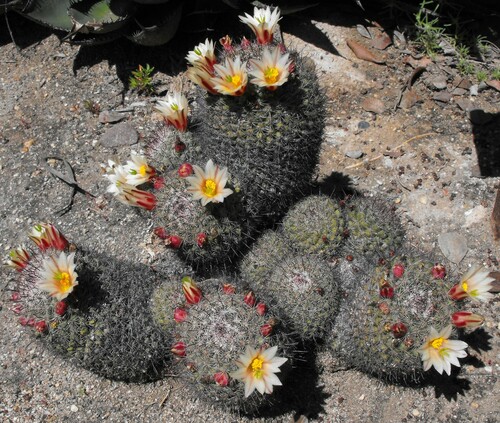
Cochemiea dioica (K.Brandegee) Doweld
Cochemiea dioica (K.Brandegee) Doweld
Cochemiea dioica is a small cactus native to southwestern North America with edible fruits used by Indigenous groups and cultivated by cactus enthusiasts.
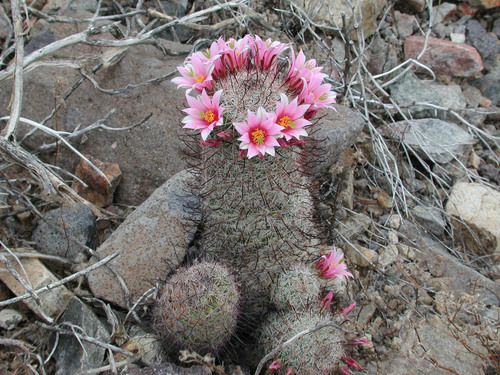
Cochemiea grahamii (Engelm.) Doweld
Cochemiea grahamii (Engelm.) Doweld
Cochemiea grahamii is a cactus native to the southwestern US and northwestern Mexico with hooked spines and pink to purple flowers.
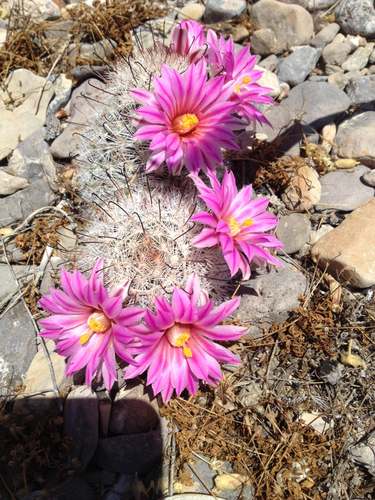
Cochemiea tetrancistra (Engelm.) P.B.Breslin & Majure
Cochemiea tetrancistra (Engelm.) P.B.Breslin & Majure
Cochemieaa tetrancistra is a small single-stemmed cactus with hooked central spines found in the southwestern US and northwestern Mexico.
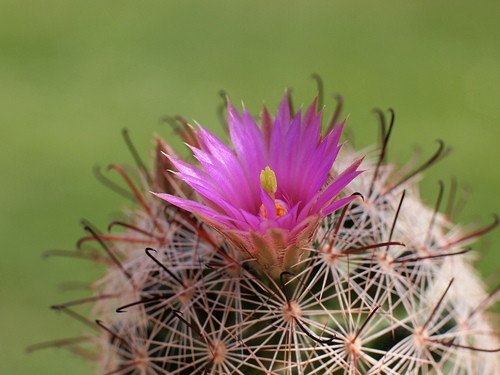
Cochemiea wrightii (Engelm. & J.M.Bigelow) Doweld
Cochemiea wrightii (Engelm. & J.M.Bigelow) Doweld
Cochemiea wrightii is a small solitary cactus native to southwestern US and northwestern Mexico.
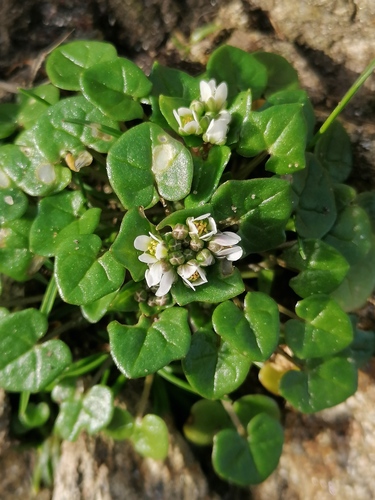
Cochlearia danica L.
Cochlearia danica L.
Danish scurvygrass (Cochlearia danica) is a salt-tolerant brassica now thriving on salty European motorways, rich in vitamin C to prevent scurvy.
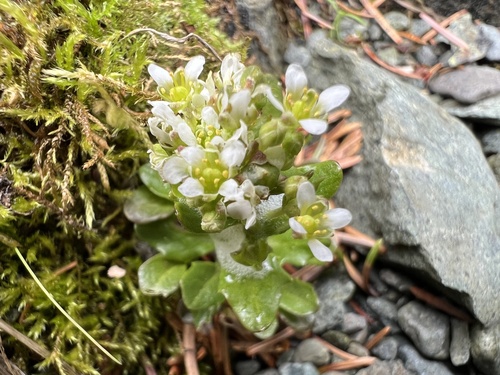
Cochlearia groenlandica L.
Cochlearia groenlandica L.
Cochlearia groenlandica, or polar scurvygrass, is a circumpolar Arctic flowering plant that reproduces only by seed.
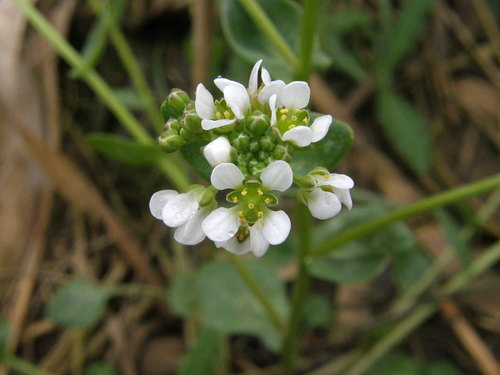
Cochlearia officinalis L.
Cochlearia officinalis L.
Cochlearia officinalis L., a vitamin C-rich European coastal/mountain plant, was historically used as a scurvy treatment.
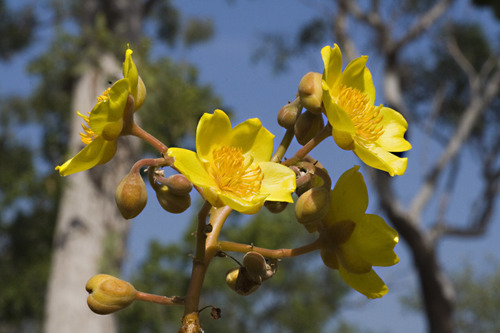
Cochlospermum gillivraei Benth.
Cochlospermum gillivraei Benth.
Cochlospermum gillivraei is a kapok tree in the Bixaceae family native to Northern Australia.
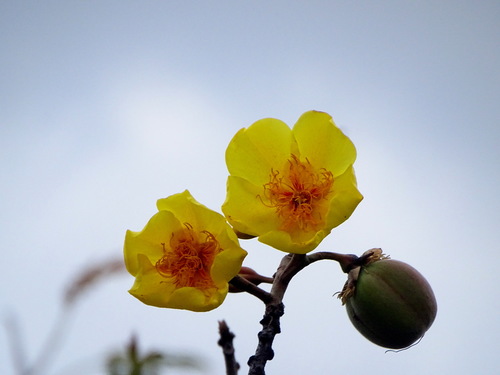
Cochlospermum vitifolium (Willd.) Spreng.
Cochlospermum vitifolium (Willd.) Spreng.
Cochlospermum vitifolium is a tree or shrub native to the tropical regions of the Americas, growing in a variety of vegetation types.
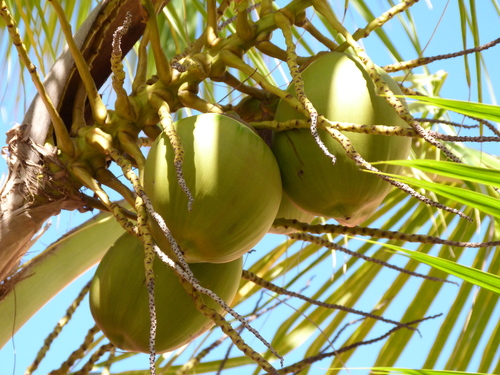
Cocos nucifera L.
Cocos nucifera L.
Cocos nucifera (coconut palm) is a widely cultivated useful tropical palm with diverse human uses.
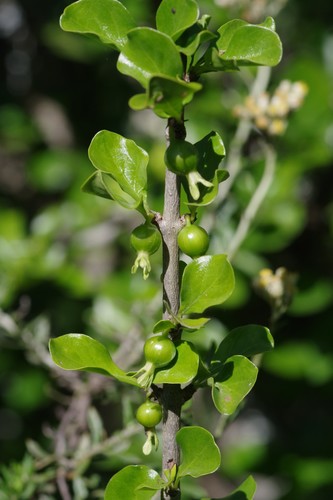
Coddia rudis (E.Mey. ex Harv.) Verdc.
Coddia rudis (E.Mey. ex Harv.) Verdc.
Coddia is a monotypic Rubiaceae genus containing only the species Coddia rudis, native to southern Africa.
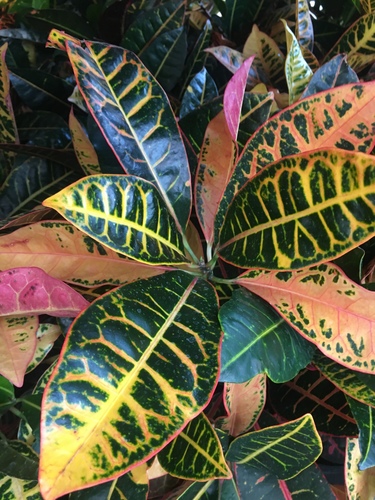
Codiaeum variegatum (L.) Rumph. ex A.Juss.
Codiaeum variegatum (L.) Rumph. ex A.Juss.
Codiaeum variegatum, or variegated croton, is a colorful toxic tropical shrub widely cultivated as an ornamental plant.
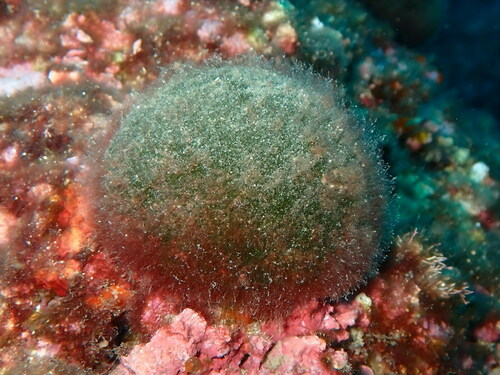
Codium bursa (Olivi) C.Agardh
Codium bursa (Olivi) C.Agardh
Codium bursa is a dark green spongy marine alga found in the northeastern Atlantic and Mediterranean Sea.
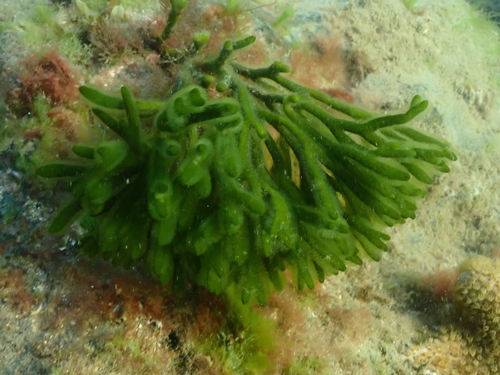
Codium fragile (Suringar) Har.
Codium fragile (Suringar) Har.
Codium fragile, nicknamed dead man's fingers, is a dark green siphonous green alga found in intertidal and subtidal coastal areas.
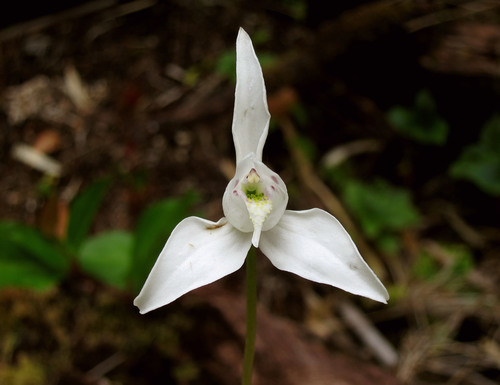
Codonorchis lessonii (d'Urv.) Lindl.
Codonorchis lessonii (d'Urv.) Lindl.
Codonorchis lessonii is a native South American orchid with two common English names that forms mycorrhizal symbiosis with specific fungi.
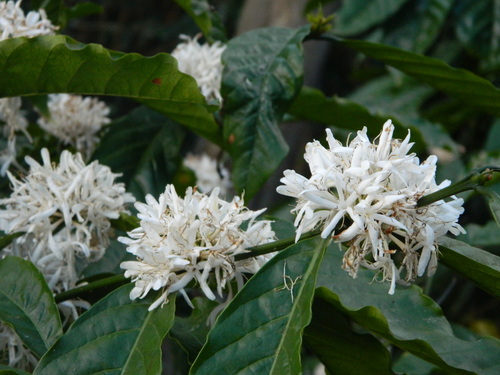
Coffea arabica L.
Coffea arabica L.
Coffea arabica L. is the world’s most widely cultivated coffee species, accounting for 60% of global coffee production.
Start Exploring Nature Today
Download iNature for free. 10 identifications on us. No account needed. No credit card required.
Download Free on App Store
