Plants — 23,046 Species
Top Families in Plants
All Plants Species
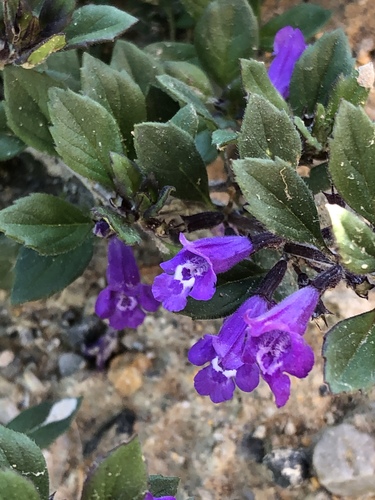
Clinopodium alpinum (L.) Kuntze
Clinopodium alpinum (L.) Kuntze
Clinopodium alpinum, or rock thyme, is a small alpine herbaceous chamaephyte native to the mountains of Southern Europe.
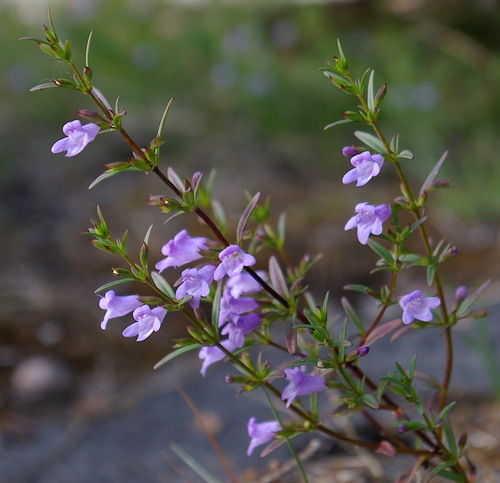
Clinopodium arkansanum (Nutt.) House
Clinopodium arkansanum (Nutt.) House
Clinopodium arkansanum is a small perennial herb native to southeastern North America that grows in moist limestone soils.
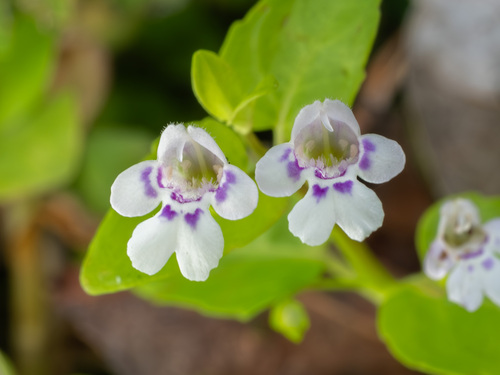
Clinopodium brownei (Sw.) Kuntze
Clinopodium brownei (Sw.) Kuntze
Browne's savory (Clinopodium brownei) is a pubescent perennial herb found across the Americas in marshy coastal habitats.
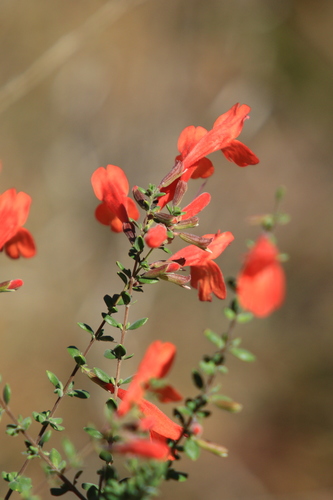
Clinopodium coccineum (Nutt. ex Hook.) Kuntze
Clinopodium coccineum (Nutt. ex Hook.) Kuntze
Clinopodium coccineum is an evergreen woody perennial from southeastern US coastal areas with reddish-orange labiate flowers.
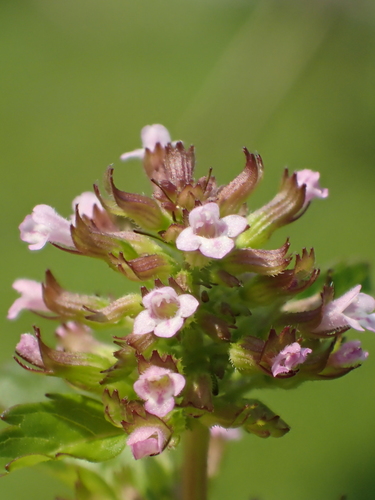
Clinopodium gracile (Benth.) Kuntze
Clinopodium gracile (Benth.) Kuntze
Clinopodium gracile is a small perennial herb native to Asia, introduced to the southeastern US, growing along rivers and forest edges.
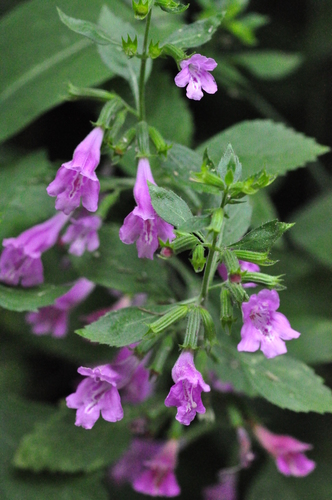
Clinopodium grandiflorum (L.) Kuntze
Clinopodium grandiflorum (L.) Kuntze
Clinopodium grandiflorum is a small European perennial herb used in cooking and herbal medicine.
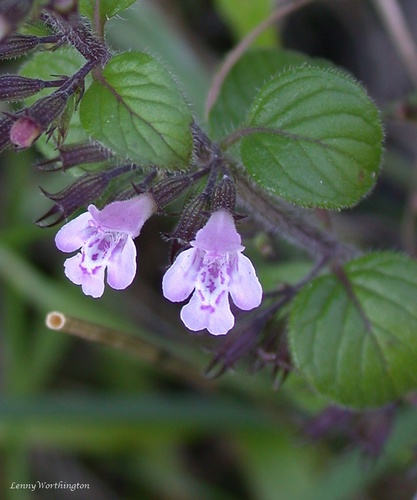
Clinopodium menthifolium (Host) Merino
Clinopodium menthifolium (Host) Merino
Clinopodium menthifolium, or wood calamint, is a perennial aromatic herb with two subspecies, used for tea, cooking, ornament, and medicine.
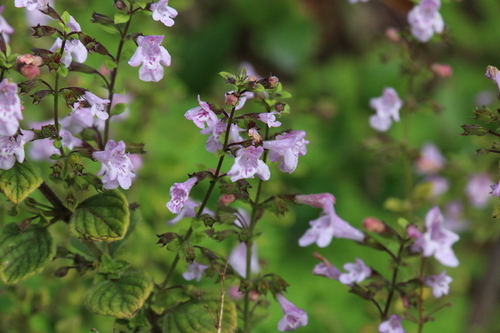
Clinopodium nepeta (L.) Kuntze
Clinopodium nepeta (L.) Kuntze
Clinopodium nepeta, or lesser calamint, is a perennial aromatic herb used in Mediterranean cuisine and traditional medicine with insect-repellent properties.
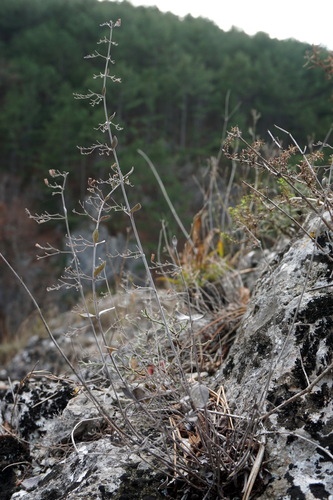
Clinopodium serpyllifolium (M.Bieb.) Kuntze
Clinopodium serpyllifolium (M.Bieb.) Kuntze
Clinopodium serpyllifolium is an eastern Mediterranean endemic shrub used for culinary and traditional medicinal purposes.
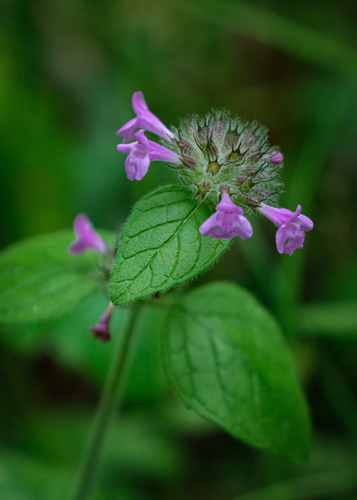
Clinopodium vulgare L.
Clinopodium vulgare L.
Clinopodium vulgare, wild basil, is a perennial herb with a wide distribution and multiple traditional uses.

Clintonia andrewsiana Torr.
Clintonia andrewsiana Torr.
Clintonia andrewsiana is the largest species in its genus, a perennial herb found in moist shady Pacific coastal US redwood forests.
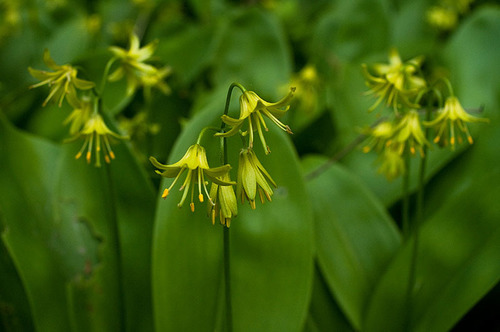
Clintonia borealis (Aiton) Raf.
Clintonia borealis (Aiton) Raf.
Clintonia borealis is a slow-spreading shade-loving perennial of eastern North American forests with semi-poisonous blue berries.
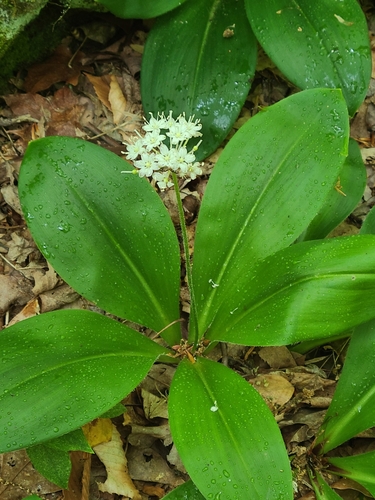
Clintonia umbellulata (Michx.) Morong
Clintonia umbellulata (Michx.) Morong
Clintonia umbellulata is a perennial Appalachian-endemic herb that spreads via rhizomes and bears white speckled flowers and dark berries.
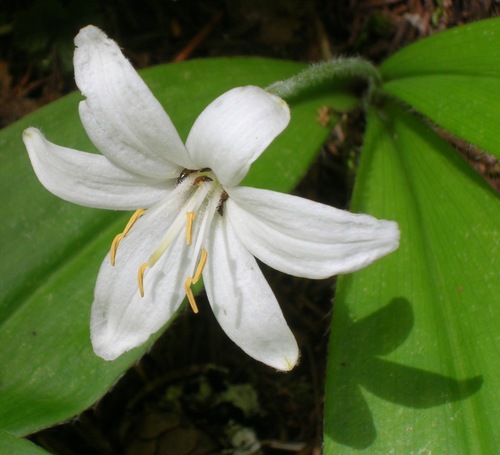
Clintonia uniflora (Menzies ex Schult. & Schult.f.) Kunth
Clintonia uniflora (Menzies ex Schult. & Schult.f.) Kunth
Clintonia uniflora is a small perennial North American forest herb with single white flowers and blue berries, used historically by Indigenous peoples and grown ornamentally today.
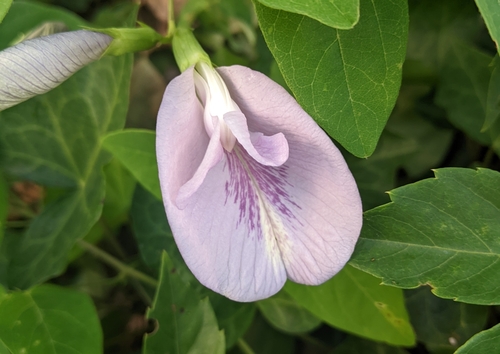
Clitoria mariana L.
Clitoria mariana L.
Clitoria mariana L. is a climbing flowering plant native to parts of the US and Asia that hosts long-tailed skipper larvae.

Clitoria ternatea L.
Clitoria ternatea L.
Clitoria ternatea L. is a perennial leguminous vine native to equatorial Asia, cultivated for ornament, soil improvement, and traditional uses.
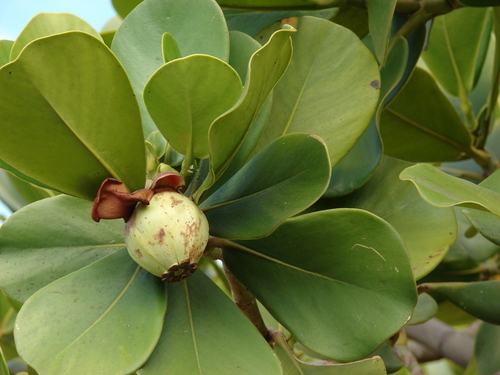
Clusia rosea Jacq.
Clusia rosea Jacq.
Clusia rosea, the autograph tree, is a Caribbean-native hemiepiphytic tree grown ornamentally, with historical uses.
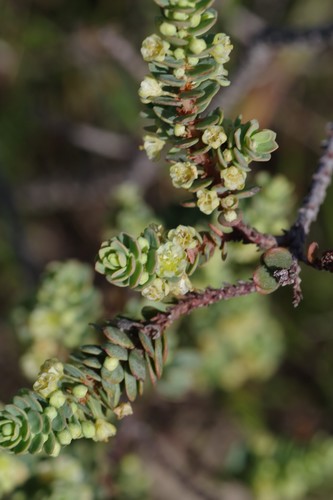
Clutia alaternoides L.
Clutia alaternoides L.
Prain in 1913 discussed original elements of Clutia alaternoides L. in Bull. Misc. Inform. Kew, applied the name per 1206.2 (LINN) and Clifford sheet, yet didn't designate a type.
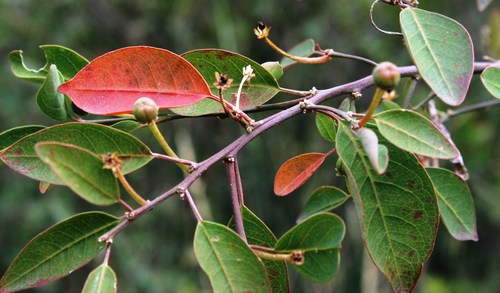
Clutia pulchella L.
Clutia pulchella L.
Clutia pulchella L. is a shrub that serves as a food plant for Heidelberg copper butterflies, closely resembling related C. abyssinica.
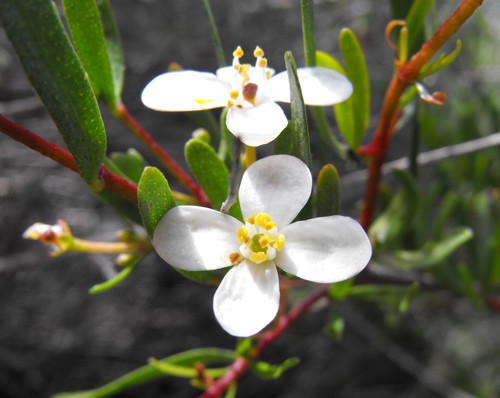
Cneoridium dumosum (Nutt.) Hook.fil.
Cneoridium dumosum (Nutt.) Hook.fil.
Cneoridium dumosum, commonly known as bushrue, is an aromatic evergreen shrub native to coastal Southern California and Baja California.
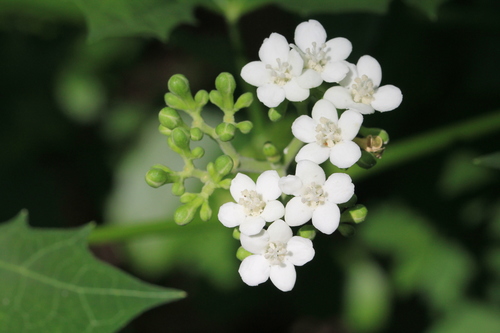
Cnidoscolus aconitifolius (Mill.) I.M.Johnst.
Cnidoscolus aconitifolius (Mill.) I.M.Johnst.
Cnidoscolus aconitifolius, commonly chaya, is a toxic-raw nutritious cultivated leafy green native to the Americas.
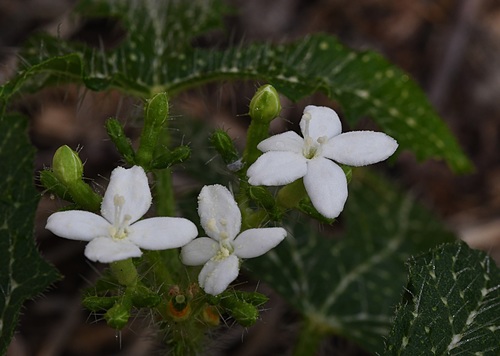
Cnidoscolus stimulosus (Michx.) Engelm. & A.Gray
Cnidoscolus stimulosus (Michx.) Engelm. & A.Gray
Cnidoscolus stimulosus is a stinging-hair covered herb native to the southeastern US Coastal Plains with edible taproots.
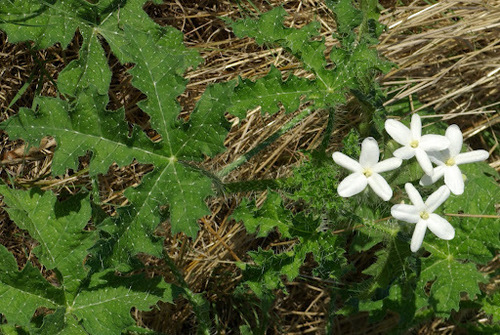
Cnidoscolus texanus (Müll.Arg.) Small
Cnidoscolus texanus (Müll.Arg.) Small
Cnidoscolus texanus is a perennial flowering plant with stinging hairs, first described in 1865 and reclassified to its current genus in 1903.
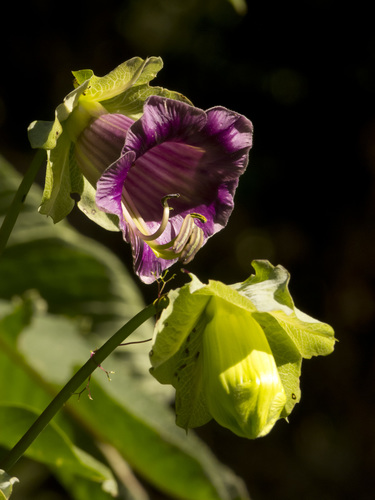
Cobaea scandens Cav.
Cobaea scandens Cav.
Cobaea scandens Cav. is a self-clinging perennial climbing plant grown ornamentally for its color-changing flowers.
Start Exploring Nature Today
Download iNature for free. 10 identifications on us. No account needed. No credit card required.
Download Free on App Store
