About Zygaena fausta Linnaeus, 1767
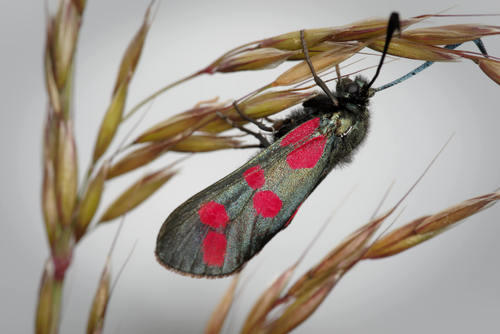
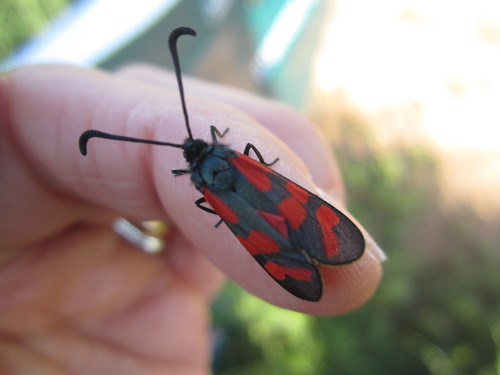
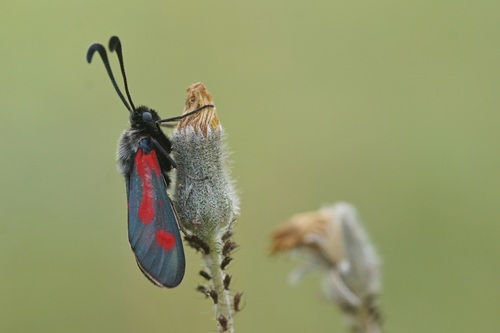
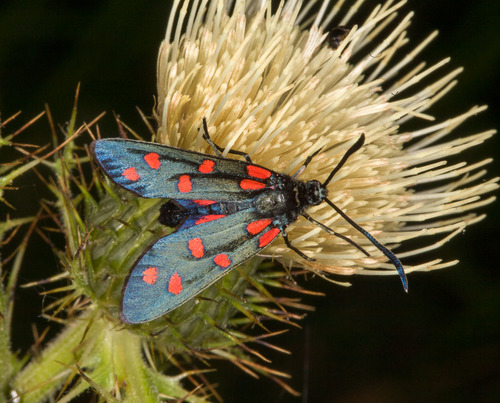
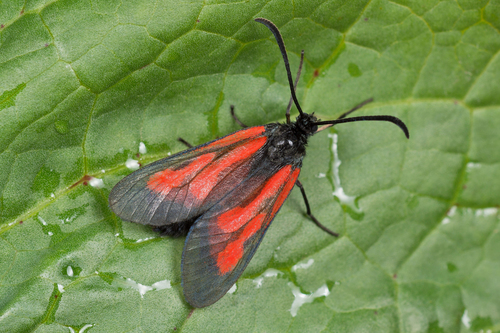
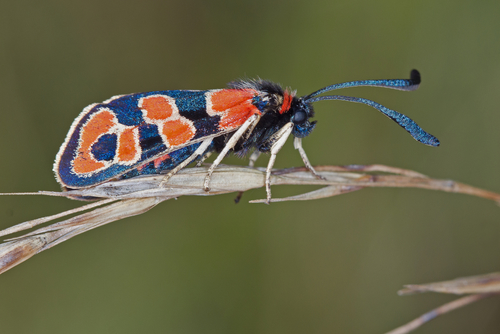
Zygaena fausta is a species of day-flying burnet moth in the family Zygaenidae. Its wings display bright aposematic red, white, and black colouration, which warns potential predators like birds that the moth is foul-tasting or poisonous. When in flight, the moth’s bright red abdomen becomes visible, contrasting with its white legs, black head, and black antennae. Its thorax is patterned black and white, with one eye spot located on each side. Specimens collected from different regions across Europe show considerable variation in their wing and body patterns. Zygaena fausta is native to southwestern Europe, with a range extending from Spain and southern Portugal to western Austria and southern Germany. It reaches northeast as far as Thuringia, and southeast as far as northwestern Italy. It is rare or entirely absent from Britain, the Netherlands, and Belgium; related species in these areas include the similarly aposematic five-spot burnet and six-spot burnet. The larval caterpillar of Zygaena fausta is dark grey, with a black stripe running along its upper body, below which sits a white stripe that is interrupted by yellow bands. Caterpillars feed exclusively on vetches belonging to the genus Coronilla. Adult moths frequently visit a wide variety of flowering plants, including knapweed and eryngo. This moth species typically inhabits dry chalk grassland. Adult Zygaena fausta fly throughout the summer, active from April or May until October. Males and females are similar in appearance but not identical; mating occurs during the daytime on isolated plants.