About Zosterops xanthochroa G.R.Gray, 1859
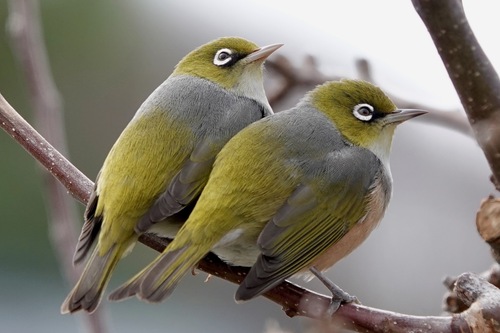
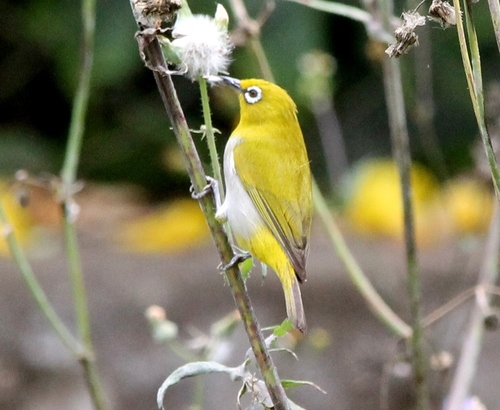
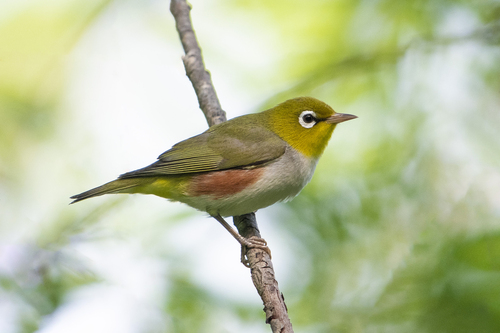
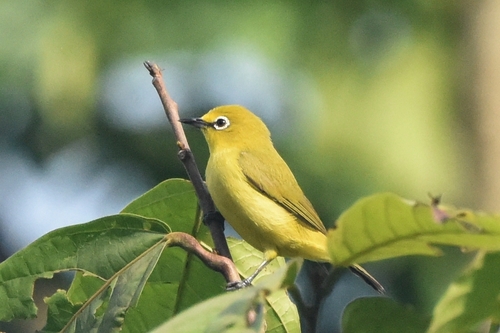
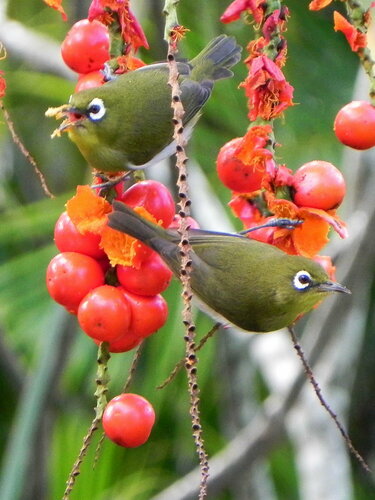
The green-backed white-eye (Zosterops xanthochroa G.R.Gray, 1859) measures 11.5–12.5 centimetres (4.5–4.9 in) in length and weighs roughly 8.5–12 grams (0.30–0.42 oz). Its head and back are dark olive green, marked by a wide white eye-ring that is broken at the front by black lores. The throat and breast are yellow, while the lower undersides are dirty white. Its wings are a mix of brown and olive green. The bill is slate coloured, with white at the base of the lower mandible, and the legs are also pale slate coloured. Both sexes look identical, and the plumage of juvenile birds has not been described. This species is endemic to the islands of New Caledonia, where it occurs on the main island of Grande Terre, the smaller L'Île-des-Pins, and Maré in the Loyalty Islands. It is replaced on Lifou by the small and large Lifou white-eyes. It primarily inhabits primary rainforest, ranging from sea level upward, though it becomes rare above 1,000 metres (3,300 ft). It will also enter native gardens, open glades, and other more open areas opportunistically to access ripening fruit and berries. In more open brush and woodland habitats, it is generally replaced by the related silvereye. Even though the green-backed white-eye has a very small global range, it is common within this range, especially in southern Grande Terre and on the island of Maré. The species' population is thought to be declining due to habitat loss and habitat fragmentation, but the rate of decline is not fast enough for the species to be classified as vulnerable. It is therefore listed as Least Concern by the IUCN. A study of cave fossils found that this species and the silvereye have the most commonly recovered fossil remains. Green-backed white-eyes feed on a range of fruits and insects. Fruits they consume include papaya and the berries of the introduced Lantana. After the breeding season, they form feeding flocks that may grow larger as time passes. These flocks will leave primary rainforests to access seasonally available food sources, and will also join mixed-species feeding flocks with silvereyes, fan-tailed gerygones, and red-throated parrotfinches. The green-backed white-eye itself is preyed on by barn owls. Its main breeding season runs from August to October, but there is significant uncertainty about the exact timing. It is possible the breeding season extends to January, or that the species produces two broods per season. The species builds its nest from rootlets, hair, feathers, and cobwebs, placed in the fork of a tree or shrub branch. It lays between two and four turquoise eggs, which measure 16.5 by 13 mm.