About Zosterops meyeni Bonaparte, 1850
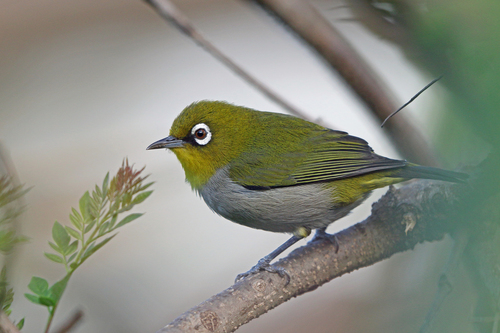
This species, Zosterops meyeni Bonaparte, 1850, is a tiny songbird. It has green upperparts, gray underparts, a yellow throat, and a broad white ring around the eye. Subspecies meyeni is found in the Philippines, while subspecies batanis occurs on Lanyu and Lüdao Islands, which lie southeast of Taiwan. It forages actively in tropical broadleaf forests and gardens, usually in small flocks, and produces harsh, buzzy calls. It occupies a wide range of additional habitats, including clearings, fishponds, rivers, second growth scrubland, and forest edge. It is typically found below 1,000 meters above sea level. The IUCN Red List has assessed this species as Least Concern. The species is common across its range, and has adapted well to human-modified habitats, even benefiting from them. While the Philippines has experienced massive deforestation, this species’ adaptability has allowed it to survive and even thrive better than most other Philippine birds. It forages in the understory and often joins mixed-species flocks with other small birds. Its breeding season is thought to run from April to August. It builds the typical nest shape of white-eyes, placed a few meters above ground on a small tree. Its clutch size is 3 to 4 eggs.