About Zosterops chloris Bonaparte, 1850
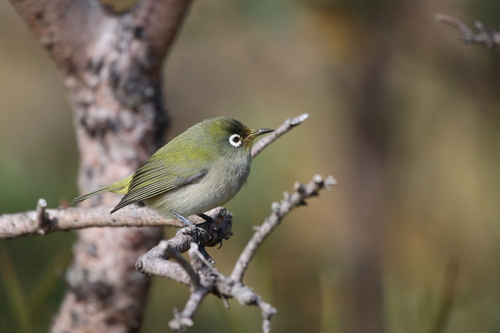
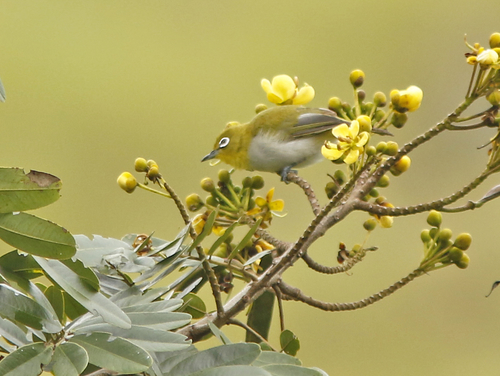
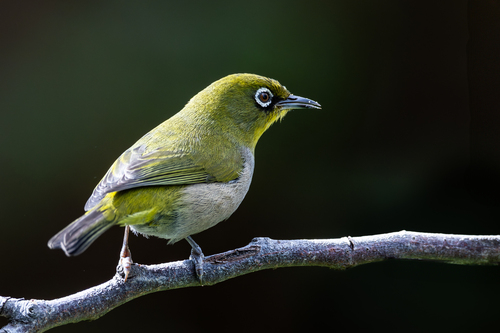
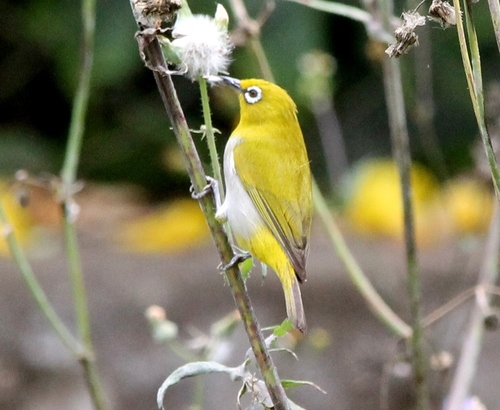
The lemon-bellied white-eye, Zosterops chloris, is a species of bird in the family Zosteropidae. This species is endemic to Indonesia, where it occurs on a number of islands stretching from the Sunda Strait to the Aru Islands. It can be found on several of the Lesser Sunda Islands, parts of Sulawesi, and many smaller islands, but it is not present on the larger islands of Borneo, Java, Sumatra, and Timor. As of May 2017, the Handbook of the Birds of the World recognises five subspecies of the lemon-bellied white-eye. The subspecies Z. c. intermedius has an extensive distribution, covering southern Sulawesi, southeastern Sulawesi, the central Lesser Sundas, and the small islands between these areas, and this range is likely to hold more than one reproductively isolated population. This is supported by the case of the former subspecies Z. c. flavissimus, which is now recognised as a distinct separate species, the Wakatobi white-eye Zosterops flavissimus. The natural habitats of the lemon-bellied white-eye are subtropical or tropical moist lowland forests, and subtropical or tropical mangrove forests. On the islands of Buton and Kabaena, the lemon-bellied white-eye appears to be restricted to coastal regions; this limitation may be the result of competition with the pale-bellied white-eye. Observations conducted on Buton suggest that the lemon-bellied white-eye prefers more disturbed habitats. The diet of the lemon-bellied white-eye includes invertebrates, fruits, and nectar. This bird has strong dark grey legs and a dark-coloured beak, and it generally measures 11 to 12 cm in size. Its dorsal side is yellow-olive, and it has the characteristic bright yellow underparts of the species.