About Zosterops ceylonensis Holdsworth, 1872
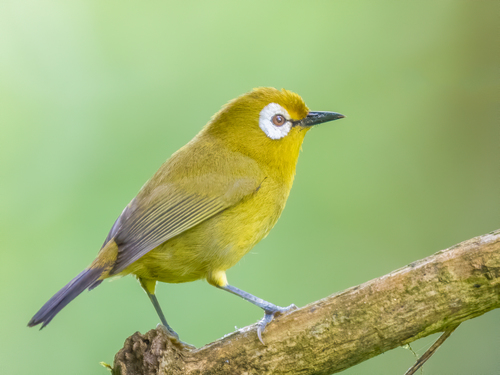
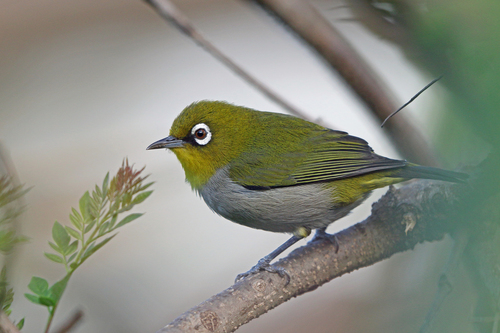
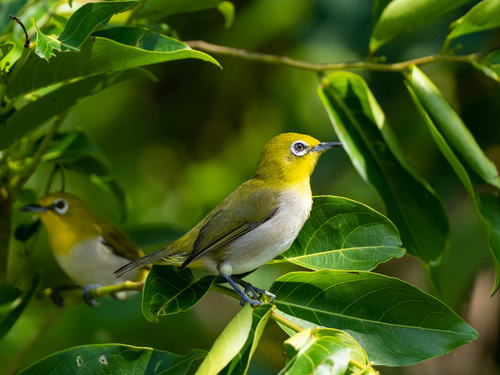
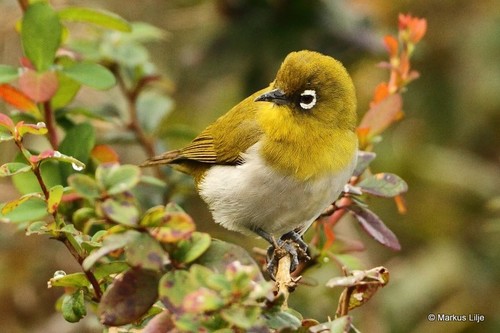
Zosterops ceylonensis Holdsworth, 1872 is a bird species slightly larger than the Indian white-eye, measuring approximately 11 cm in length. This species replaces the Indian white-eye at elevations above 4000 ft. Its upper body and the sides of its neck are dark olive-green. The rump is a paler green, while the crown and forehead are darker. Its wings and tail are brown, with green edges along their upper surfaces. Like other related white-eyes, it has a characteristic ring of small white feathers surrounding the eye. The lores (the area between the eye and the base of the bill) are dark, and a dark streak runs below the eye. The chin, throat, upper breast, thighs, and vent are all greenish-yellow. The belly region is greyish white. Its dark bill has a slaty base on the lower mandible; its legs are dark, and its iris ranges from yellow to reddish-brown. This species can be told apart from the widespread Indian white-eye, Zosterops palpebrosus, by its larger body size, duller green back, more extensive yellow coloration on the breast, and a darker patch between the eye and the bill. It is a sociable species that forms large flocks, which only disperse as the breeding season approaches. It builds its nest in a tree and lays 3 unspotted pale blue eggs. Though it is primarily insectivorous, it also feeds on nectar and a variety of fruits. Both its common English name and scientific name reference its conspicuous white feather ring around the eyes; the genus name Zosterops translates from Greek as "girdle-eye".