About Zostera muelleri Irmisch ex Asch.
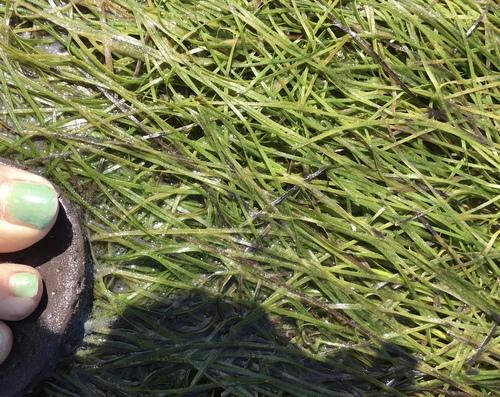
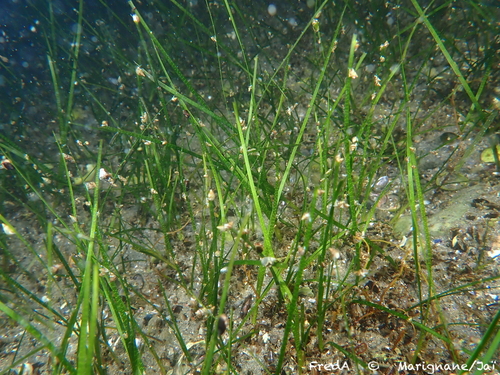
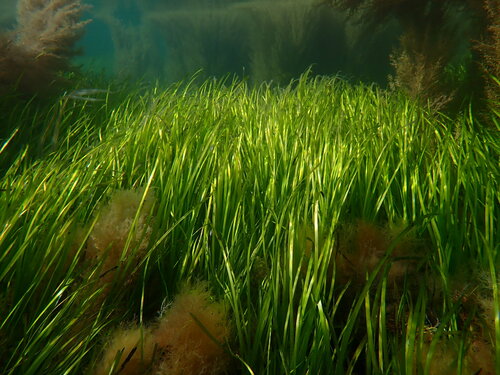
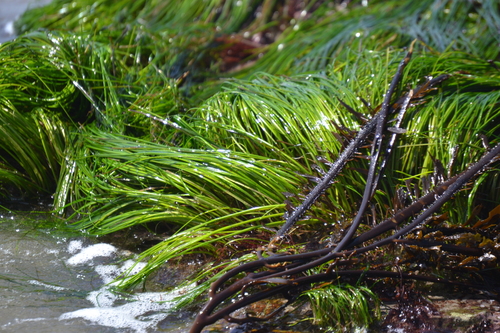
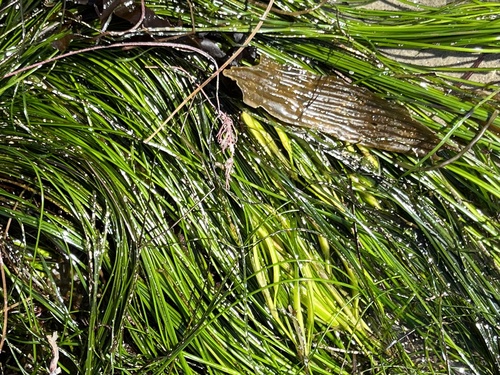
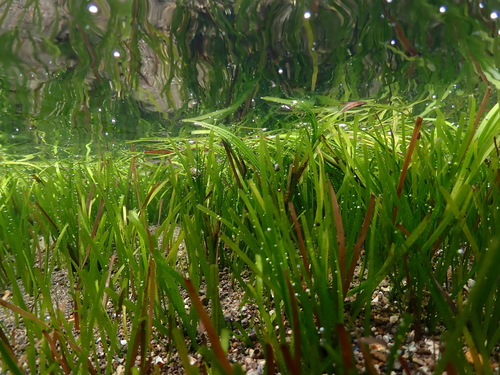
Zostera muelleri Irmisch ex Asch. is a species of seagrass with distinct morphological features. It produces long, strap-shaped leaves with rounded tips, and visible cross-veins run through each leaf. Leaf width varies widely between individuals: thin-leaved forms can be confused with Heterozostera uninervus, and the species as a whole is often mistaken for Zostera tasmanica and Zostera capensis due to shared physical traits. When exposed to high levels of sunlight, its leaves may turn red. Its thin rhizomes measure less than 3 mm in diameter, and range in color from dark brown to yellow; young rhizomes are most commonly yellow. This is a perennial marine species, so its populations persist year-round. It can tolerate limited freshwater inputs, and grows primarily in littoral or sublittoral sand flats, sheltered coastal embayments, soft muddy or sandy areas near reefs, estuaries, shallow bays, and intertidal shoals. It is uncommon on reefs itself, as reefs provide too little growing space and nutrients for it to thrive. It most often forms single-species meadows, but may also grow alongside Ruppia, Halophila, and Lepilena. It is widespread across southern Australia, and also occurs in New Zealand and Papua New Guinea. As a flowering seagrass, it can reproduce both sexually and asexually. Sexual reproduction boosts genetic variation, improving the species' ability to adapt to changing environments, but asexual reproduction is less energetically costly and is the method Zostera muelleri usually uses to maintain its population. For sexual reproduction, the plant's flowers grow in an inflorescence enclosed within a spathe, a large sheathing bract that wraps around the flower cluster. Each individual shoot can produce up to 6 spathes, each holding 4 to 12 pairs of male and female flowers. Larger plants produce more flowers, and male flowers typically mature before female flowers. Once a flowering shoot matures, it darkens, breaks away from the parent plant, and floats away. The seeds it carries are eventually deposited in new sediment to establish new plants. Asexual reproduction occurs through clonal growth via rhizome extension, and this form of regeneration allows the species to recover after high-intensity disturbances.