About Zostera japonica Asch. & Graebn.
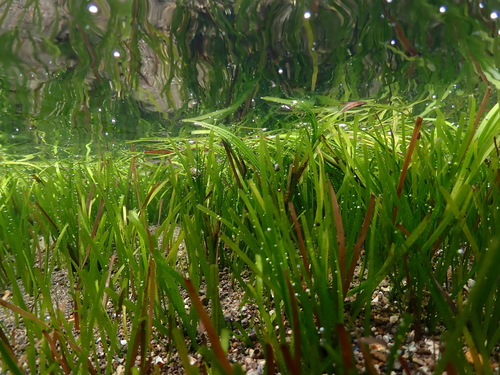
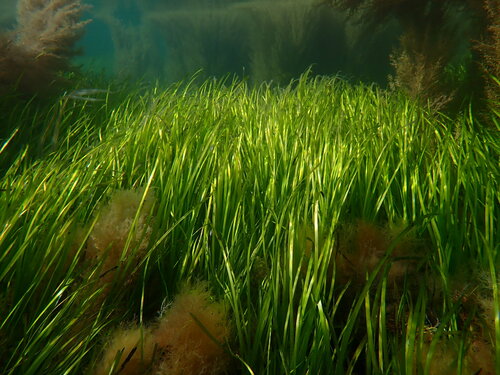
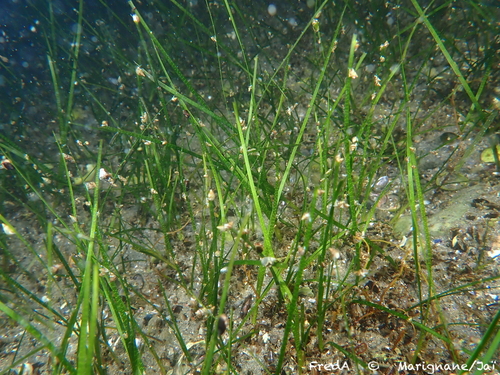
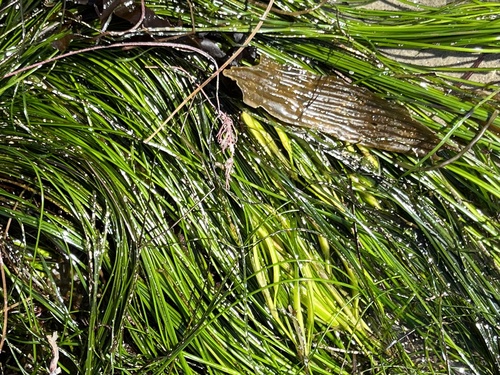
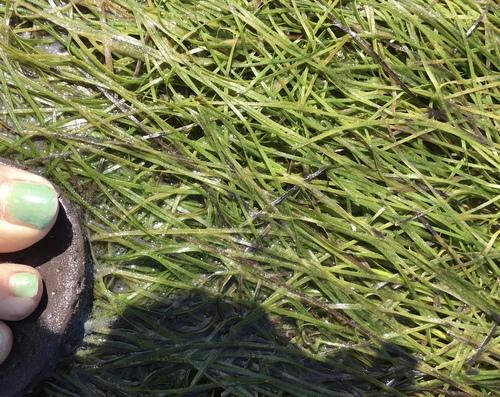
Zostera japonica Asch. & Graebn. is an aquatic plant species in the Zosteraceae family, commonly known as dwarf eelgrass or Japanese eelgrass. It is native to the eastern Asian seacoast, ranging from Russia to Vietnam, and has been introduced to the western coast of North America. This seagrass occurs in the intertidal zone and shallow subtidal, growing on sandy, muddy, and silty substrates in sheltered bays, reaching depths of about 3 m (10 ft).
Its native range includes the Russian Far East (Sakhalin, Kamchatka, Primorye, and the Kuril Islands), Japan, Korea, China, the Ryukyu Islands, Taiwan, and Vietnam. It was first recorded as naturalized in British Columbia, Canada, and the U.S. state of Washington, and is now considered invasive as far south as California. It is thought to have been introduced with a shipment of Japanese oysters during the first half of the twentieth century.
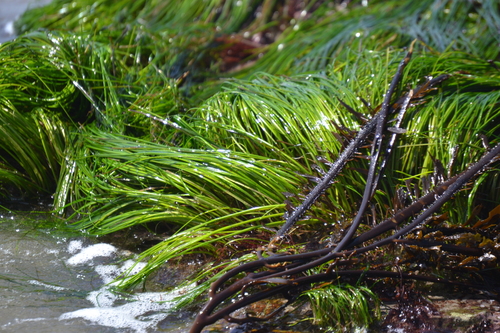
Japanese eelgrass is a small species that typically grows on the upper edge of seagrass beds, most often on mudflats exposed at low tide. The plants shed many of their leaves in winter. In Hong Kong, algae grows as epiphytes on the blades of this seagrass, and snails of the genus Clithon graze on this epiphytic growth. In a research study, excluding these snails from sections of the seagrass bed led to increased epiphyte load, which had a harmful effect on the total biomass of Z. japonica. The excess epiphytes reduced the seagrass’s photosynthesis and increased physical damage caused by waves and currents. When snails were present, seagrass blades stayed cleaner, were less likely to break off, and had higher total biomass.
On the west coast of North America, non-native Japanese eelgrass now occupies the same habitats as the native common eelgrass Zostera marina, growing alongside it and sometimes displacing the native species. This shared habitat is used by economically important shellfish. Further research is needed to clarify the ecological roles of both species in this habitat, and to determine whether management strategies are required to protect the native Z. marina from the invasive Z. japonica. One known difference between the two species is that Z. marina undergoes microbial decomposition more slowly than Z. japonica. Faster nutrient cycling with Z. japonica causes changes to both total ecosystem productivity and the community structure of decomposers.