About Zosimus aeneus (Linnaeus, 1758)
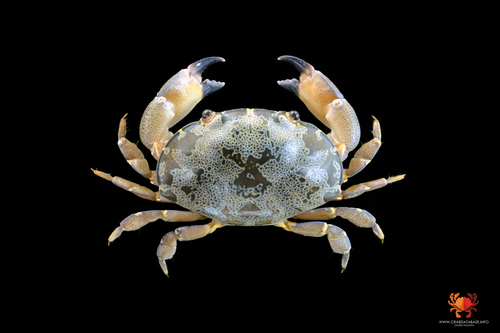
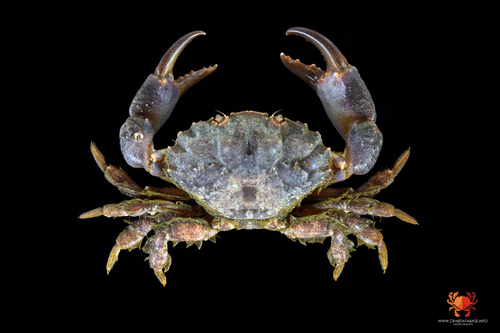
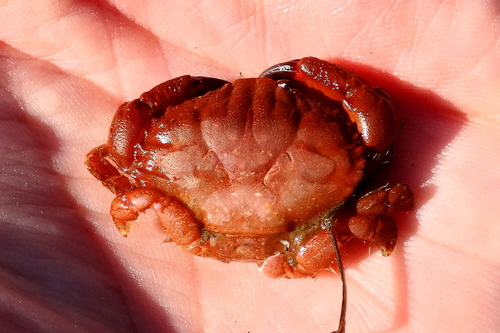
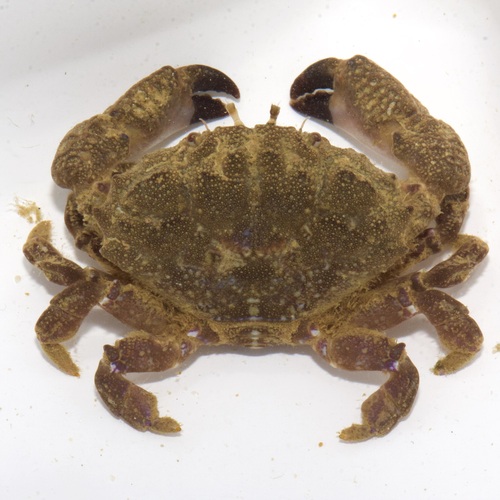
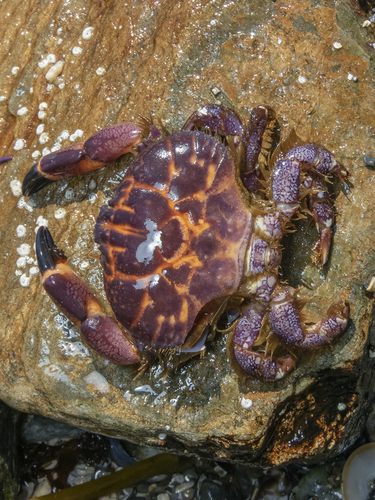
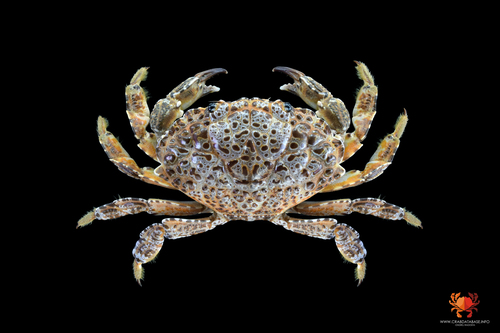
Zosimus aeneus (Linnaeus, 1758) grows to dimensions of 60 by 90 millimeters, or 2.4 by 3.5 inches. It is a well-known, brightly colored species with distinct striking patterning. Its carapace and legs, including its claws, have a characteristic pattern of red or brown patches set against a pale brown or cream background. Its carapace is deeply grooved, and its walking legs bear prominent crests. This species occurs across a large portion of the Indo-Pacific, ranging from South Africa to the Red Sea, and extending east as far as Japan, Australia, and Hawaii. It inhabits reef flats within the intertidal zone. Both the shell and meat of Zosimus aeneus hold significant concentrations of neurotoxins, including tetrodotoxin and saxitoxin. Tetrodotoxin (TTX) is the same compound that makes puffer fish toxic, while saxitoxin (SXN) is the most well-known of several related neurotoxins that cause paralytic shellfish poisoning (PSP). Both toxins are absorbed through the gastrointestinal tract and interfere with sodium channels in the membranes of nerve cells. Poisoning from consuming Zosimus aeneus can be fatal. One man in Timor-Leste died hours after eating this crab, after consuming a dose equivalent to 1–2 μg of saxitoxin per kilogram of body mass. Inhabitants of Pacific Islands have been reported to eat this crab's flesh to commit suicide. Zosimus aeneus is considered the most poisonous crab in the Philippines, where 50% of intoxication cases are fatal. Studies have found that individual specimens can contain more than 3000 MU/g of saxitoxin, a lethal amount for humans that caused 12 fatalities on Negros Island in the 1980s. In February 2021, two children in Cagayan died after eating Zosimus aeneus caught by their father. In February 2026, a food vlogger in Palawan died after eating multiple Zosimus aeneus for her social media channel.