About Zootermopsis angusticollis (Hagen, 1858)
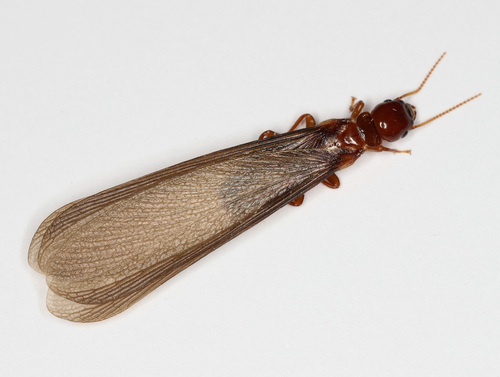
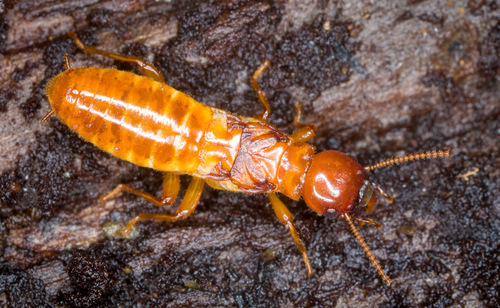
Identification: Zootermopsis angusticollis is a hemimetabolous, diploid species. After hatching from eggs, young individuals closely resemble adults, except that they lack developed genitalia. They go through a series of morphological instars that let them increase in size until they reach the adult stage. Like all other termites, this dampwood termite species lives in eusocial colonies that include workers, soldiers, nymphs (semi-mature young), and both male and female reproductive individuals. When a colony is located, nymphs are typically the individuals observed. Winged alate individuals are light brown with dark brown leathery wings, while nymphs are cream-colored with a dark abdomen. Dampwood termites are among the largest termites found in North America. A key identifying sign of a dampwood termite infestation is their unique fecal pellets, which are approximately 1 mm long and slightly hexagonal.
Habitat: Unlike the more common drywood termites, dampwood termites are highly tolerant of wet conditions, and build their colonies in damp wood such as rotting stumps, logs, or other wood debris from coniferous trees. All colony members spend their entire lives within the same piece of wood, and never leave to forage, since the wood serves as their food source. However, winged alate females leave the colony on a mating flight to take on their primary role as queen. Winged individuals are strong fliers, and can reach distances of up to 350 meters. When a colony outgrows its current habitat, it will swarm; however, swarming exposes individuals to pathogens and can increase mortality. Swarms of this species only contain around 50 to 60 individuals.
Model species for hindgut ecology: Zootermopsis angusticollis hosts many different species of symbiotic microbes in its hindgut that help digest the wood it primarily eats. This species is considered one of the best-studied lower termites for research on hindgut symbionts. The termite and its symbionts are thought to have co-evolved with one another, and this species has been studied for almost 100 years. Protists found in the termite hindgut include multiple species from the genus Trichonympha, as well as Hexmastix temopsidis, Tricercomitus termopsidis, Trichomitopsis termopsidis, Trichonympha campanula, Trichonympha collaris, Trichonympha sphaerica, and Streblomastis strix.