About Zoarces viviparus (Linnaeus, 1758)
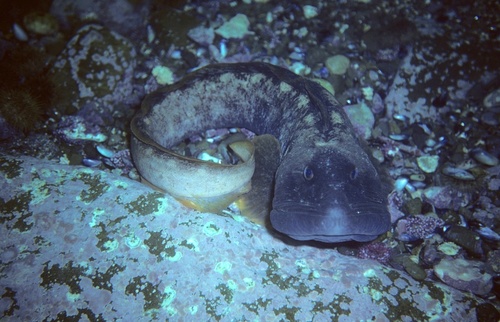
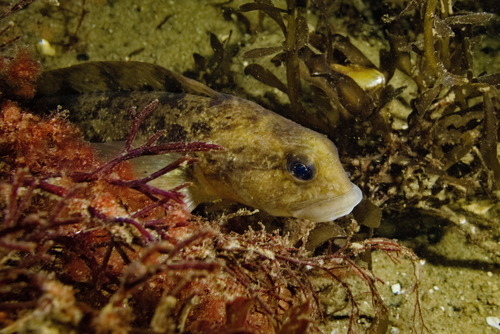
The viviparous eelpout, Zoarces viviparus, has a slim, tapering body that resembles a small burbot (Lota lota). It has a wide head, wide mouth, and protruding lips. Its long, ribbon-shaped dorsal and anal fins extend back to join with its arrowhead-shaped caudal fin; this feature sets it apart from two other similar slim-bodied bottom-dwelling fish in its range: the rock gunnel (Pholis gunnellus) and the snake blenny (Ophidion barbatum). Its bones are green, and tiny scales are embedded in its slimy skin. The dorsal fin gradually decreases in height closer to the caudal fin, and the shorter fin rays in this lower section are short and spinous. Its body color is highly variable, but most individuals are greyish brown on the upper body and yellowish on the ventral side. They have either a single or double row of dark blotches along the body and on the dorsal fin, and the edges of their pectoral fins are yellow or yellowish orange. This species reaches a maximum published total length of 52 cm (20 in), with 30 cm (12 in) being the more common size, and can weigh up to 510 g (18 oz). This fish is found in the eastern Atlantic Ocean, with a range extending north from the English Channel around the British Isles (it is absent from Ireland's Atlantic coasts), east into the Baltic Sea, and north through the North Sea along the Norwegian coast to the White Sea and Barents Sea. It inhabits the intertidal zone of both marine and brackish environments. When the tide is low and the fish is exposed, it avoids drying out by sheltering under rocks, in rock cracks, or staying submerged in rock pools. This demersal fish is normally sedentary, and spends most of its time hiding under rocks or among seaweed. It can be found at depths from 0 to 40 m (0 to 131 ft), though it most commonly occurs between 2 and 20 m deep.