About Zingiber zerumbet (L.) Roscoe ex Sm.
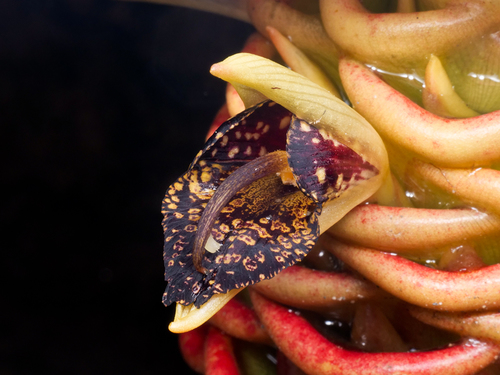
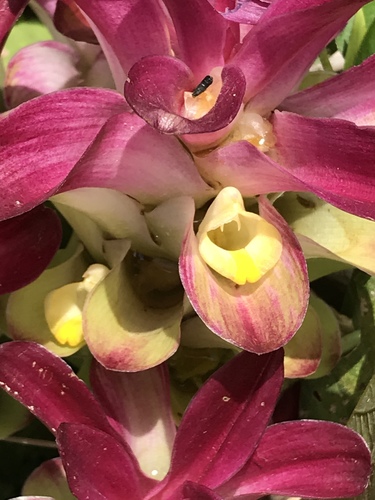
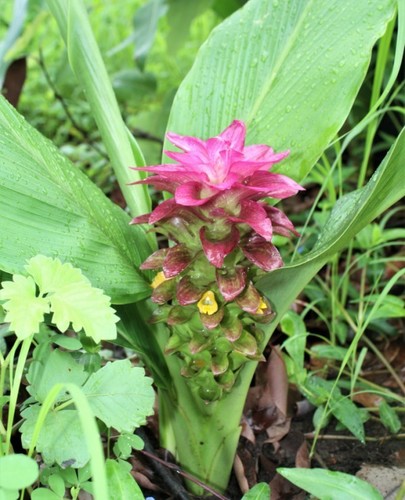
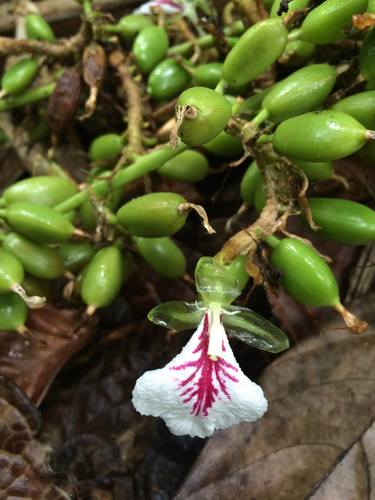
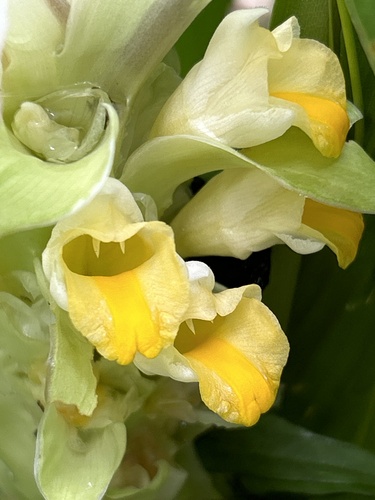
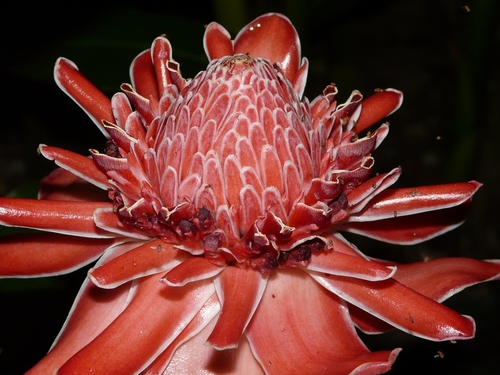
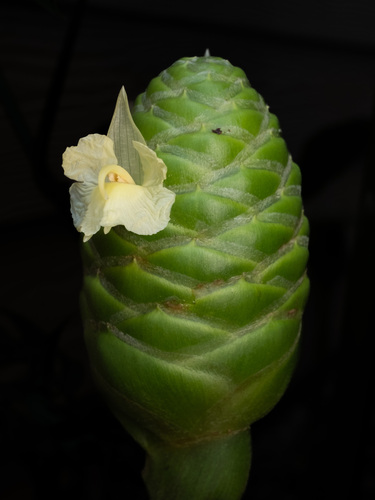
Zingiber zerumbet is a perennial herb. It goes dormant above ground from autumn through spring: its leafy stems shrivel and die back, leaving pale brown creeping rhizomes (underground stems) at ground level. The plant regrows new foliage in spring. It produces a thin upright stem that reaches 1.2 m (4 ft) tall, which bears 10–12 blade-shaped leaves arranged alternately. Each leaf measures 15–20 centimetres (6–8 in) in length. Conical or club-shaped flower heads emerge on separate shorter stalks among the leafy stems. These flower heads appear in summer, after the leafy stems have been growing for some time. Initially green, the flower heads are 3 to 10 cm (1+1⁄4 to 4 in) long, with overlapping scales that enclose small yellowish-white flowers, which open just a few at a time. As flower heads mature, they gradually fill with an aromatic, slimy liquid and turn a brighter shade of red. The flower stalks usually stay hidden beneath the leaf stalks. Z. zerumbet is native to tropical Asia and Australasia. The subspecies Z. zerumbet subsp. cochinchinense (Gagnep.) Triboun & K.Larsen, previously classified as a separate species Z. cochinchinense, is found in Vietnam. Remains of Z. zerumbet have been identified in Phase 1 layers at the Kuk Swamp archaeological site in New Guinea, dated to 10,220 to 9,910 BP. It is unknown whether these remains represent cultivated plants or plants that were simply harvested from the wild. Like true ginger, the earliest evidence of cultivation of Z. zerumbet comes from Austronesian peoples, who carried the plant with them as a canoe plant during the Austronesian expansion around 5,000 BP, spreading it as far as Remote Oceania. The fragrant leaves and leaf stalks of Zingiber zerumbet were traditionally used for baking in imu, underground ovens, to add flavor to cooking pork and fish. Aromatic underground rhizomes were traditionally sliced, dried, pounded into a powder, and added to the folds of stored kapa cloth. Perhaps the most common use of this plant, often called awapuhi, is as a shampoo and conditioner. The clear fragrant juice from mature pine cone-like red flower heads is used to soften hair and add shine. It can be left in the hair or rinsed out, and it can also be used as a massage lubricant.