About Zicrona caerulea (Linnaeus, 1758)
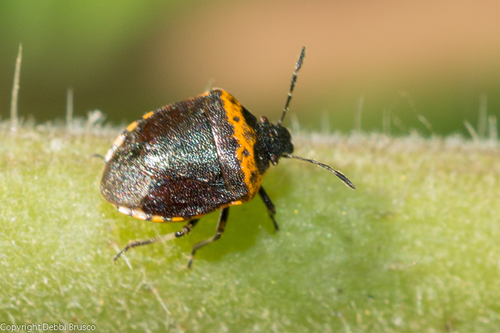
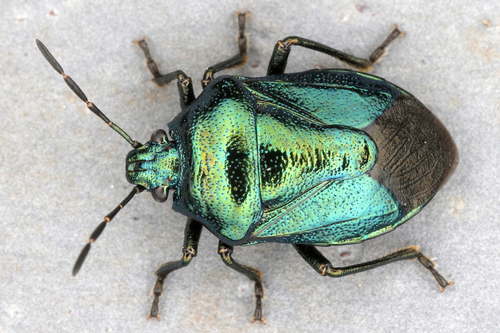
Adult Zicrona caerulea reach an average body length of 5–8 millimetres (0.20–0.31 in). Their bodies are uniformly metallic blue-green; this coloration gives the species its Latin specific epithet caerulea, which means blue. Immature individuals have a red abdomen marked with black patches. This bug acts as a useful predator of leaf beetles in the genus Altica, the larvae of various beetle species, and moth caterpillars, and it also feeds on plant material. Females lay their eggs in the spring. Zicrona caerulea is a univoltine species, meaning it produces one generation per year. New adults of this generation emerge and can be found starting in July. This species overwinters in the adult life stage. This species is distributed across Eurasia and North America. It inhabits areas with low vegetation in moors, heaths, damp grassland, and forest edges.