About Zhuliangomyces illinitus (Fr.) Redhead
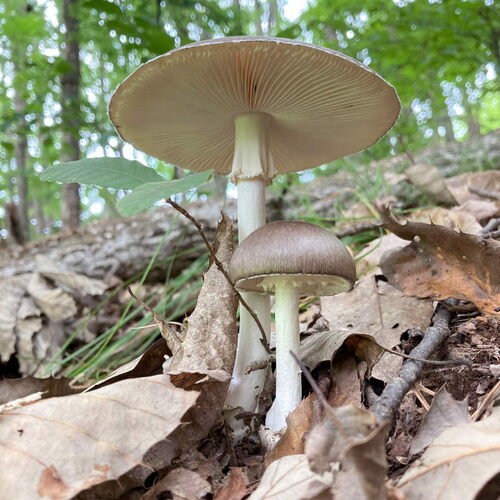
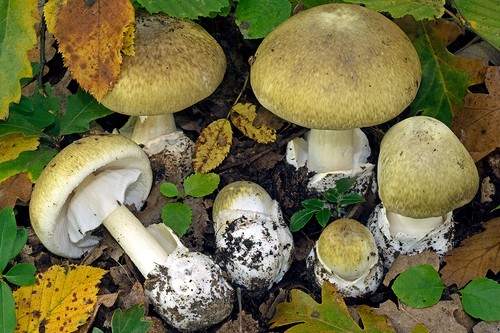
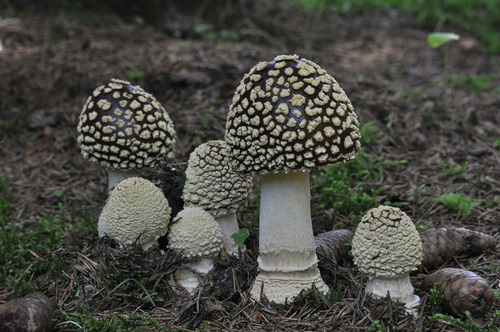
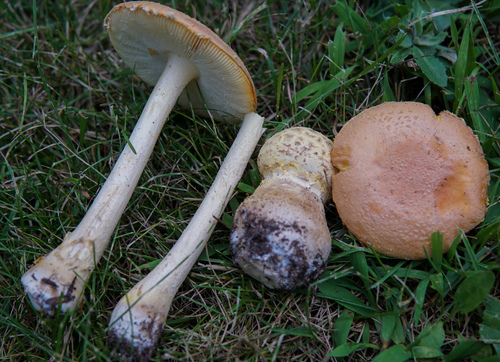
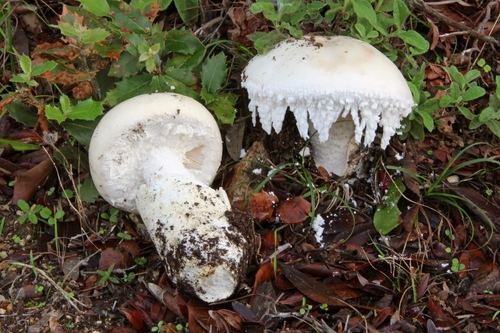
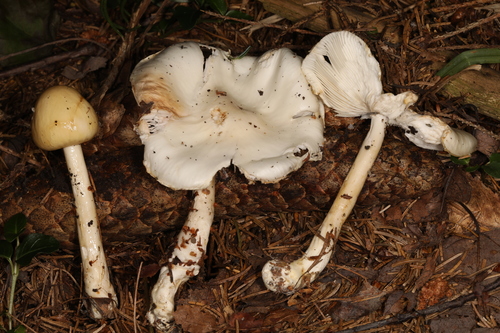
The scientific name of this fungus is Zhuliangomyces illinitus (Fr.) Redhead. Its cap (pileus) is whitish or gray-brown, and measures 2–7 centimetres (3⁄4–2+3⁄4 in) wide. Caps start out roundish, and typically become convex then flat with age. They may have a broad umbo, with a smooth or slimy surface, and slimy veil remnants hanging from the cap margin. The gills are white, free from the stalk, non-waxy, closely spaced, broad, and white in color. The spores measure 4–6.5 μm, are smooth, and generally spherical. The spore print is white. The stalk is typically 5–10 cm long, turns brown when bruised, and tapers slightly toward the top. It is fleshy, soft, and bears a ring. The stalk is white, sticky, and slimy, as is the flesh of the entire fruit body. Its edibility is unknown, and its slime discourages culinary use. The translucent slime on fresh caps is leftover from the fungus's universal veil, which does not leave a volva when the fungus reaches maturity. This slimy veil is one key difference between the genus Zhuliangomyces and its relative Amanita. A second difference is that the uppermost hyphae layer of Z. illinitus's pileus is made up of narrow, subcylindrical terminal cells. For the newly defined genus Zhuliangomyces, another key difference between its members and the Limacella genus is the lack of a rudimentary annulus combined with the presence of a slimy, smooth stalk. This fungus, previously referenced as L. illinita, is widely distributed in North America and often found in Europe. It can grow singly, scattered, or in groups in woods, fields, lawns, roadsides, and sand dunes. In North America, the mushrooms appear in season between July or August and October or November. According to Hutchinson (1998), the fungus was initially thought to be facultatively mycorrhizal, meaning it would obtain nutrients through a symbiotic relationship with plant roots. However, laboratory observations found that this species does not form ectomycorrhizal relationships with plant roots. Since then, it has been assumed that members of this species are saprobic, though more research is needed to confirm this trait definitively. This mushroom is found in North America, parts of Europe, and China, and is typically found growing scattered in temperate mixed forests, swamps, and grass lawns.