About Zhangixalus schlegelii (Günther, 1858)
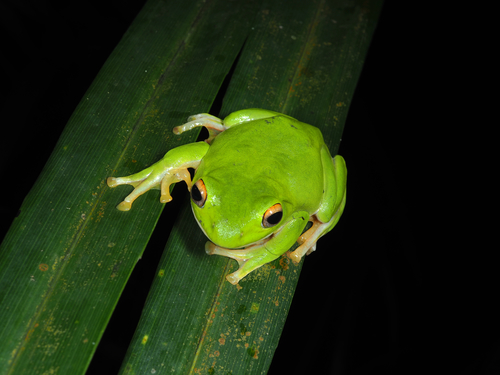
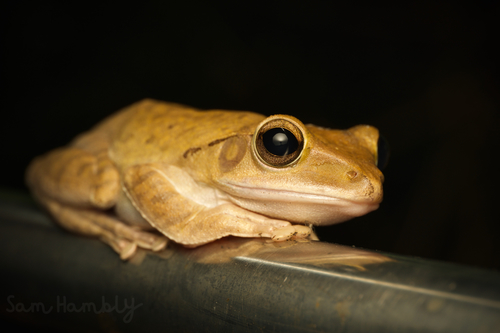
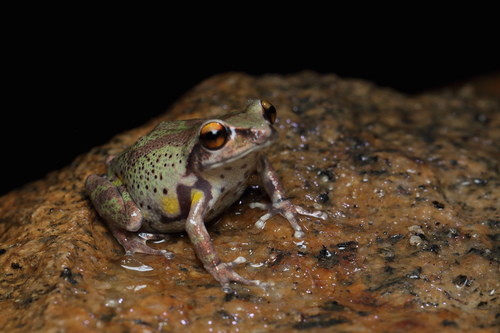
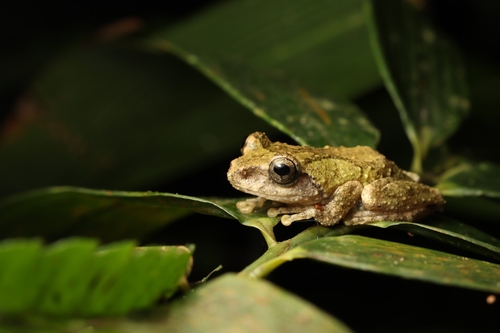
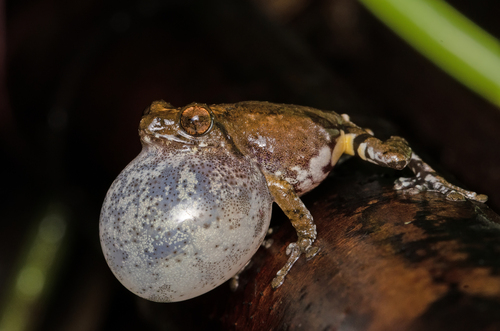
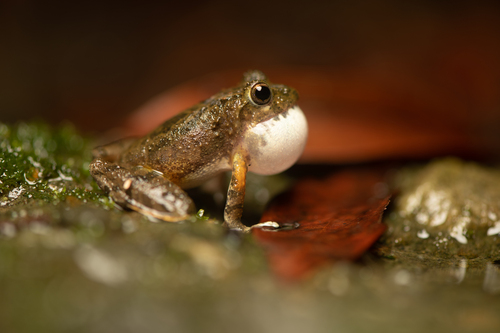
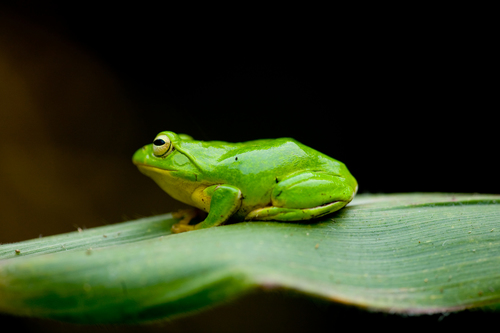
Males of Zhangixalus schlegelii measure 32–43 mm (1.3–1.7 in) in snout–vent length, while females measure 43–53 mm (1.7–2.1 in). Males have yellowish white nuptial pads, a darkly colored throat, and a pair of slit-like vocal openings. The webbing on the fingers and toes is not well developed; the finger tips have truncated discs with circummarginal grooves. The dorsal skin is almost completely smooth. The supra-tympanic fold is prominent, but there is no dorsolateral fold. This species occurs in temperate wetlands and forests ranging from hilly to lowland areas, and it especially favors paddy fields, which are its main breeding site. The International Union for Conservation of Nature (IUCN) does not consider this species threatened. Zhangixalus schlegelii (formerly classified as Rhacophorus schlegelii) reproduces by building underground foam nests. In Japan, this nest-making frog has been reported to occasionally lay eggs among leaves on bushes or trees, but its usual behavior is to create a nest underground. After awakening from hibernation, the frogs crawl along the edges of rice fields and swamps to dig out holes above the water level. The much smaller male is carried by the female, and both become buried in a hole 6–9 cm wide, located 10–15 cm above the water surface. The female smooths the interior of this nest cavity with her movements. At night, she produces a tough, elastic ball of white, air bubble-filled material 6–7 cm thick, which emerges from her cloaca alongside the eggs. This foam mass provides moisture and air for developing offspring. The female kneads the mass thoroughly with distinctive foot movements: she stretches and closes her toes to mix the sticky material with air, breaking large bubbles into progressively smaller bubbles of foam. The male makes similar foot movements to push the foam backward, leaving eggs unobstructed for subsequent fertilization. Once the eggs are fertilized and surrounded by this protective, aerating mass, the adult frogs exit the nest and move to live among trees. Over time, the foam mass gradually liquefies. The liquid flows out through the opening the parents left when exiting the nest, carrying the developed young out into the surrounding open water.