About Zhangixalus moltrechti (Boulenger, 1908)
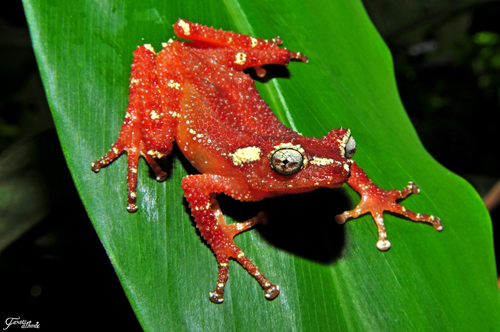
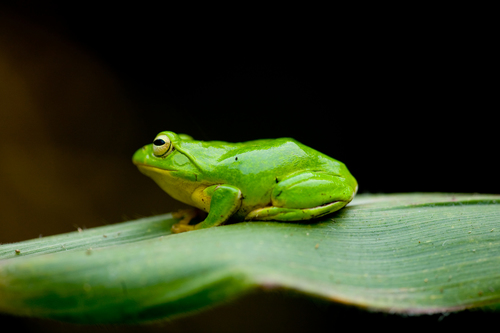
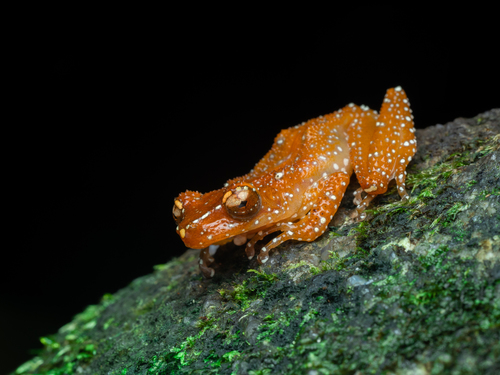
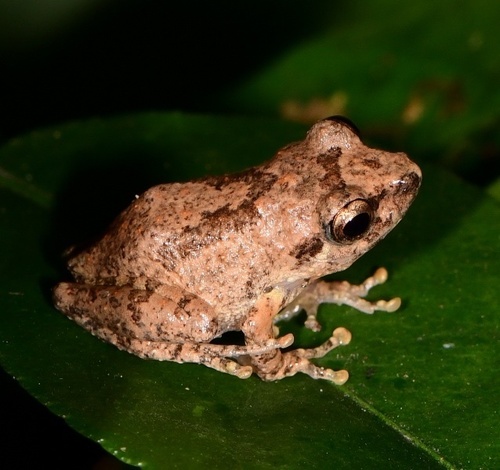
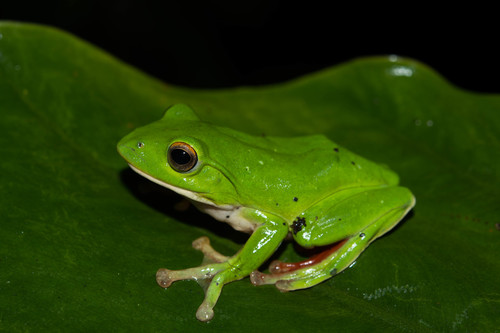
Zhangixalus moltrechti is a medium-sized tree frog. Females measure 5–6 cm (2.0–2.4 in) in snout-vent length, while males are slightly smaller at 3.6–4.2 cm (1.4–1.7 in). Its finger and toe tips have well-developed discs, and its skin is smooth. Most individuals are solid green overall, though a small number have a few white spots. The belly is white-yellow. The hidden surfaces of its hind legs are red or orange and marked with black spots, and its iris is orange-red. This species is found in forests, orchards, and tea plantations at elevations ranging from 0 to 2500 meters above sea level. It breeds in standing water bodies, including ponds, pools, cisterns, and blocked roadside ditches. Females lay eggs in sheltered locations such as caves, under cover, or on plants near the water; after hatching, rain washes the tadpoles into the water. It can also breed in pools within intermittent streams, potholes, and streamside pools. Breeding timing varies by elevation: high-elevation populations around 2,000 m (6,600 ft) breed in spring and summer from April to September, low-elevation populations below 500 m (1,600 ft) breed from late autumn to early spring from October to March, and mid-elevation populations breed year-round with a peak in spring. Eggs are laid in foam nests positioned above water, attached to tree branches, bush branches, or walls. The International Union for Conservation of Nature classifies this frog as a species of least concern for extinction.