About Zeuzera pyrina Linnaeus, 1761
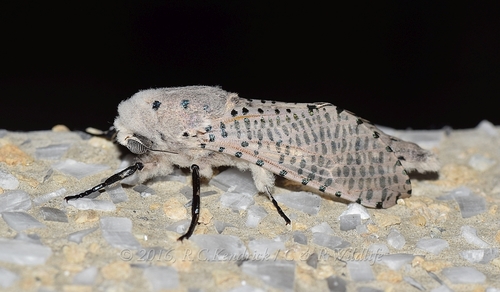
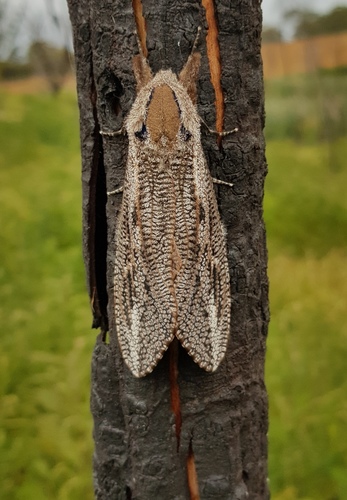
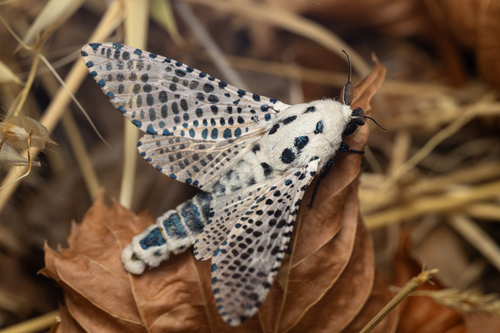
Zeuzera pyrina (Linnaeus, 1761) has a wingspan ranging from 35 to 60 millimetres (1.4 to 2.4 inches), and is a highly distinctive moth species. Females have an abdomen length of approximately 45 to 50 millimetres (1.8 to 2.0 inches). Males are slightly smaller than females, and have broader, more feathery antennae. The antennae are bipectinate, wide at the base and narrow near the tips, with this narrowing being especially pronounced in males. These moths have a white head with a black forehead, and a very furry white thorax marked with six black spots. Their abdomen is black, with short white hair-like scales on the posterior edge of each segment, and a flat brush of scales at the apex. The forewings are whitish, long and narrow, with numerous black spots or black spots with inner white spots, arranged in rows along the veins. The hindwings are translucent except for the anal area, and have small black spots. This species is primarily found in Europe, excluding Ireland, and is also present in northern Africa (Algeria, Egypt, Libya, Morocco) and Asia (Taiwan, India, Iran, Iraq, Israel, Japan, Korea, Lebanon, Sri Lanka, Syria, Turkey). It was introduced to the northeastern United States before 1879, and its current range in the country includes Maine, Pennsylvania, Tennessee, and Texas. These moths live in woodland areas, gardens, and orchards.