About Zethalia zelandica (Hombron & Jacquinot, 1848)
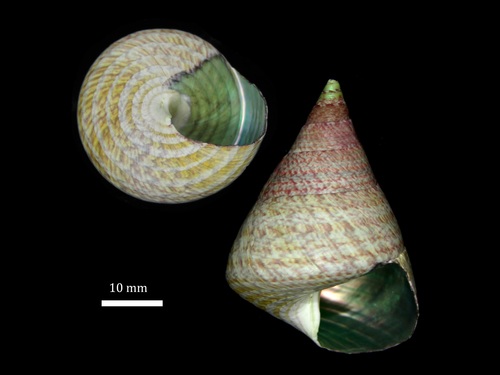
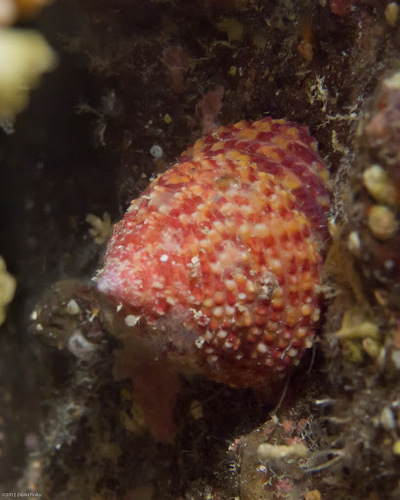
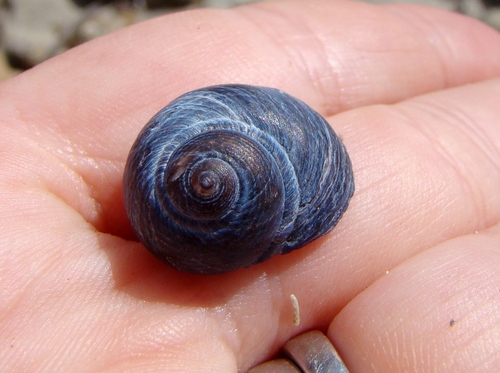
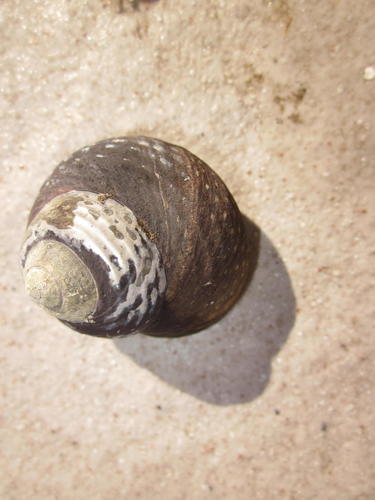
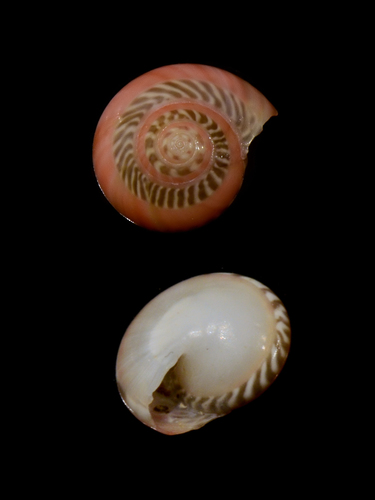
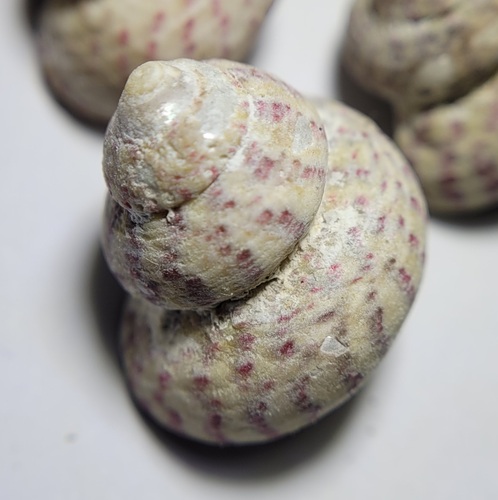
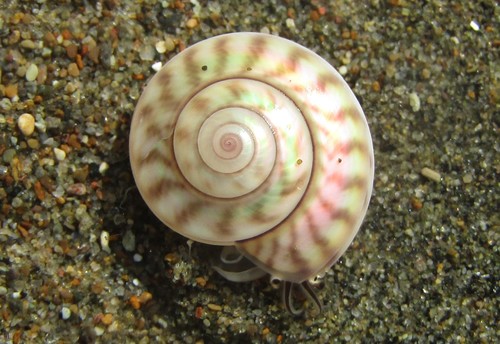
This marine species has the scientific name Zethalia zelandica (Hombron & Jacquinot, 1848). The shell of Zethalia zelandica ranges in length between 15 mm and 22 mm. The shell is solid, depressed, and imperforate. Its base color is yellowish or pinkish; the upper surface features radiating streaks of chestnut brown or red. The shell base has a reddish or purple zone surrounding the central callus, while the outer portion of the base is white and marked with more or less distinct radiating stripes. The shell surface is shining and smooth; when examined under a lens, the base displays very fine, close, regular spiral striae. Well-preserved specimens display red and emerald-green reflections that show through the thin layer overlying the nacre, similar to the appearance of fiery opals. The low spire is conoidal in shape. The sutures are linear and not impressed. The body whorl is concave on its upper side. The compressed periphery is surrounded by two rather obscure carinae. The shell base is slightly convex, with a narrow spiral groove that forms the boundary of a central area; this central area is covered by a thin, radiately rugose callus that is purple and white. The aperture is rounded quadrate, and is nacreous and iridescent on the inside. The columella is short, very thick, and heavy. Its edge is pearly, and is inserted into a pad of white callus on the body whorl and over the axis. This shell can be easily distinguished by its radiating stripes, compressed body whorl, and biangular periphery. Unlike other trochids, this species is primarily a filter feeder: it secretes a chain of mucus that traps food particles, and periodically pulls this mucus chain inward to ingest the trapped particles. It lives buried in sand on exposed ocean beaches, and large numbers are sometimes washed up on shore after storms. This species is endemic to New Zealand and the Chatham Islands, and is most common on the east coast of Northland.