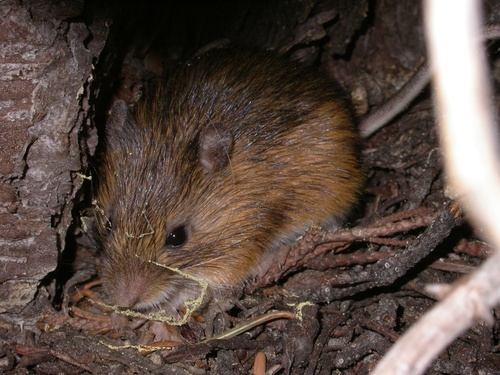
About Zapus princeps J.A.Allen, 1893
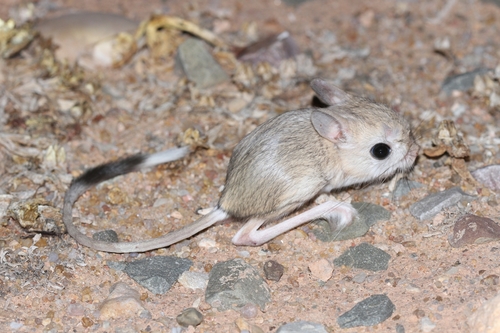
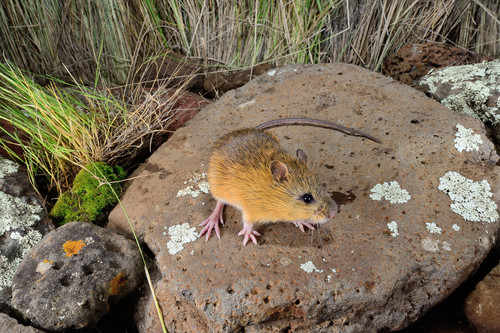
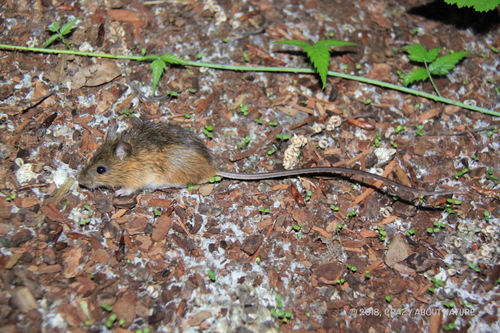
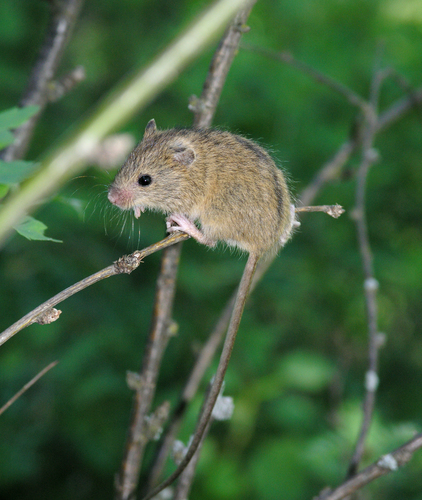
Western jumping mice (scientific name: Zapus princeps J.A.Allen, 1893) resemble typical mice in overall appearance, but have long hind feet and reduced forelimbs. Their total body length ranges from 22 to 25 cm (8.7 to 9.8 in), which includes a tail that is 13 to 15 cm (5.1 to 5.9 in) long, and they weigh between 17 and 40 g (0.60 to 1.41 oz). This species has coarse, dark greyish-brown fur on its upper body, with a broad yellow to red band running along its flanks, and pale yellowish-white fur on its underparts. Some individual western jumping mice have white spots on the upper body or on the tip of the tail. Males and females are similar in appearance and size; females of the species have four pairs of teats. Western jumping mice are distributed across western North America, ranging from Yukon down to New Mexico. They inhabit mountainous terrain with moderately damp climates, living in meadows and forests dominated by alder, aspen, or willow. They are most commonly found in areas of dense vegetation located close to fresh water. Eleven subspecies of Zapus princeps are currently recognized. These are: Zapus princeps princeps, found in eastern Wyoming, Colorado, and northern New Mexico; Z. p. chrysogenys, found in the La Sal Mountains; Z. p. cinereus, found in southeastern Idaho and northwestern Utah; Z. p. curtatus, found in northwestern Nevada; Z. p. idahoensis, found in northern Idaho, western Montana, and central Wyoming; Z. p. kootenayensis, found in southern British Columbia and northwestern Washington; Z. p. minor, found from southern Alberta to northeastern South Dakota; Z. p. oregonus, found in Oregon, southeastern Idaho, and northern Nevada; Z. p. pacificus, found in northern California; Z. p. saltator, found from British Columbia to southern Yukon; and Z. p. utahensis, found in Utah and western Wyoming. Regarding reproduction, female western jumping mice enter estrus within one week of emerging from hibernation, and typically breed only once each year. Gestation lasts 18 days, resulting in a litter of four to eight young. The pups are born blind and hairless, weighing approximately 0.8 g (0.03 oz). They are weaned between 28 and 35 days of age. Young western jumping mice are apparently able to breed once they have completed their first hibernation, though only around 40% do so; the rest wait an additional year to breed. Individuals of this species live for three to four years.