About Zapus hudsonius (Zimmermann, 1780)
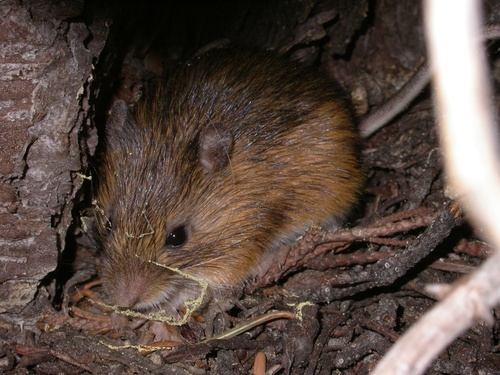
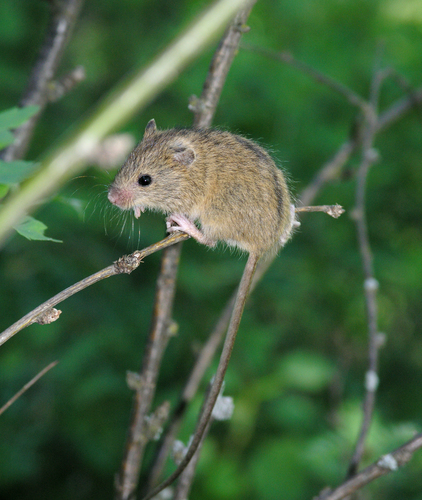
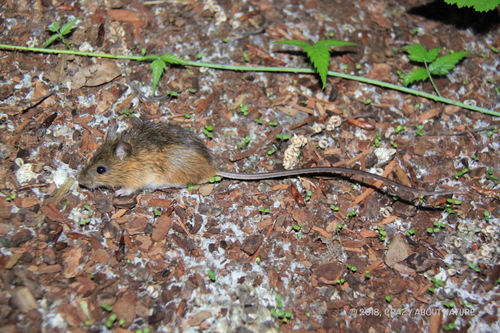
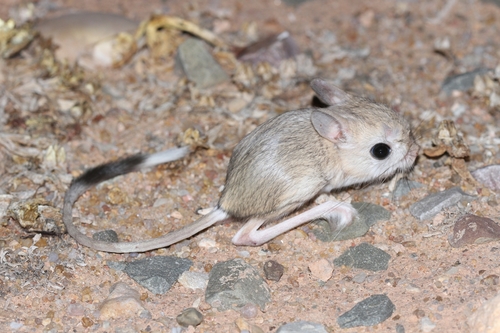
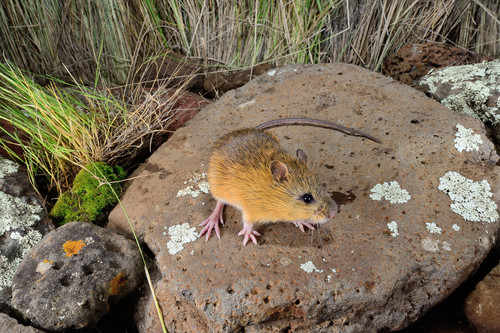
Zapus hudsonius, commonly known as the meadow jumping mouse, has a total body length ranging from 180 mm to 240 mm. Most of this total length comes from its tail, which is typically between 108 mm and 165 mm long. A key distinguishing feature of this species is its enlarged hind feet, which measure 28 to 35 mm long, paired with relatively short forelimbs. This body shape gives the meadow jumping mouse a kangaroo rat-like appearance, but it can be told apart from kangaroo rats by its tail, which is not bushy at the tip. Its fur (pelage) is short, somewhat dense, and coarse. While pelage color varies between individuals, a broad darker brown dorsal stripe with black-tipped hair that creates a slightly grayish appearance is always present. The sides of the body are usually a lighter shade, ranging from bright yellow to orange, and the underbelly and feet are always white. Female meadow jumping mice have eight mammary glands total: four inguinal, two pectoral, and two abdominal. Male genitalia are not easily visible outside of mating season, when the scrotal sac enlarges and becomes more prominent. The tail, which makes up most of the animal's total body length, is bicolored, darker on the upper side and lighter on the underside. It is lightly covered with hair that gets longer toward the tip, but never becomes bushy like a kangaroo rat's tail. Meadow jumping mice have prominent noticeable ears, prominent whiskers, a small narrow head that is relatively high crowned, a short pointy nose, relatively large eyes, and a large infraorbital foramen. Aside from the Aye-Aye, the meadow jumping mouse is the only mammal with 18 teeth, following a dental formula of 1/1, 0/0, 1/0, 3/3. Its upper jaw is short and narrow. The incisors have longitudinal grooves, the cheek teeth are small, and a small peg-like premolar sits before the molars. On average, female meadow jumping mice are slightly larger and heavier than males. Overall body weight varies significantly by season: in summer, weight ranges from 11.15 grams to 24.8 grams, with an average of 16 to 19 grams. Just before entering hibernation, individuals can reach a weight of 35 grams or more. Meadow jumping mice prefer habitats with high humidity. While they can live in many different areas that have high herbaceous cover, they favor moist grasslands and avoid heavily wooded regions. Large populations are typically found in grassy fields and thickly vegetated areas near streams, ponds, or marshes, and they prefer large open areas over densely wooded regions. This species is found across large parts of the United States and extends north into Canada. Hibernation for meadow jumping mice begins in late September or early October. When they enter hibernation, their metabolism decreases. Hibernation ends between mid April and May, with males emerging from hibernation slightly earlier than females. Meadow jumping mice lose a significant amount of weight over the hibernation period from entering to emerging. When males emerge, they begin feeding immediately and become reproductively active right away. Females emerge a short time after males, and mating begins shortly after. Roughly two weeks after emergence, all females are pregnant and gestation starts. Gestation lasts around 18 days, and it may be slightly longer if the female is still nursing a previous litter. Average litter size is 5.3 young, and litters can range from two to nine young. A single meadow jumping mouse can produce two to three litters per year. Most young are weaned between June and August. On average, meadow jumping mice have a litter in late spring just after emerging from hibernation, a second litter in late summer, and very little reproductive activity occurs in mid summer.