About Zanthoxylum asiaticum (L.) Appelhans, Groppo & J.Wen
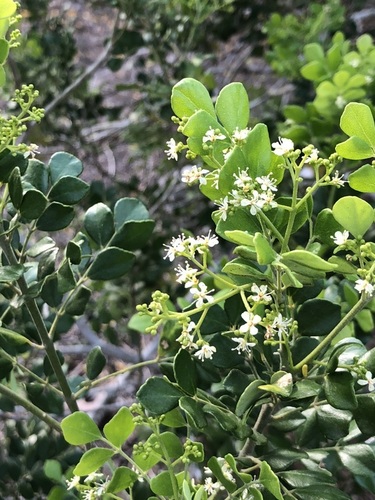
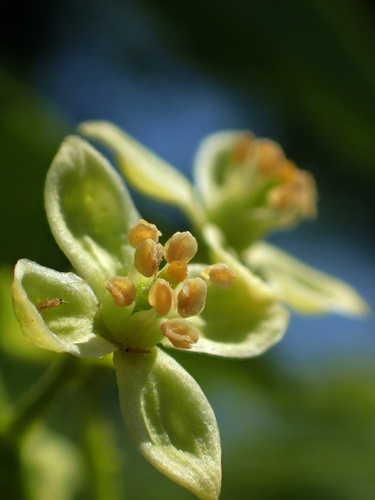
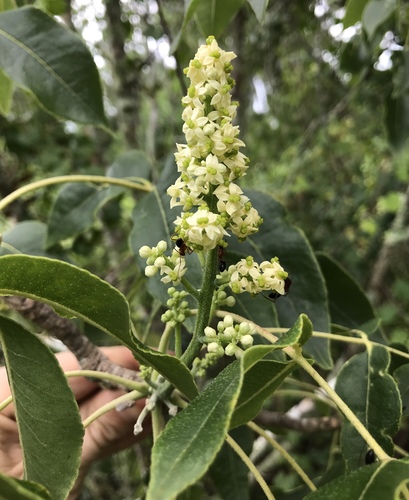
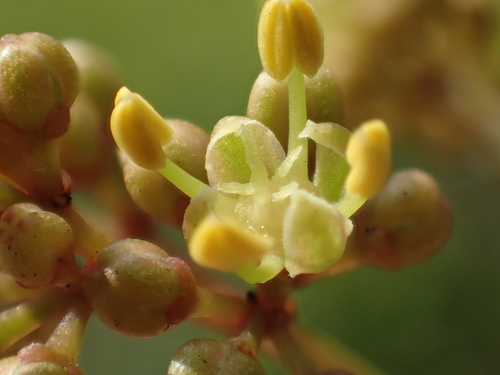
This species, Zanthoxylum asiaticum (L.) Appelhans, Groppo & J.Wen, is a climbing woody liana. Its stems are corky and thorny, and it can reach up to 10 meters in length while climbing on trees. It produces shiny green leaves that carry a citrus scent, yellow-green flowers, and orange fruits around half a centimeter wide that taste like orange peel. Birds and monkeys disperse the plant's seeds after eating its fruits, and scaly-breasted munias specifically prefer to nest in this plant. It is native to multiple countries across Africa and Asia. In South Africa, it is called ranklemoentjie in Afrikaans and gwambadzi in Venda. It is well known among the Kikuyus of Central Kenya, where it is called mururue, and in Mauritius it is called patte poule, with the correct formal name mũrũrũe. It grows in forested riparian habitats that receive high rainfall. Destruction of forest habitat across Africa currently threatens the survival of this species. Many African peoples use this plant medicinally; the Maasai use it to treat malaria, cough, and influenza. Its roots contain coumarins with antiplasmodial activity. Laboratory testing has shown that extracts of this plant have antiviral activity against H1N1 influenza. Harvesting this slow-growing species from the wild for medicinal use may lead to declines in its wild populations. Research is currently being conducted on protocols for the domestication or propagation of this plant.