About Zamia pumila L.
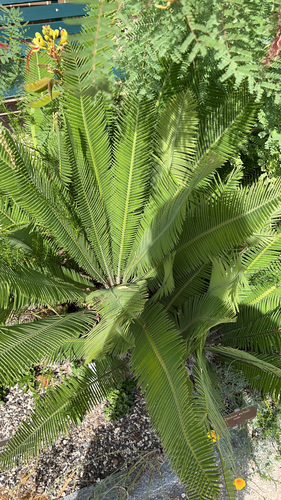
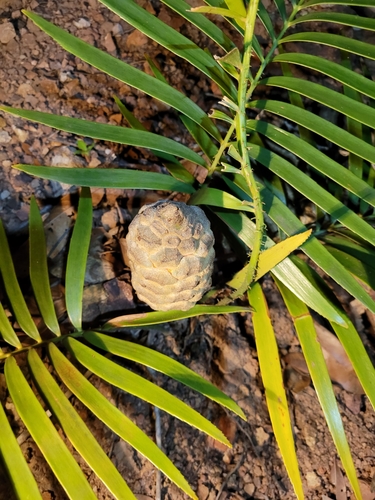
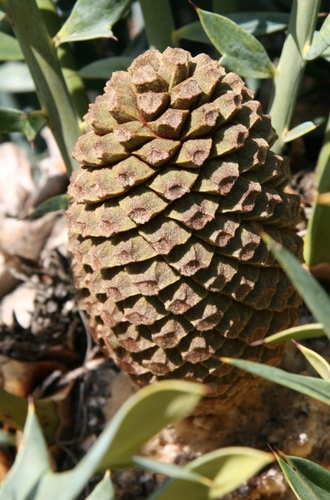
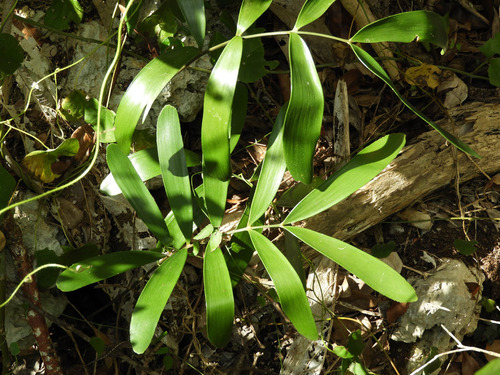
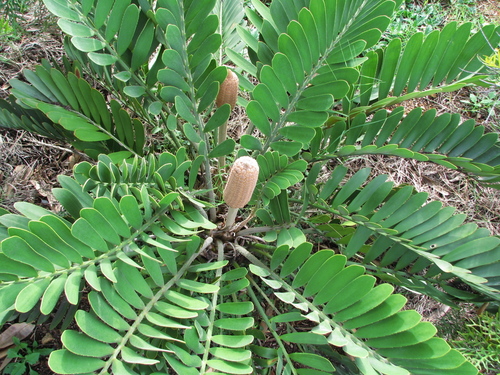
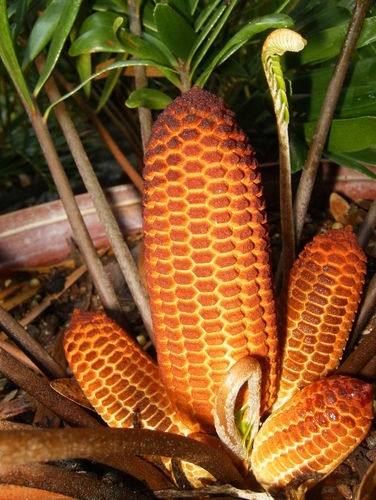
Zamia pumila L. is a cycad species that produces reddish seed cones with a distinct acuminate tip. Its leaves are 60–120 cm (2.0–3.9 ft) long, and bear 5 to 30 pairs of leaflets called pinnae. Each leaflet ranges in shape from linear to lanceolate or oblong-obovate, measuring 8–25 cm long and 0.5–2 cm broad, with distinct teeth along the tip. Leaflets are often revolute, and leaf petioles are prickly. This species is similar in many features to Z. furfuracea, but has slightly narrower leaflets. It is sometimes grouped with Z. integrifolia, which differs by having leaflets that are more commonly entire, meaning untoothed or only slightly toothed. Zamia pumila is a low-growing plant, with a trunk that reaches 3–25 cm in both height and diameter, and the trunk is often subterranean. Over time, it forms a multi-branched cluster with a large, tuberous root system that is actually an extension of the above-ground stems. Like other cycads, Z. pumila is dioecious, meaning individual plants produce either male or female reproductive cones. Male cones are cylindrical, growing 3–15 cm long, and are often clustered. Female cones are elongate-ovoid, growing 6–15 cm long and 4–6 cm in diameter. Pollination of this species is carried out by a specific insect, the cycad weevil Rhopalotria slossoni. This cycad grows in a variety of habitats that have well-drained sands or sandy loam soils, and it prefers filtered sunlight to partial shade. Currently, confirmed populations of Z. pumila exist in central Cuba, southern Puerto Rico, and the Dominican Republic on the island of Hispaniola. Populations formerly occurred in Haiti, but they have likely been extirpated there due to intensive land use. Populations in Puerto Rico have declined as a result of land clearing for cattle ranching. Ecologically, Z. pumila is poisonous, producing a toxin called cycasin that affects the gastrointestinal tract and nervous system. This toxin can be removed through careful leaching, and Taíno people historically used the roots and half-buried stems to obtain starch. The plant is also eaten by a variety of insects, including the Atala butterfly (Eumaeus atala), which sequesters cycasin toxin in its own body for defensive use.