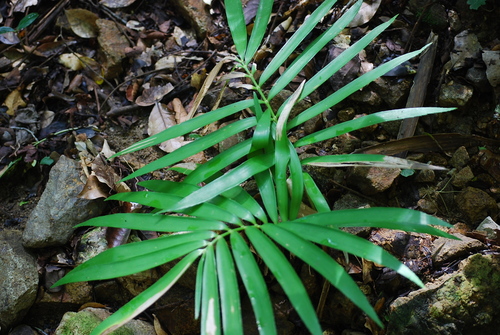
About Zamia furfuracea L.f.
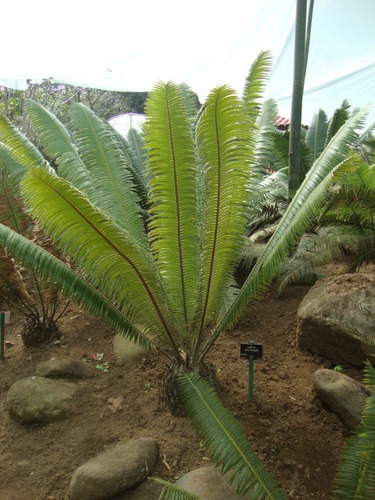
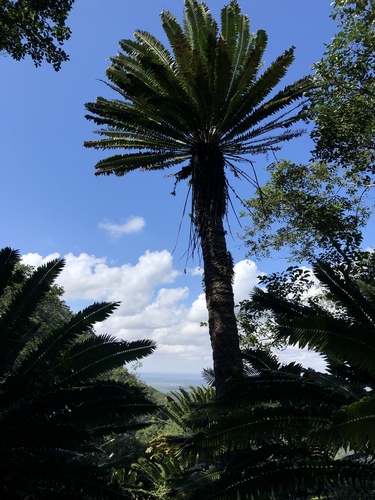
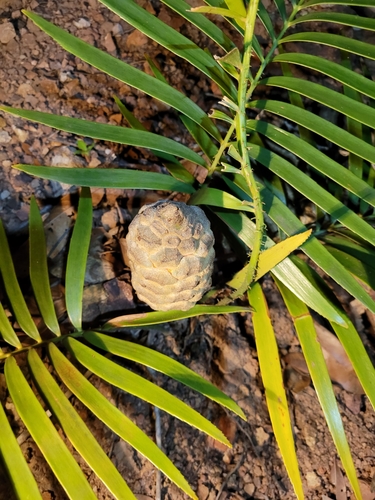
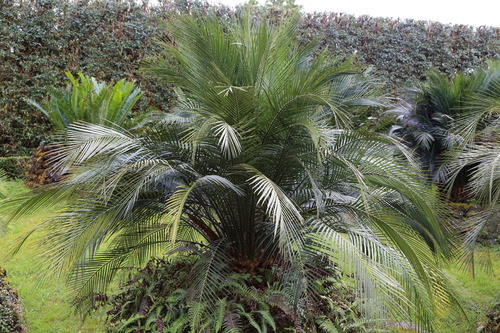
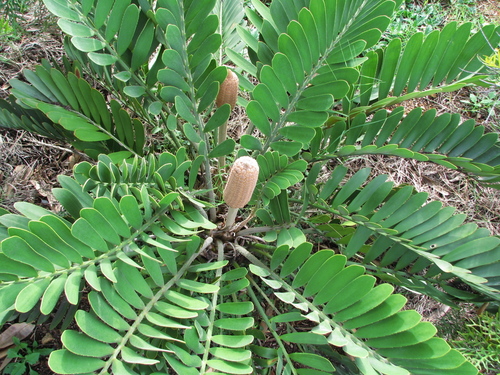
Zamia furfuracea L.f. has a short trunk that is sometimes subterranean, reaching up to 20 cm in both width and height, and is usually marked with scars from old leaf bases. Young plants grow very slowly, but growth speeds up after the trunk matures. When measured including its leaves, the whole plant typically reaches 1.3 m in height and about 2 m in width. Leaves radiate from the center of the trunk; each individual leaf is 50–150 cm long, with a 15–30 cm long petiole, and carries 6 to 12 pairs of extremely stiff, pubescent (fuzzy) green leaflets. These leaflets grow 8–20 cm long and 3–5 cm wide. Leaflets are occasionally toothed toward their tips. The circular leaf crowns resemble fern or palm fronds, and are held erect in full sun, and horizontal in shade. Zamia furfuracea is a dioecious species: egg-shaped female seed-producing cones and smaller clusters of male pollen-producing cones grow on separate individual plants. Female plants produce a rusty-brown cone at the center of their structure. Pollination of this species is carried out by a specific insect, the cycad weevil Rhopalotria mollis. All parts of this plant contain Cycasin and an uncharacterized nervous system toxin that are poisonous to animals, including humans. The seeds are toxic enough to kill small mammals such as dogs and cats. In humans, poisoning causes liver and kidney failure, eventual paralysis, and very rapid onset of dehydration. No effective treatment for this plant's poisoning is currently known. This species is easy to care for in cultivation. It grows best in moist, well-drained soil, and tolerates both full sun and partial shade, but does not grow well in constant deep shade. It is fairly tolerant of salt and drought, but needs protection from extreme cold. Occasional fertilization with palm-formulated food is recommended. After Cycas revoluta, this is likely the most popular cycad species in cultivation. In temperate regions, it is commonly grown as a houseplant; in subtropical areas, it is grown outdoors as a container plant or bedding plant.