About Zaedyus pichiy (Desmarest, 1804)
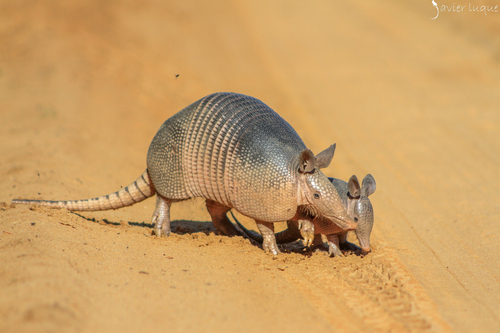
Pichis (Zaedyus pichiy) are relatively small armadillos. They measure approximately 27 cm (11 in) in body length, with a tail about 11 cm (4.3 in) long. Adult pichis weigh between 700 and 1,500 grams (25 to 53 oz), and males may be slightly larger than females.
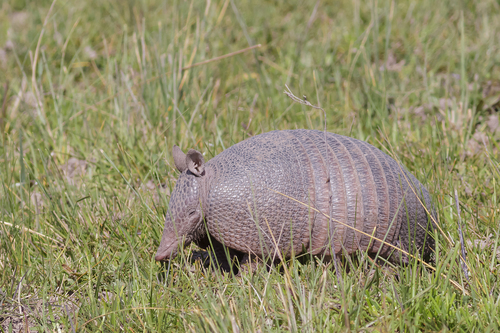
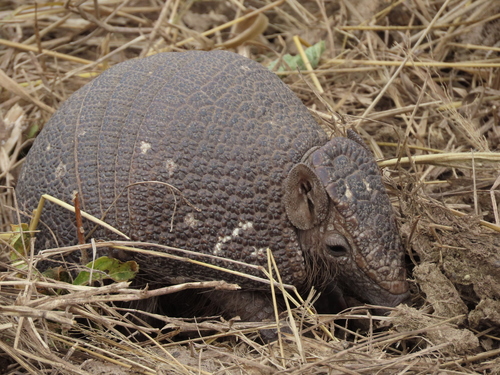
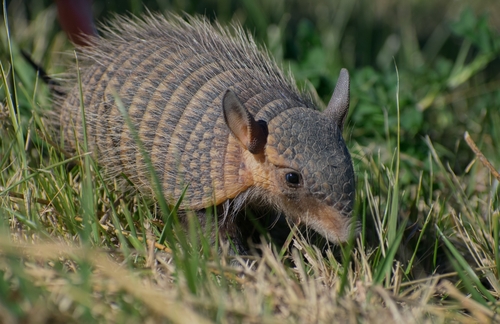
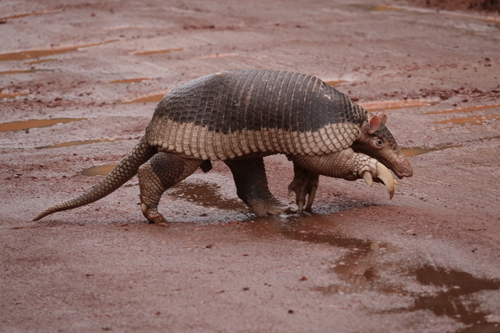
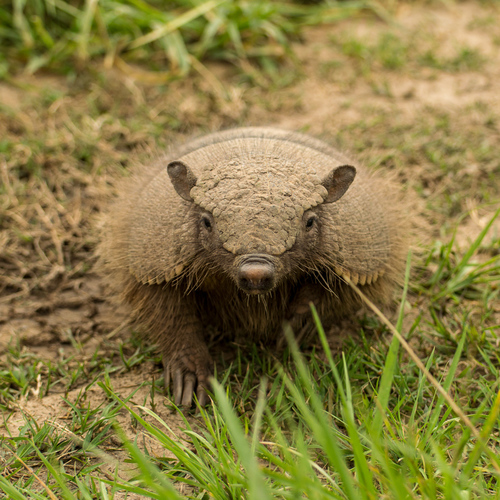
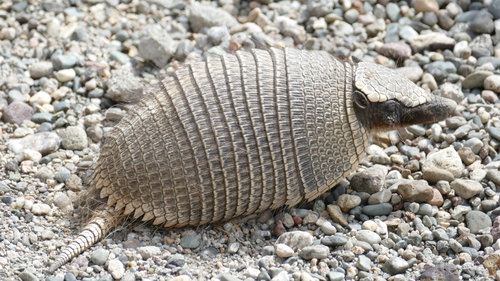
Their protective carapace ranges in color from light yellow to near-black. It is made up of heavy scapular and pelvic shields composed of rectangular osteoderms, separated by six to eight movable bands. An extra "nuchal" band sits in front of the scapular shield, there is a triangular shield on the top of the head, and additional osteoderms run along the tail. The underside of the pichi is covered in tan-colored hair, which grows thicker and longer in winter; a few long hairs also protrude through small holes near the posterior edge of some scales.
Pichis have well-developed claws on all four feet. They have short ears, and dark, relatively small eyes. They have eight teeth on each side of the upper jaw, and nine on each side of the lower jaw. One feature that distinguishes pichis from other similar armadillos like the six-banded armadillo is the absence of teeth on the premaxillary bone of the upper jaw.
Female pichis have two teats located in the chest region. Like most armadillos, they do not have a true vagina, and instead have a single urogenital sinus about 18 mm (0.71 in) long. The male pichi's penis is unusually long for a mammal, reaching about 60% of the animal's total body length.
Pichis are distributed across central and southern Argentina (Patagonia), west to the Andean grasslands of Chile, and south to the Strait of Magellan. Within this range, they most commonly live in arid or semiarid steppe grasslands, but can also be found in other environments that have sandy soils suitable for burrowing.