About Ypsolopha vittella (Linnaeus, 1758)
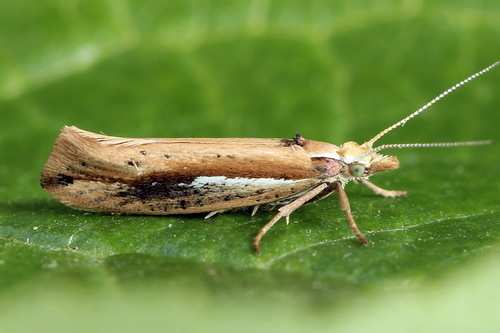
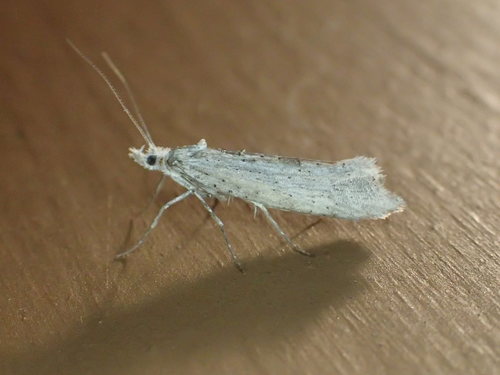
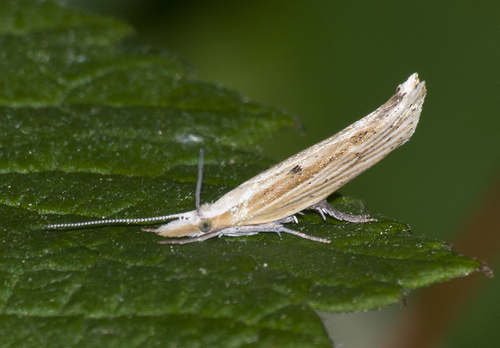
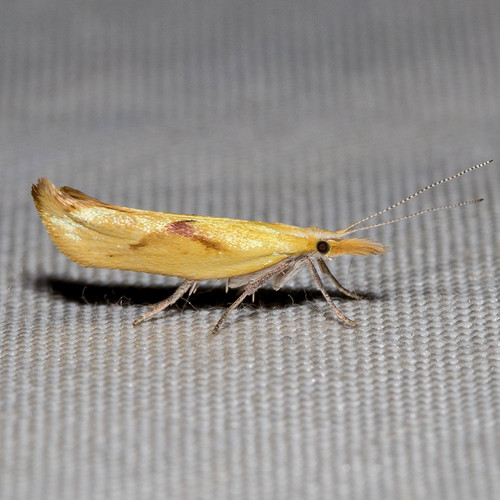
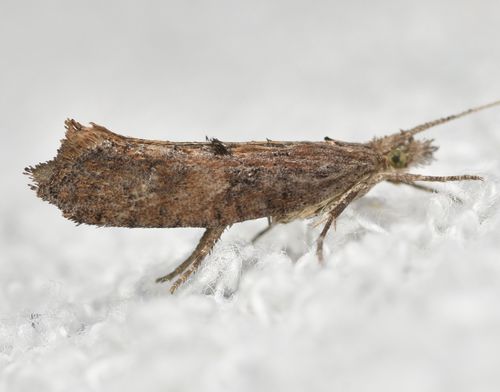
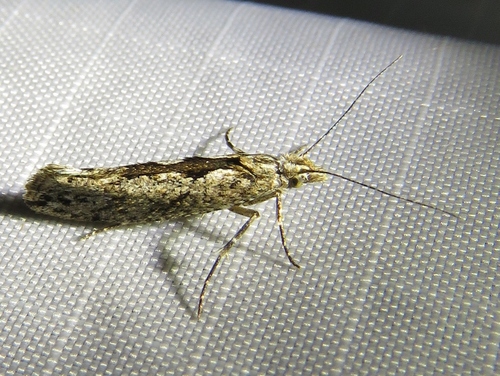
Ypsolopha vittella, commonly known as the elm autumn moth, is a moth species that belongs to the family Ypsolophidae. It can be found across a range extending from Europe, through Siberia, to Japan. This range also includes China, Asia Minor, and Middle Asia. Its native habitat is woodlands and copses. This species has a wingspan of 16 to 20 mm. Adults have light grey heads. Their forewings are pale grey or whitish-grey, sometimes mixed with brown, and sprinkled or strigulated with dark grey; some individuals are more or less fully suffused with blackish. A blackish or dark fuscous streak runs along the dorsum, forming upward-pointing triangular projections before and beyond the middle of the wing. The hindwings are grey. Full-grown larvae are brown-blackish, with a broad whitish dorsal stripe. Adult moths are active in flight from July to August. This species produces one generation per year. The larvae feed on the leaves and flowers of Ulmus (elm) and Fagus (beech) species. Additional recorded food plants for the larvae include Quercus (oak), Lonicera (honeysuckle), and Acer pseudosieboldianum (Korean maple).