About Ypsolopha scabrella (Linnaeus, 1761)
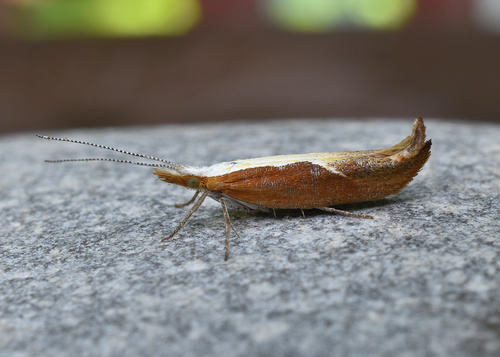
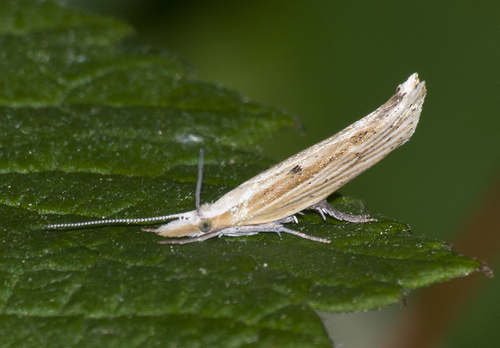
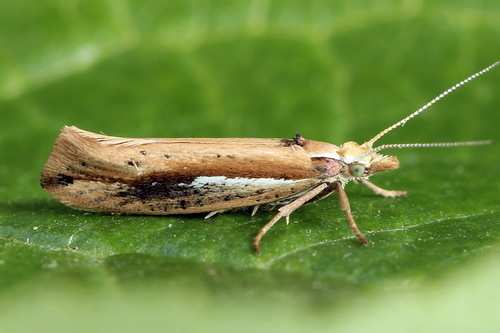
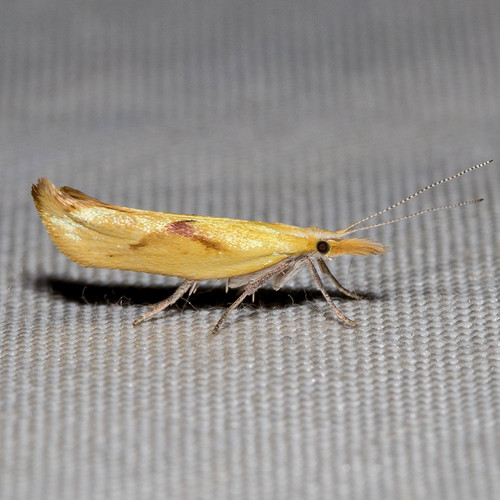
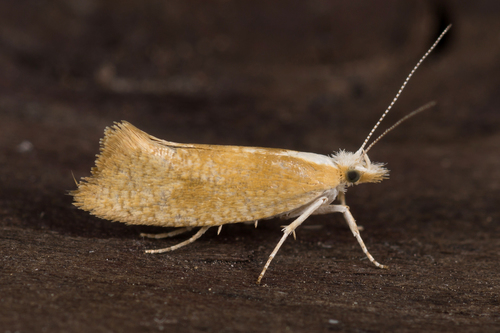
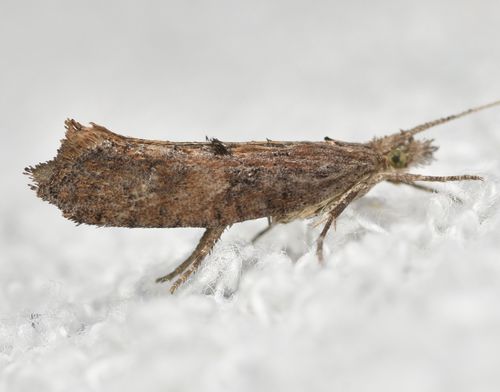
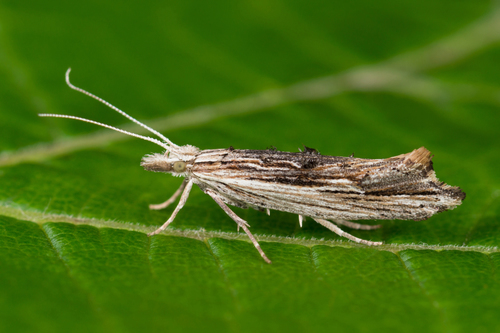
Ypsolopha scabrella, commonly known as the wainscot hooktip or wainscot smudge, is a moth species that belongs to the family Ypsolophidae. It was first described by Carl Linnaeus in 1761. This species is found in Europe, China, Russia, Asia Minor, and Middle Asia. Its wingspan measures 20–22 mm. The head and thorax are whitish, marked with dark fuscous streaks. Forewings have an acutely produced apex; they are whitish, more or less sprinkled with light purplish fuscous and black, with ferruginous-brown veins. The dorsal half is more or less fully suffused with dark purplish-fuscous, with one or two black streaks including a darker dorsal streak. There are three blackish scale tufts below the fold and one above the tornus on the forewings. Hindwings are light grey, and become darker toward the posterior end. Full-grown larvae are green, with a broad white dorsal line and black dots. Adult moths fly from July to September, with the exact timing varying by location. The larvae feed on apple, Crataegus, and Cotoneaster plants.