About Yponomeuta evonymella (Linnaeus, 1758)
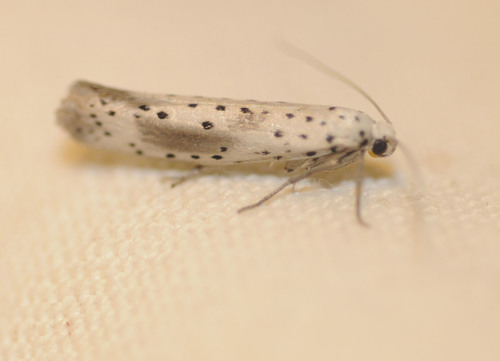
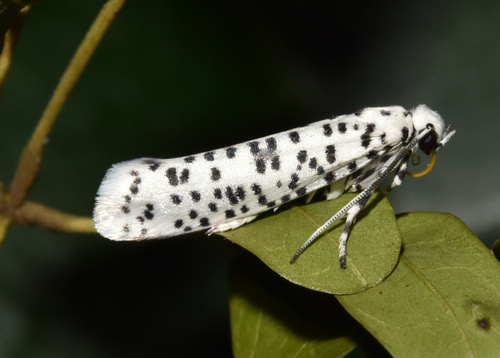
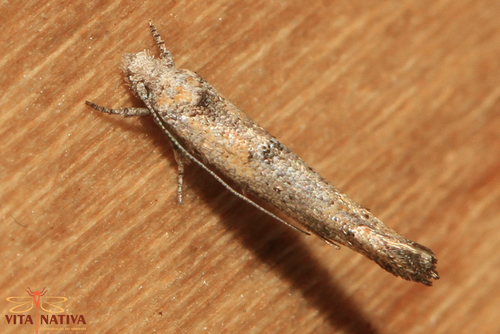
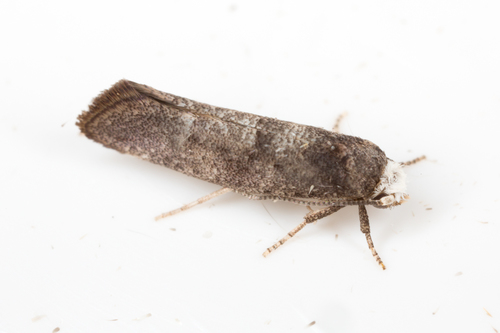
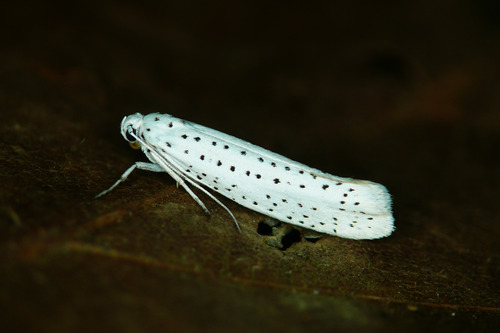
Yponomeuta evonymella, commonly called the bird-cherry ermine, is a distinctive moth species. Adult moths have a wingspan between 16 and 25 mm (0.6 and 1.0 in). Their forewings are white and marked with five longitudinal rows of small black spots. The shorter, wider hindwings are smoky brown with dark edging. Their fine, thread-like antennae extend to two-thirds the length of the wings. When at rest, the moths roll their wings and hold them close to the body, giving their body an almost tubular appearance. At the smallest disturbance, they skip away and drop skillfully to the ground. This species can be found across nearly all of Europe. It inhabits river lowlands up to the deciduous forest border, living in alluvial forests, bushy, tree-lined stream banks, gardens, and parks. Population sizes fluctuate from year to year, and mass outbreaks that fully defoliate host trees are not uncommon. The primary host plant of the bird-cherry ermine is bird cherry; caterpillars are occasionally found on cherry or buckthorn. Females lay their eggs on winter buds. Young caterpillars overwinter under bud scales, becoming active once buds burst in spring. Larvae feed through late May to early June, then pupate inside tightly packed shared webs on the tree trunk or among low herbaceous plants below. Because caterpillars stay hidden within a large web-like nest, they can fully defoliate an entire tree without disturbance. Affected trees usually survive, but will have reduced growth in following seasons. Bird-cherry ermine caterpillars have few natural predators, and their populations are primarily controlled by attacks from parasitic wasps. Adult moths are nocturnal, active and flying between July and August. They feed on nectar and are attracted to lights.