About Xylaria polymorpha (Pers.) Grev.
Xylaria polymorpha (Pers.) Grev. belongs to Ascomycetes, a phylum of sac fungi within division Mycota. This group of fungi is defined by a saclike structure called the ascus, which holds 4 to 8 ascospores during the sexual stage. Sac fungi are grouped into subgroups based on two characteristics: whether asci develop singly or are produced in one of several types of fruiting structures called ascocarps, and the method that ascospores are discharged. Unlike some other species in this class, X. polymorpha is inedible.
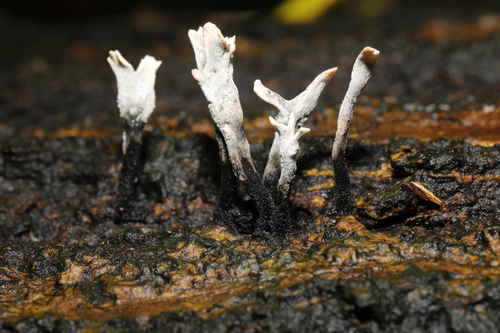
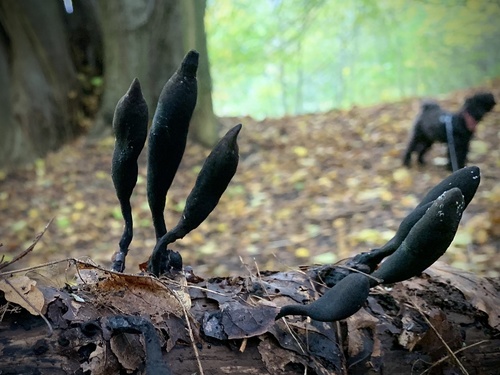
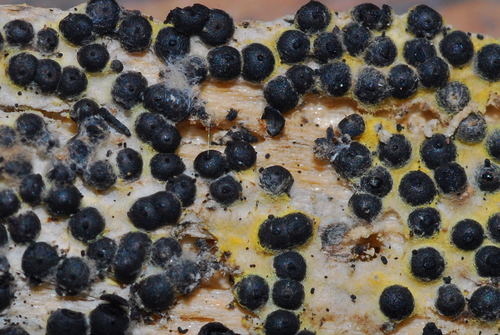
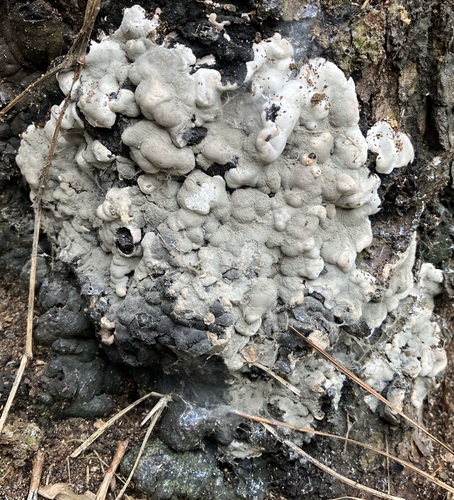
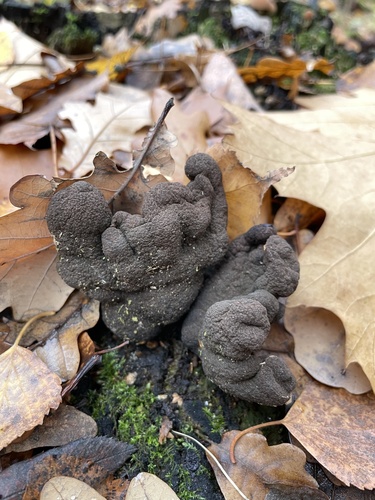
This fungus often grows with many separate finger-shaped structures, but these individual structures may sometimes fuse together. Mature fruiting bodies reach 3–10 centimetres (1+1⁄4–4 inches) tall, with an external color of black or brown, sometimes with blue or green shades. The interior of the fruiting body is white, surrounded by a blackened dotted area. This blackened area is made up of tiny structures called perithecia, which hold a layer of asci that contain the ascospores. The asci elongate into the ostiole, and discharge the ascospores outward. Spore distribution is a lengthy process that can sometimes take several months to complete. The spore print of X. polymorpha is black. In spring, this fungus often produces a layer of white or bluish asexual spores called conidia, which grow on its surface and the surrounding area.
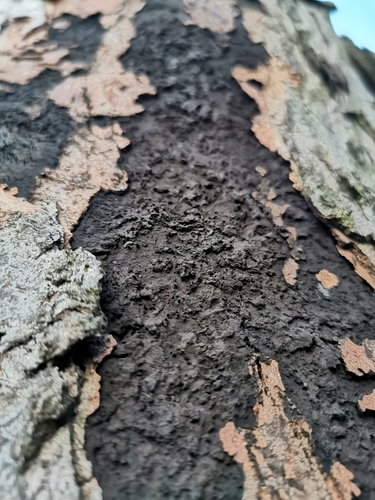
Geographically, X. polymorpha is distributed across all six inhabited continents. It is a common species of forest and woodland areas, usually growing from the bases of rotting or injured tree stumps and decaying wood. It is also known to colonize other woody and plant substrates including woody legume pods, petioles, and herbaceous stems.