About Xylaria longipes Nitschke
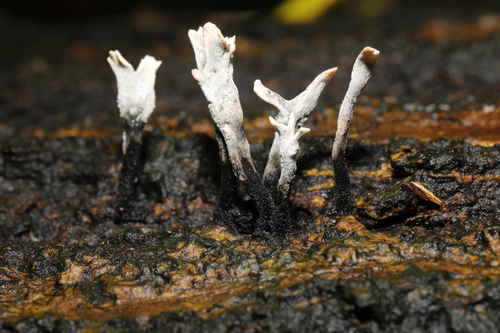
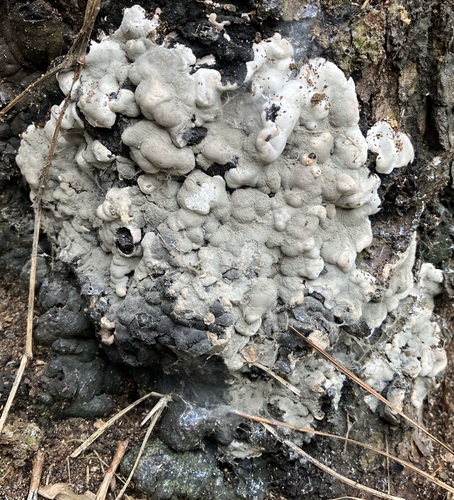
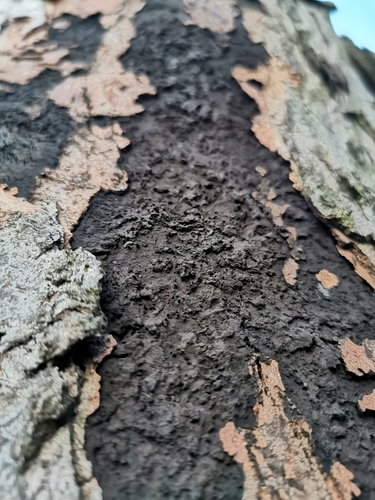
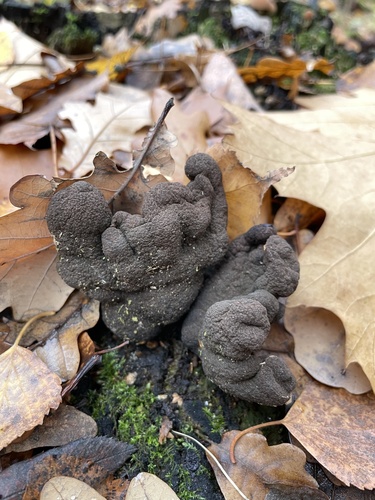
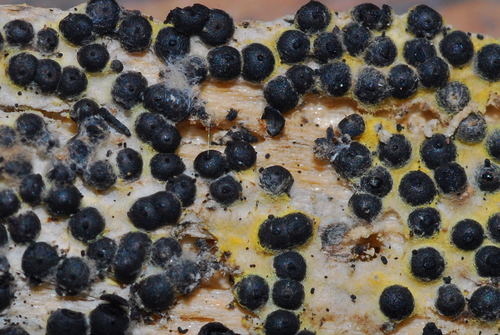
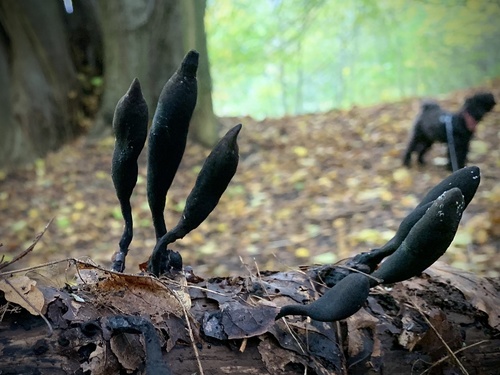
Xylaria longipes Nitschke produces roughly club-shaped fruit bodies that grow 2 to 8 centimeters tall and reach a maximum thickness of 2 centimeters. The top of the fruit body is rounded, and it can have a fairly long stem, though the stem is sometimes almost entirely absent. The surface color of the fruit body changes with age: younger specimens are gray or fairly brown, and they darken to black as they mature. As the fruit body ages, its surface cracks and develops scales. X. longipes can be distinguished from the similar species Xylaria polymorpha, commonly called dead man's fingers, by three key traits: it is somewhat more slender, it has a more distinct stalk, and it produces smaller spores. The spores of X. longipes measure 12 to 16 by 5 to 7 micrometres, while the spores of X. polymorpha measure 20 to 32 by 5 to 9 micrometres. X. longipes has spindle-shaped spores with a smooth surface, which feature germ slits. This fungus is distributed across Europe, Asia, and North America. It is a saprotroph that grows directly on dead hardwood wood, including fallen branches and stumps, and causes soft rot in the dead wood it colonizes. In Europe, X. longipes prefers the wood of sycamores, while collections from North America have most often been found growing on the wood of maples and beeches. It can grow either singly or in groups, and it is more likely to grow singly than X. polymorpha. Xylaria longipes is inedible, but a 2008 study found that this species can modify wood to make it more suitable for making violins. Several chemical compounds have been isolated from this fungus: the antifungal compound xylaramide, the antioxidant tyrosol, and a derivative of the antifungal compound sordarin, which was first isolated from Sordaria araneosa.