About Xiphophorus variatus (Meek, 1904)
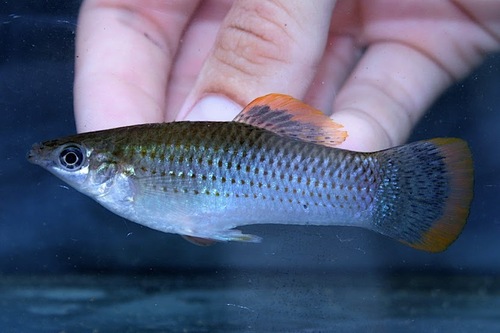
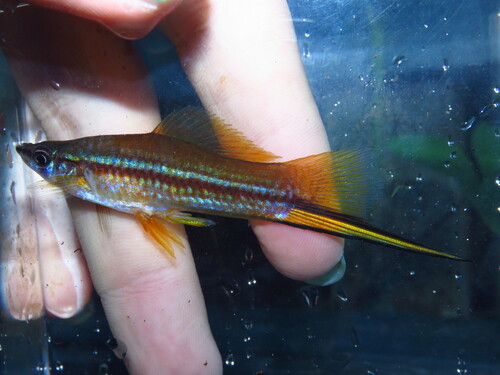
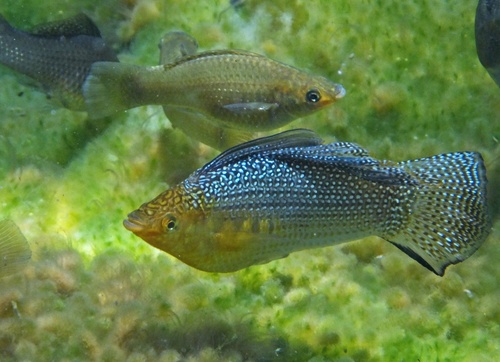
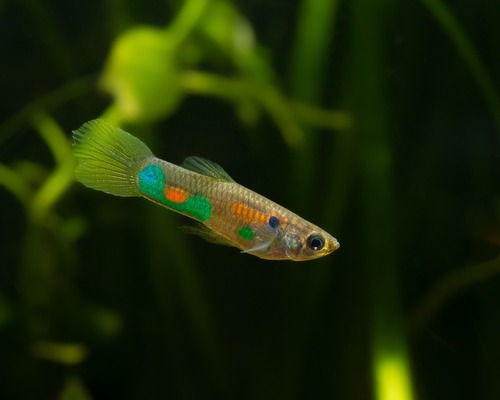
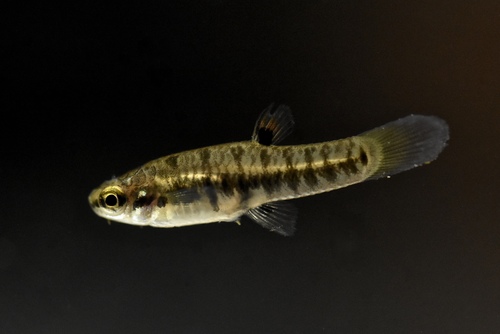
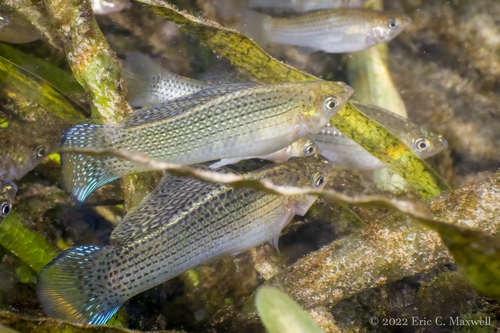
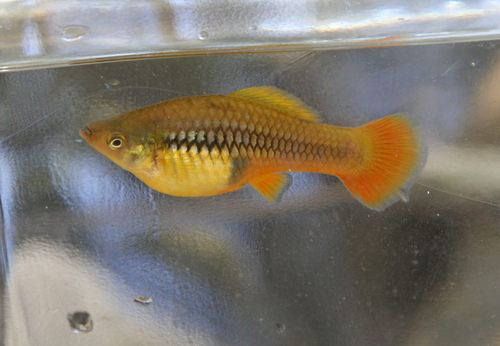
Xiphophorus variatus, commonly called the variable platyfish, reaches a maximum total length of 7.0 cm, or 2.8 inches. Wild individuals are olive-colored, with black marbling or spots on the side of the caudal peduncle. Large males have blackish blotches on the dorsal fin. Unlike some other species in the genus Xiphophorus, X. variatus does not have a claw at the tip of the fifth anal fin ray. The fourth pectoral fin ray has well-developed serrae, which are saw-like notches. This species typically has 20 to 24 lateral scales, 10 to 12 dorsal fin rays, and two rows of jaw teeth. Males have a more pointed, needle-like anal fin, while females have a more triangular anal fin. The variable platyfish is endemic to the Atlantic slope of Mexico, ranging from southern Tamaulipas south to northern Veracruz. It is considered uncommon throughout its native range. The species has been introduced and established in many locations outside its native range, mostly from releases connected to the aquarium trade. In the United States, it has established populations in canals along the eastern shore of Tampa Bay, Florida, and in Gainesville, Florida. It is also naturalized in springs in Beaverhead, Granite, and Madison counties in Montana. The species has also spread to several other countries outside its original range, including Colombia, Singapore, and Hong Kong. Hong Kong has recorded a negative impact on local native species from this introduced platyfish, caused by its extremely prolific breeding. Variable platyfish inhabit slow-moving, vegetated waters including canals, ditches, and warm springs. They are omnivorous, and their diet includes plant matter as well as small crustaceans, insects, and annelid worms.