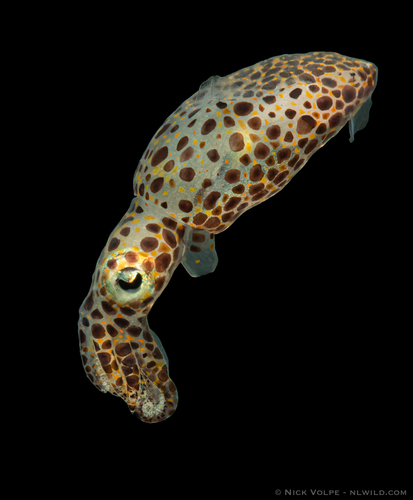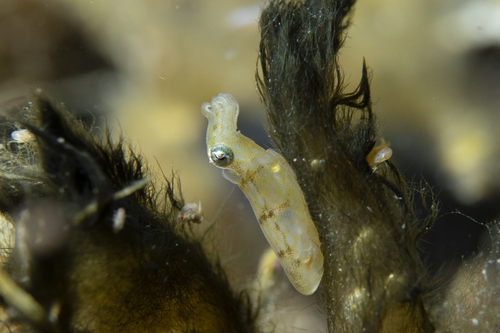
About Xipholeptos notoides (S.S.Berry, 1921)
Xipholeptos is a genus of squid in the family Idiosepiidae. This genus is monotypic, meaning it contains only one recognized species: Xipholeptos notoides, which is commonly known as the southern pygmy squid. This species was originally classified under the name Idiosepius notoides. The southern pygmy squid is native to the southwestern Pacific Ocean, in waters off southern and eastern Australia. It lives in shallow, inshore waters, and has been recorded off the coasts of New South Wales, South Australia, Tasmania and Victoria. Females of this species grow to a mantle length of 25 mm, while males have not been recorded with a mantle length exceeding 15.8 mm. This species lives in seagrass beds within bays and inlets. It feeds at night on small crustaceans, such as shrimp. During the day, southern pygmy squids stay hidden within seagrass, and adhere to seagrass leaves using a glue excreted by a gland on the dorsal surface of their bodies. Females of the species attach their eggs to seagrass blades, most often on species from the genera Heterozostera and Zostera. Researchers believe this species goes through a pelagic stage during its development. The type specimen of Xipholeptos notoides was collected off Goolwa, South Australia, Australia, and is currently held at the South Australian Museum in Adelaide. Molecular data indicates that Xipholeptos populations from western Australia belong to a distinct species, but this potential new species has not been formally described yet, and further study is required.