About Xipholena punicea (Pallas, 1764)
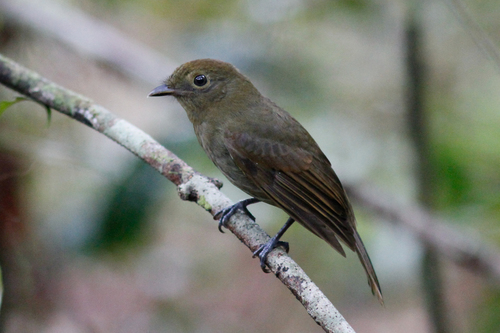
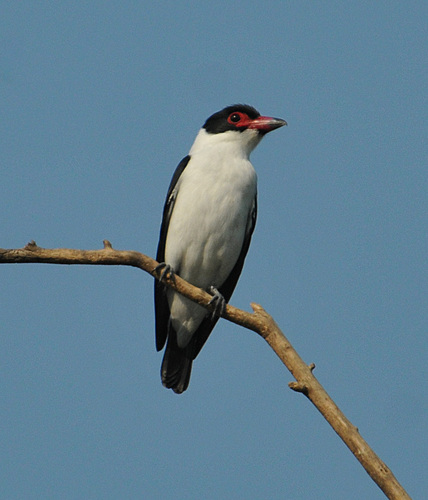
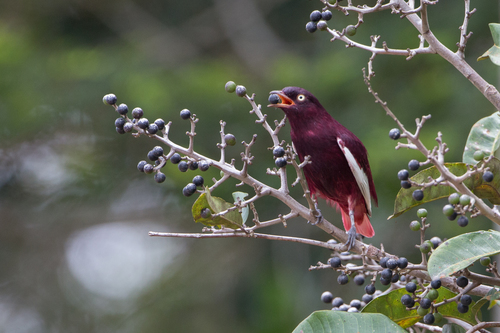
Xipholena punicea, commonly called the pompadour cotinga, is a sexually dimorphic species. Males display bright, complex coloration, while females are paler and grey. Males have yellow eyes, stark white primary coverts with black wing tips, and a glossy wine-red head and body. This distinctive burgundy color in males was previously thought to result from a combination of blue structural color and red carotenoid, but recent research on this cotingid species has confirmed that it does not use structural coloration at all. Instead, its distinct color comes from eight different carotenoid pigments, six of which are unique to Xipholena punicea. These six species-specific pigments are ring-substituted methoxy carotenoids, and they likely form through chemical reactions of other carotenoids obtained from the species' diet. No other known bird species uses the same carotenoid production pathways that the pompadour cotinga uses, making these unique pigments an important point of study for this species. The complex process of creating these pigments also produces greater diversity in the resulting carotenoid products, which further distinguishes X. punicea from other members of its genus. Both male and female pompadour cotingas have a short beak and wide gape, a trait shared by other members of the Cotingidae family that indicates this species has a frugivorous, or fruit-eating, diet. Eggs of this species are not well documented, but what records exist describe them as bluish-grey with blotches. Chicks change in color from white to blotched grey as they grow; this color change may act as camouflage while they are in the nest. Pompadour cotingas live in the canopy layer of rainforests across South America, within established ranges in Brazil, Colombia, Venezuela, and the Guianas. In the Northern Peruvian Amazon, they inhabit varillal (white sand forest) regions, and forage in groups in Caraipa tereticaulis trees along the Nanay River. This species generally occupies areas with thick vegetation and white sandy soil that has been darkened and acidified by decomposing plant material. Rare vagrant individuals have been sighted outside the species' established range in Bolivia and eastern Ecuador. Wild observations of the pompadour cotinga are limited. Most existing accounts focus on the species' complex mating ritual, though the exact timing of its breeding season remains unknown. When mating, small flocks of males gather in areas where a female has been observed building a nest. The males then engage in ritualized chasing, which is thought to communicate a dominance hierarchy among the males to the watching female. As each male flies to take over a perch occupied by another male, he flashes his bright white wings over the area where the female watches from below. These mating displays are mostly silent from the males, with only a faint noise produced by the movement of their wings. A pair forms shortly after breeding, but this pairing is short-lived and ends once nesting begins.