About Xerus erythropus (É.Geoffroy Saint-Hilaire, 1803)
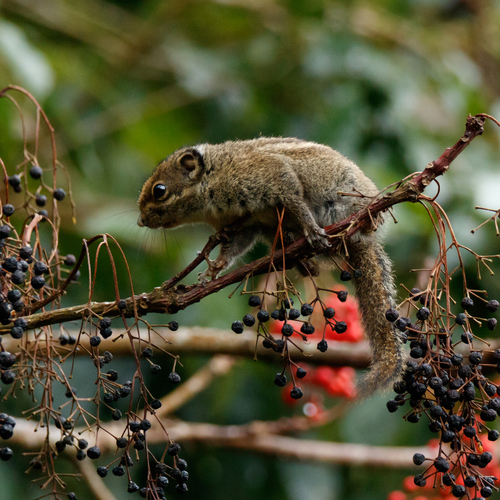
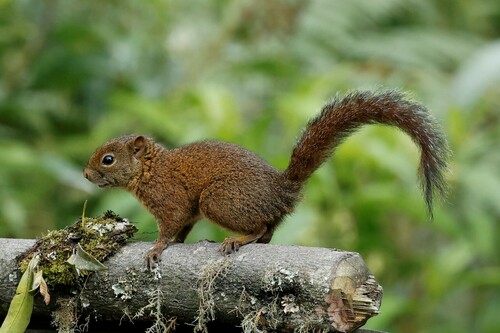
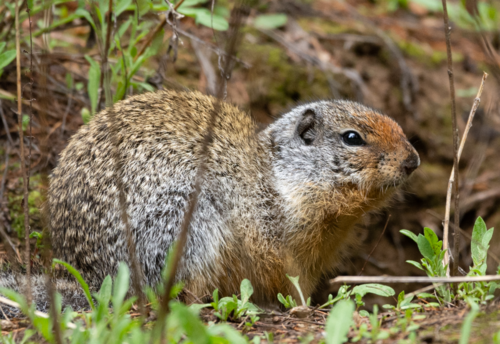
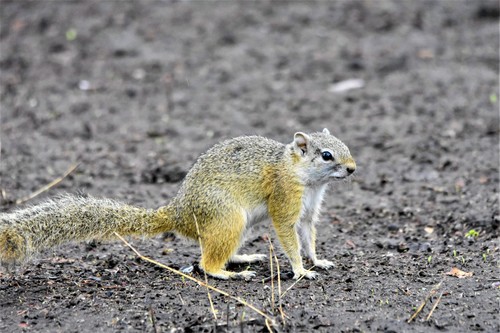
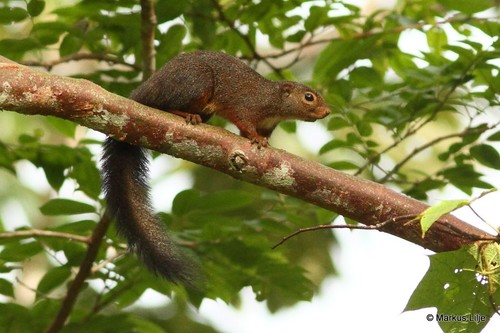
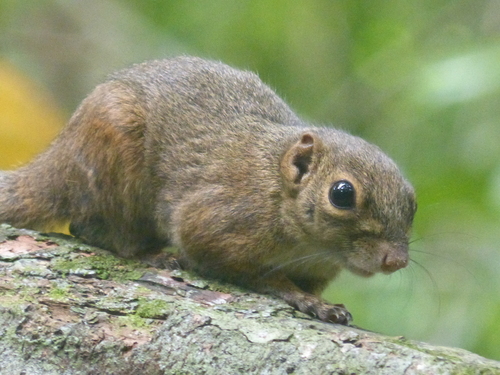
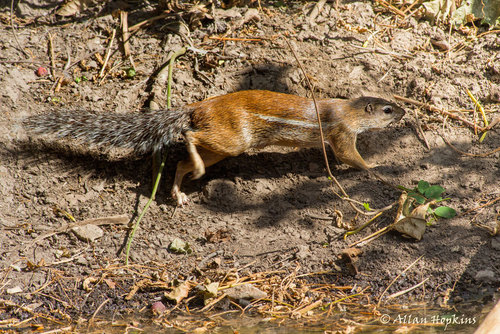
Xerus erythropus, commonly called the striped ground squirrel, is a moderately large ground squirrel species. Adults range from 22 to 29 centimetres (8.7 to 11.4 in) in body length, and their tails measure 19 to 26 centimetres (7.5 to 10.2 in), nearly matching body length. Adult body weight falls between 0.5 and 1 kilogram (1.1 and 2.2 lb). Their fur is short and bristly; most of the body is pale sandy to dark brown, while the underparts are whitish and nearly hairless. A narrow stripe of pure white fur runs down the flanks from the shoulders to the hips. Tail hairs are much longer than body hairs, fan out to the sides, and are multi-coloured along their length, giving the tail a grizzled appearance. This species has small ears, a long muzzle, and a projecting, almost pointed nose. Its limbs are pale, with large feet and long, straight claws. Unlike the similar Cape and mountain ground squirrels which have only two pairs of teats in females, female striped ground squirrels have three pairs of teats. Striped ground squirrels are distributed across Africa south of the Sahara and north of the tropical rainforest, stretching from the Atlantic coast in the west to Ethiopia and Kenya in the east. They are not present in the Horn of Africa. They occupy open or disturbed forests and savannah, often close to cultivated land; at the edges of their range, they also inhabit coastal scrubland and semidesert regions. Fossils attributed to this species have been found in Pliocene-aged deposits in Ethiopia. Six subspecies are currently recognized: Xerus erythropus erythropus, found in West Africa from Mauritania to the Central African Republic, with a small relict population in the Souss plains of Morocco; X. e. chadensis, found in eastern Niger, Nigeria, Cameroon, southern Chad, and central western Sudan; X. e. lacustris, found in northern Congo; X. e. leucombrinus, found in eastern Uganda, southeastern Sudan, Ethiopia, Eritrea, and northern Kenya; X. e. limitaneus, found in southwestern Sudan and neighboring parts of Chad and the Central African Republic; and X. e. microdon, found in southern Kenya.