About Xerophyta retinervis Baker
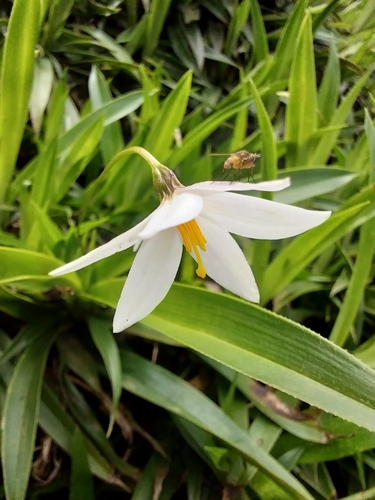
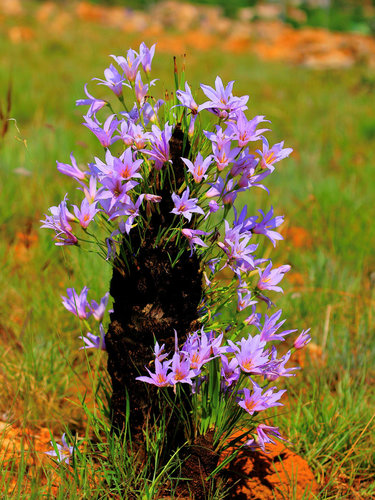
Xerophyta retinervis Baker is a deciduous perennial plant that grows up to 2 metres tall. It has stout, erect stems that are densely covered in persistent, fibrous leaf bases, which are often charred and blackened by veldfires. Strap-shaped leaves grow in tufts along the stems. Its fragrant flowers bloom after fire or rain, and they are blue or mauve, or rarely white. The small seed capsules of this species are covered in rough hairs and split open loculicidally to release numerous small, black angled seeds that are about 2 mm long. Xerophyta retinervis is tolerant of extreme conditions including drought, fire, and low temperatures. Its old leaf bases are arranged to funnel rainwater down to the core of the stem, where the water is absorbed by densely packed roots that run along the entire length of the stem. This species is widespread across seasonally high rainfall regions. It grows in grasslands located on rocky outcrops, and on sheetrock covered with a thin layer of shallow soil. It can be found in KwaZulu-Natal, Mpumalanga, Gauteng, Limpopo, North West Province, Botswana and Eswatini. There are around 43 species in the genus Xerophyta, and nine of these species are native to South Africa. The generic name Xerophyta comes from the Greek words 'xeros', meaning 'arid', and 'phytos', meaning 'plant', a reference to the genus's drought tolerance. The specific epithet retinervis is Latin for 'vein network'. This species was first described by Baker in 1875, from specimens collected by Burke & Zeyher in the Magaliesberg. Its recorded synonyms include Barbacenia retinervis (Baker) Burtt Davy, Hypoxis vellosioides Harv. ex Baker, Vellozia clavata (Baker) Baker, Vellozia retinervis (Baker) Baker and Xerophyta clavata Baker.