About Xenopus muelleri (Peters, 1844)
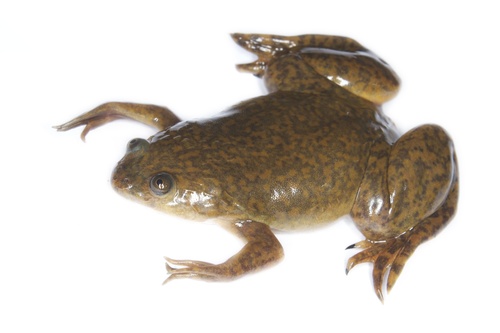
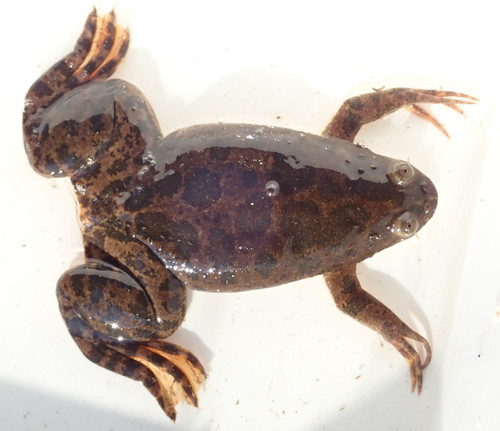
Müller's clawed frog, with the scientific name Xenopus muelleri (Peters, 1844), can be distinguished from the closely related Xenopus laevis by its relatively longer subocular tentacle. Its natural habitats include subtropical or tropical dry forests, subtropical or tropical moist lowland forests, dry savanna, moist savanna, subtropical or tropical dry shrubland, subtropical or tropical moist shrubland, subtropical or tropical dry lowland grassland, subtropical or tropical seasonally wet or flooded lowland grassland, subtropical or tropical high-altitude grassland, rivers, intermittent rivers, swamps, freshwater lakes, intermittent freshwater lakes, freshwater marshes, intermittent freshwater marshes, freshwater springs, arable land, pastureland, rural gardens, water storage areas, ponds, open excavations, canals, and ditches. In regions where the geographic distributions of X. laevis and X. muelleri overlap, X. muelleri prefers warmer areas at lower elevations.