About Xanthoparmelia mougeotii (Schaer. ex D.Dietr.) Hale
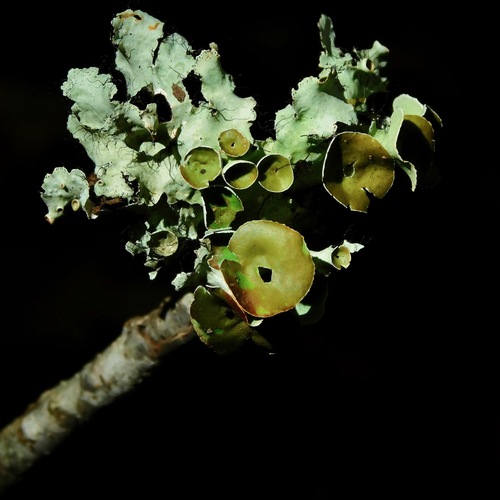
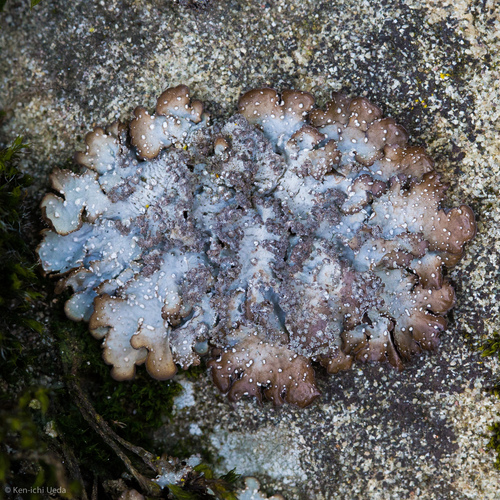
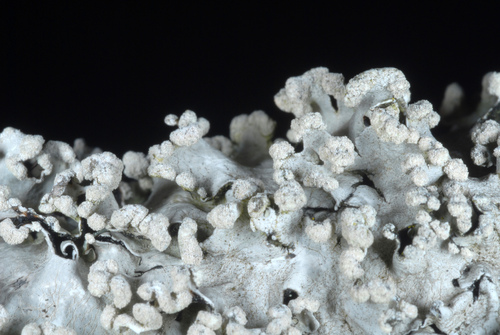
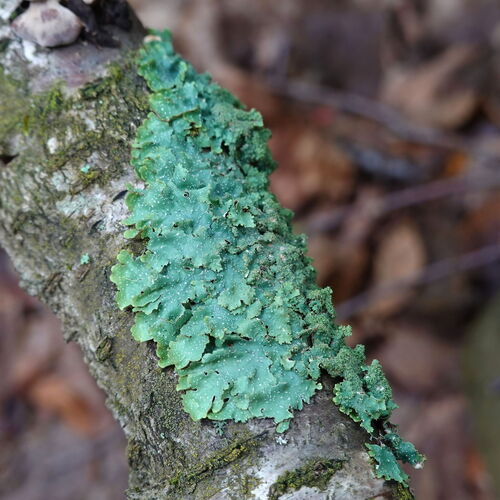
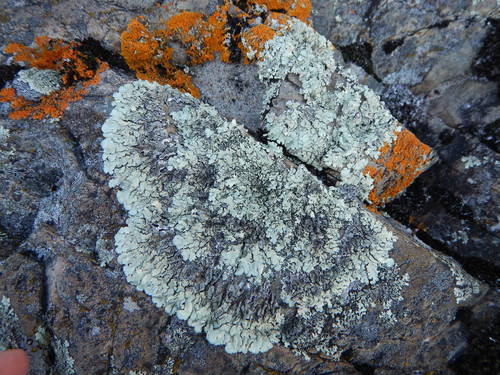
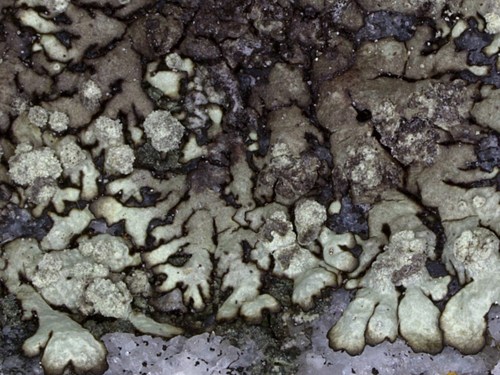
Xanthoparmelia mougeotii is a foliose lichen, with a thallus that usually reaches 2–4 cm (0.8–1.6 in) in diameter. Its thallus is made up of flattened, greenish-grey to yellowish-grey lobes around 0.2–0.5 mm wide, which are closely attached to the growing substrate. The lower surface of the thallus is dark brown to black, and bears short, simple rhizines that measure 0.1–0.2 mm long. Apothecia are rare in this species; they have brown discs and sorediate margins. The main secondary compounds produced by Xanthoparmelia mougeotii are usnic acid, stictic acid, and norstictic acid. This lichen typically grows on rocks, especially smooth, vertical rock surfaces. It is commonly found in scree fields, rock outcrops, cliffs, on boulders, stones, pebbles, or siliceous conglomerates. It occurs in temperate regions, and has been recorded in Europe, the United States including Hawaii, the Dominican Republic, South America, South Africa, and Asia.