About Xanthocyparis nootkatensis (D.Don) Farjon & Harder
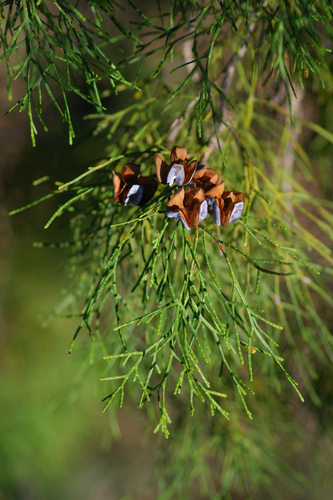
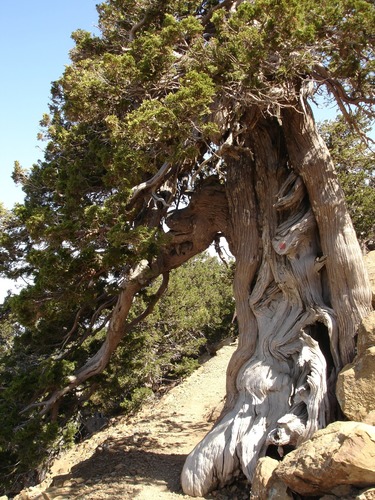
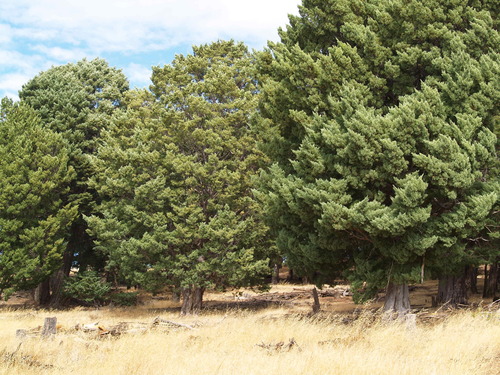
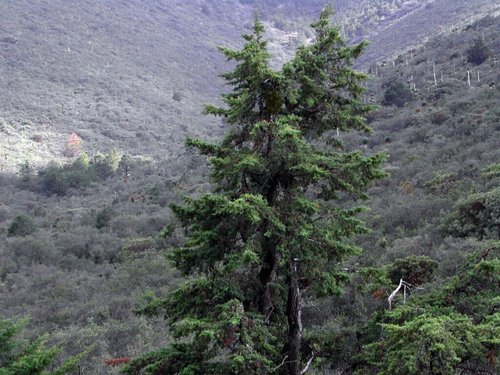
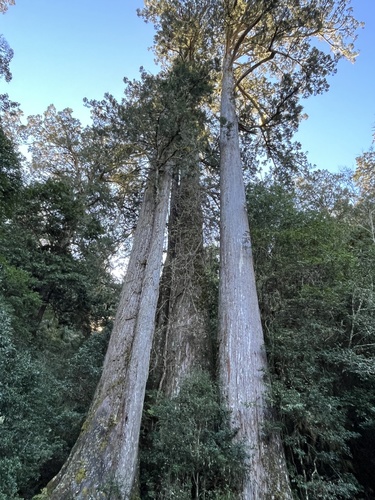
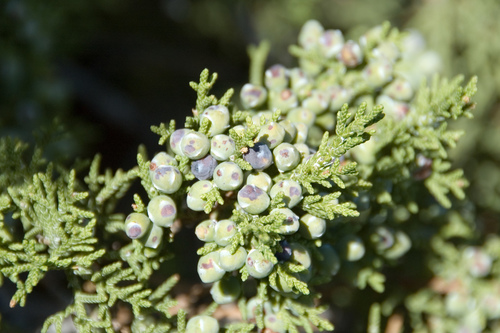
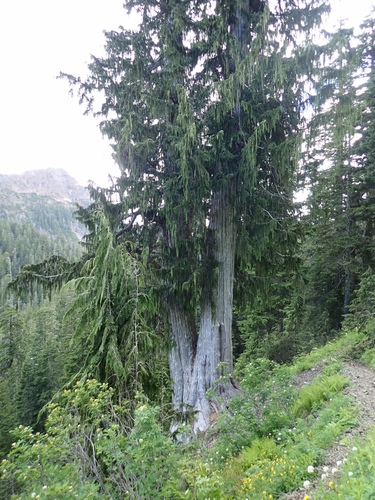
Xanthocyparis nootkatensis (also referenced taxonomically as Callitropsis nootkatensis, commonly called Nootka cypress or yellow cedar) is an evergreen conifer. It typically grows up to 40 meters (131 ft) tall, and exceptionally reaches 60 m (200 ft), with trunk diameters of 3.4 to 4 m (11 to 13 ft). Young trees have thin, smooth, purplish bark that becomes flaky and gray with age. Branches are most commonly pendulous, bearing foliage in flat sprays made of dark green scale-shaped leaves that measure 3–5 millimeters (1⁄8–3⁄16 in) long. Its seed cones mature every two years and bear 4 scales, occasionally 6. The cones are similar in appearance to cones of Cupressus lusitanica (a species that can also produce foliage in flat sprays), but are somewhat smaller, typically 8–14 mm (5⁄16–9⁄16 in) in diameter. Each scale has a pointed triangular bract approximately 1.5–2 mm long; this bract shape matches other Cupressus, and differs from the crescent-shaped, non-pointed bract found on Chamaecyparis cone scales. The species produces small winged seeds that only disperse over short distances, and only a small percentage of produced seeds are viable. The oldest known Nootka cypress specimens grow in the Caren Range on the west coast of British Columbia; one documented specimen there is 1,834 years old, and some specimens may exceed 3,000 years of age. This species is one of the two parent species of the hybrid Leyland cypress; the other parent is Monterey cypress (Hesperocyparis macrocarpa), which was also formerly placed in the genus Cupressus, but belongs to the North American Hesperocyparis clade. Phylogenetic studies have generally found this clade to be closer to C. nootkatensis than Cupressus sensu stricto, the Old World clade of true cypresses. This species grows in moist areas of coastal mountains of the Pacific Northwest, including the Cascade Range, from the Kenai Peninsula in Alaska to the Klamath Mountains in the northernmost part of California. It occurs at higher elevations than Thuja plicata (western redcedar), sometimes takes a krummholz growth form, and can even grow on very rocky sites near the California-Oregon border. In Southeast Alaska, it is found at elevations of 600 to 750 m (1,970 to 2,460 ft), and from coastal British Columbia into Oregon, it occurs at elevations between 750 and 2,000 m (2,460 and 6,560 ft). Isolated groves near Nelson, British Columbia, and John Day, Oregon, may be descendants of local populations that survived the Last Glacial Period. This tree grows best where annual precipitation exceeds 150 centimeters (59 in), particularly with deep seasonal snow, and temperatures do not often drop below −18 °C (0 °F). Its flexible branches do not typically break under the weight of snow. It is shade tolerant, but less shade tolerant than its common associates Tsuga mertensiana (mountain hemlock) and Abies amabilis (Pacific silver fir), and grows slowly. Anti-fungal compounds produced by the tree contribute to its long lifespan, and it is rarely attacked by insects, though it is susceptible to heart rot. In Alaska, where the species is most often called yellow cedar, extensive research has studied large-scale die-offs of yellow cedar stands. These studies confirm that the species relies on thick coastal snowpack to insulate its shallow roots from cold Arctic winter temperatures. Climate change has led to thinner, less persistent snowpacks, which increases the species' susceptibility to freeze damage. This mortality has been recorded across 7% of the species' total range, spanning approximately 10 degrees of latitude from northern Southeast Alaska to southern British Columbia. Substantial additional future mortality is considered likely due to continuing warming temperatures and decreasing snowpack. The U.S. Fish & Wildlife Service is currently reviewing whether to list the species as threatened or endangered. Indigenous peoples of the Pacific Northwest Coast use Nootka cypress extensively, alongside another large cypress relative, Thuja plicata (western redcedar). While western redcedar's wood and inner bark were preferred for large projects such as houses and canoes, Nootka cypress's stronger inner bark was used for smaller vessels, utensils, canoe paddles and baskets, as well as thread for clothing and blankets. The species has been regarded as one of the finest timber trees in the world, and was exported to China during the 19th and 20th centuries. Its wood is used for flooring, interior finish, and shipbuilding. The high quality of its heartwood makes it one of the most desired firewood sources on the U.S. West Coast; it burns very hot and retains embers for a long time, and wood from a tree that died up to 100 years prior can still be used for firewood.