About Xanthocephalus xanthocephalus (Bonaparte, 1826)
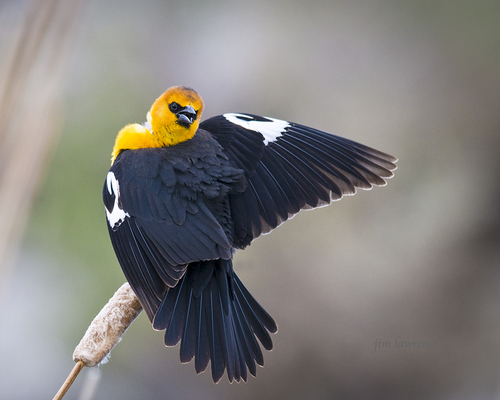
Yellow-headed blackbirds (Xanthocephalus xanthocephalus) are relatively large blackbirds defined by their large, yellow heads. They range from 8.3–10.2 inches (21–26 cm) in length, have a wingspan of 16.5–17.3 inches (42–44 cm), and weigh 1.6–3.5 ounces (44–100 g). All adults have a pointed bill. Adult males are mostly black, with yellow heads and breasts, and carry a white wing patch that is sometimes only visible when they are in flight. Adult females are mostly brown, with dull yellow throats and breasts. Immature birds of both sexes are brown, with duller yellow plumage than adult males, and immature males also have some white wing patches. Both sexes of this species resemble the corresponding sexes of the smaller South American yellow-hooded blackbird. In winter, these birds migrate to the southwestern United States and Mexico, often traveling in huge flocks mixed with other bird species. The only areas of the United States where yellow-headed blackbirds are permanent residents are the San Joaquin Valley in California and the Lower Colorado River Valley in Arizona and California. This species is an extremely rare vagrant to western Europe, and some records are suspected to be of individuals that escaped from captivity. During migration, males and females travel separately; in spring migration, males typically reach breeding marshes 2–3 weeks earlier than females. Research shows that females choose their breeding sites based on how successful reproduction was at that site in previous years, measured as the number of young produced per breeding female. The breeding habitat of the yellow-headed blackbird is marshes across North America, mostly located west of the Great Lakes. They favor marshes with dominant vegetation from the genera Typha (cattails), Scirpus (bulrush), and Phragmites (common reeds). Nests are built from marsh vegetation, attached to marsh plants, and constructed over open water. Yellow-headed blackbirds nest in colonies, and often share their habitat closely with red-winged blackbirds (Agelaius phoeniceus). During the breeding and nesting season, males are highly territorial, and spend much of their time perched on reed stalks displaying, or chasing away intruders. For most of the year, yellow-headed blackbirds eat mostly seeds, and they eat insects throughout the summer months. They forage in marshes, fields, or on the ground, and will sometimes catch insects in flight. In the Northern Great Plains, sunflowers are a fairly popular food source for this species; one study found that males eat more sunflower than grains, while females eat more grains than sunflower. Their feeding behaviors include flipping over stones, catching insects from the surface of water, and foraging. When foraging in uplands, flocks move in a "rolling" formation, where birds fly from the back of the flock to the front to feed. Female yellow-headed blackbirds primarily feed their newly hatched young on insects from the order Odonata, which includes dragonflies and damselflies. Outside of the nesting period, they often feed in flocks, frequently alongside related species.