About Wiseana umbraculatus (Guenée, 1868)
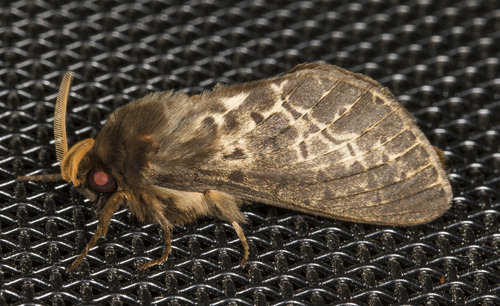
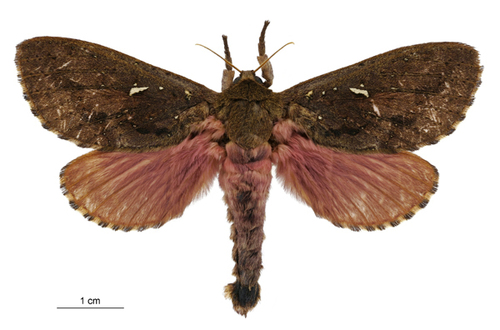
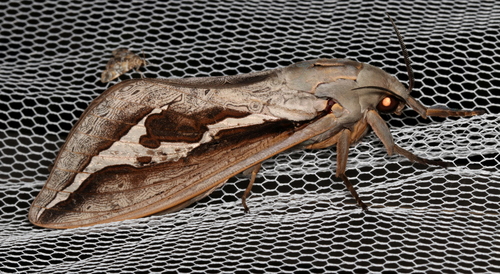
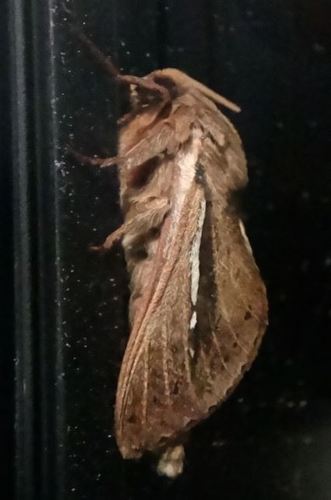
Wiseana umbraculatus, commonly called bog porina, has a wingspan of 38–50 mm for males and 49–66 mm for females. Adult bog porina can be distinguished by sex: males are much darker in color and have noticeable dark spots on their forewings, while females are lighter colored with brown dots on their forewings. Adults are on wing from September to April. The caterpillars of this species have a brown head with a dirty white and grey body. Without DNA technology, it is not possible to tell different porina species apart at the larval or caterpillar stage. Bog porina occur throughout New Zealand, but are uncommon in the northern half of the North Island. They occupy habitats ranging from alpine regions to lowland plains, and are distributed from the central North Island to the southern end of the South Island. The preferred habitat for eggs and caterpillars is long dense pasture, and the larvae thrive in warm, moist conditions. Very hot, dry weather can drastically reduce young porina populations, especially in short open pastures. The larvae live in pasture and can be very damaging. Adult porina moths mate immediately after they emerge from the soil once they complete the larval stage. Moths fly in spring, summer, and early autumn depending on location. Adult moths do not feed and only live for a few days. During this short lifespan, female moths fly over pastures and release around 3000 eggs. Eggs hatch within a few weeks. Newly hatched caterpillars first live above ground, spending about five weeks on the soil surface feeding on plant matter and microflora. As caterpillars grow larger, they burrow beneath the soil and build permanent silk burrows that can reach a depth of around 30 cm. They emerge from these burrows at night to feed, severing grass and clover leaves at the base of the plant and dragging them back to their burrow to eat. Porina caterpillars moult seven or eight times over their lifetime. Development from egg to adult takes 12 months.