About Wikstroemia oahuensis (A.Gray) Rock
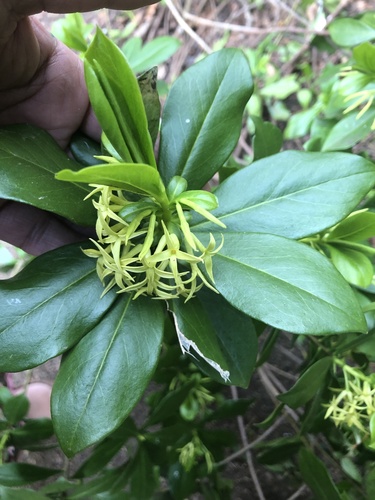
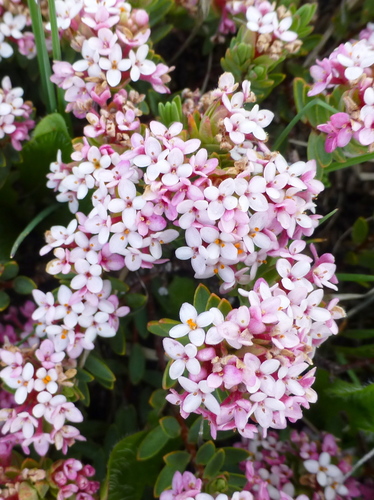
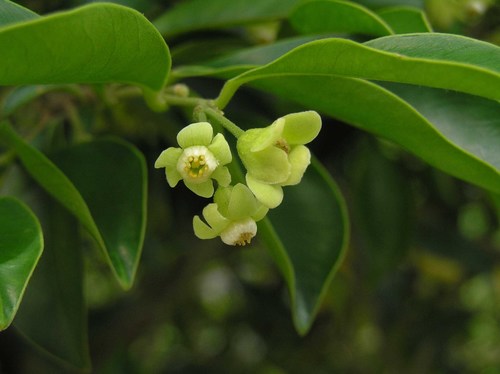
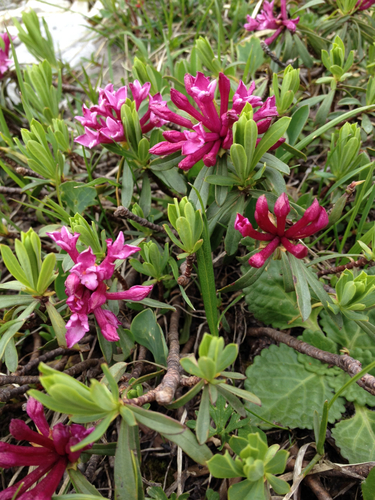
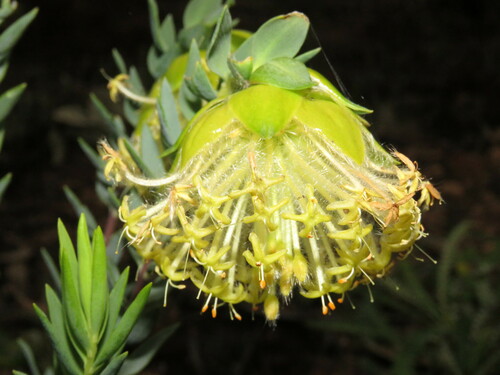
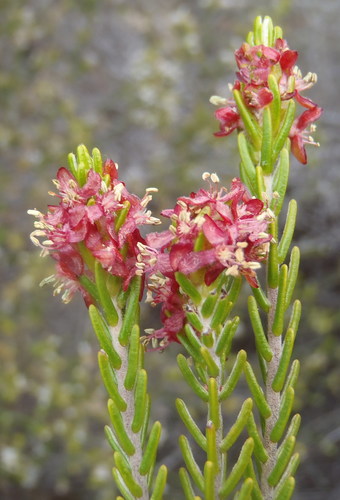
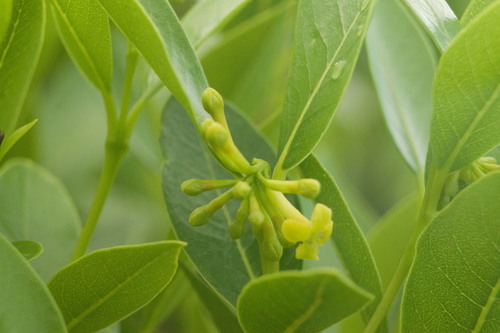
Wikstroemia oahuensis, commonly known as ʻākia, grows up to 1.5 m (5 feet) tall in the wild, while cultivated plants usually reach 0.91 m (3 feet) in height with a diameter of 3.0 m (10 feet). Its young branches are colored gray, yellow, or reddish brown. Leaves are arranged oppositely in overlapping pairs on the branches; the upper leaf surface is dark green or grayish, while the underside is a lighter green. Leaves range in shape from oval to round, and are usually under 2.5 cm (1 inch) in length. This species is highly variable, with leaves that can be large and long, or small and round. When bent, the stems do not snap, but instead peel. It flowers irregularly throughout the year, and produces fewer flowers when the plant bears mature fruit. The tubular yellow to yellow-green flowers measure less than 1.3 cm (0.5 inches) long, and may be perfect (bisexual) or unisexual (either male or female). A dwarf bog form of this plant found on Kauaʻi is sometimes recognized as a separate species, W. palustris. 12 Wikstroemia species are endemic to the Hawaiian Islands. Wikstroemia oahuensis is a relatively common plant that occurs in a wide variety of habitats across the Hawaiian islands of Kauaʻi, Oʻahu, Molokaʻi, Lānaʻi, and Maui. It grows on ridges and rocky areas, in hala (Pandanus tectorius) forest, mesic forest, and wet forest, and in bogs, at elevations between 100 and 1,400 metres (330–4,590 ft). The bacterial species Flavobacterium akiainvivens was originally isolated from rotting ʻākia wood, and takes its name from this shrub. Wikstroemia oahuensis is toxic. Native Hawaiians used this species to stupefy fish, and created a poison from ʻākia combined with other plants to execute criminals. In traditional Hawaiian medicine, it was used as a laxative and to treat asthma. It has been reported to have possible anti-tumor activity.