About Weinmannia trichosperma Cav.
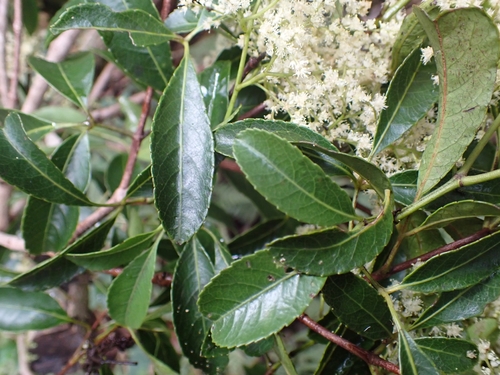
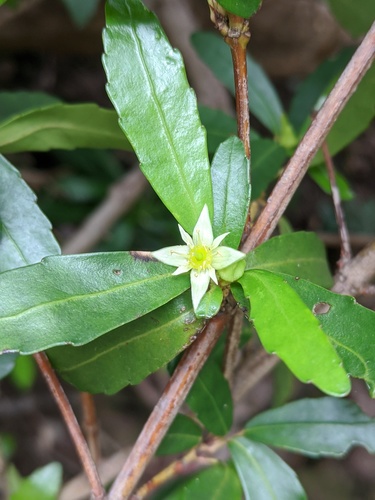
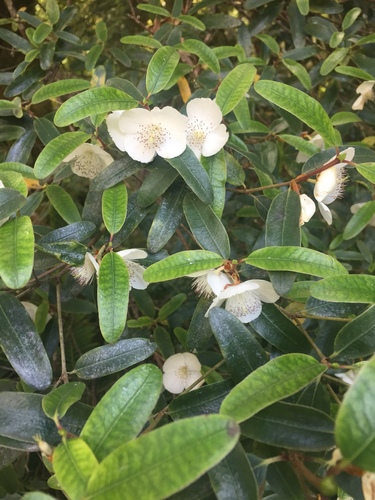
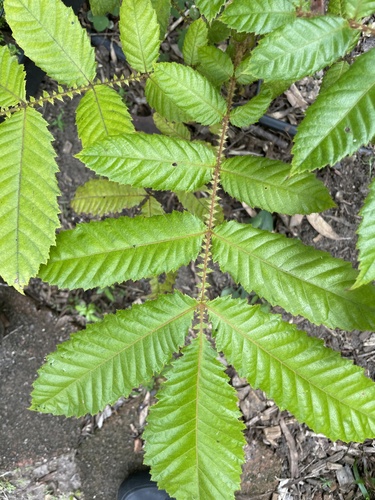
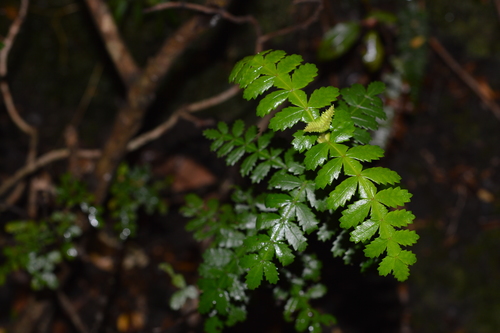
Weinmannia trichosperma Cav. is a tree that can reach up to 30 meters (100 feet) in height. It has a straight trunk that grows up to 1 meter (3 feet) in diameter, covered by gray, fissured bark. Its leaves are opposite and imparipinnate, with triangular wings between leaflets that give each leaf pair a rhomboid outline. Two deciduous stipules grow at the base of each leaf. Whole leaves measure roughly 3–8 cm long and 2–4 cm wide, while individual leaflets are 0.6–1.6 cm long, 0.6–1.0 cm wide, and have toothed margins. The tree’s foliage is typically sparse and open in growth habit. Its small, white hermaphroditic flowers are clustered in racemes. The flower structure consists of a calyx of 4–5 imbricate sepals, a corolla of 3–5 composite petals, an androecium of 8–10 stamens, and a gynoecium with a superior ovary formed by 2 carpels and white stigmas. The fruit is a leathery, obovate two-part capsule; in autumn, this capsule turns bright red, measuring 6–9 mm long and 2 mm wide, and splits open down the center between its styles. The small seeds are ellipsoid, light brown, marked with scattered white hairs, and measure 1 mm long by 0.6 mm wide. The bark of this species is used for tanning leather. It is planted as an ornamental tree in Chile, and its flowers are harvested by introduced European honey bees to produce flavorful honey. Its hard wood, which has a distinct contrasting grain pattern of dark and light coloration, is highly valued for decorative woodworking. This tree grows best in cool, moist climates, and it grows successfully as an ornamental in Northern Ireland, Scotland, parts of England, and the North Pacific Coast of the United States.