About Watsonalla binaria (Hufnagel, 1769)
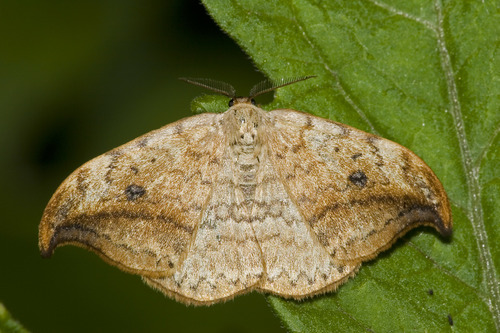
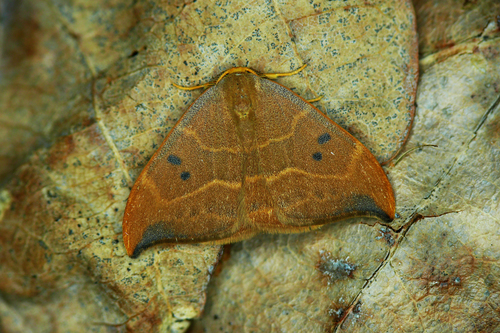
Watsonalla binaria, commonly called the oak hook-tip, is a species of moth in the family Drepanidae. It is distributed across most of Europe, excluding the far north. It is quite common in England and Wales; it is not found in Scotland, and has only been recorded in Ireland recently. This species was first described by Johann Siegfried Hufnagel in 1769. The two sexes differ in size, with males having a wingspan of approximately 30 mm and females around 35 mm, but they share similar coloration. The forewings are orange-brown and marked with three narrow yellow fasciae; the outermost of these is faint and sometimes absent. Two dark discal spots sit between the two innermost fasciae. These markings sometimes appear, in a weaker form, on the hindwings. The apex of the forewings is shaped like a hook, which gives the species its common name. The hindwings are a lighter orange, and also have three yellow fasciae. In the British Isles, this species usually produces two broods per year, with adult moths flying in May and June, and again in August. Moths of the second generation are much smaller and slightly lighter in color than first generation individuals. This species looks very similar to Watsonalla cultraria, which also has a yellowish-brown coloration. The clearest distinguishing feature between the two is the pair of dark twin spots on the forewings of Watsonalla binaria. Oak hook-tip moths sometimes fly during the day, but most often fly at night and are attracted to light. The larvae are brown with yellow markings, and have the typical tapered tail shape characteristic of drepanid moths. They usually feed on oak, but have also been recorded feeding on alder, beech, and birch. This species overwinters in the pupal stage. The flight season information given applies specifically to the British Isles, and may differ in other parts of the species' range.