About Vitta usnea (Röding, 1798)
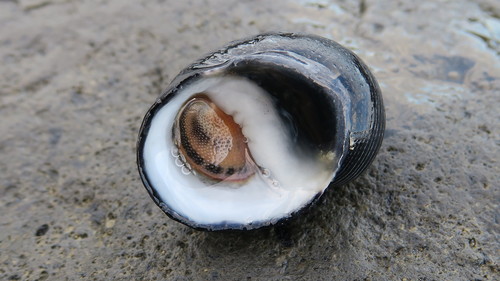
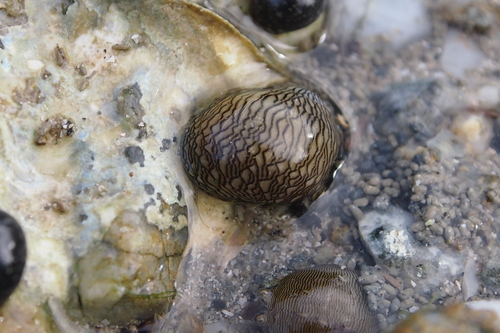
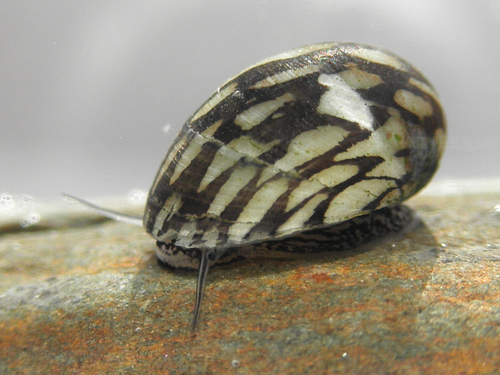
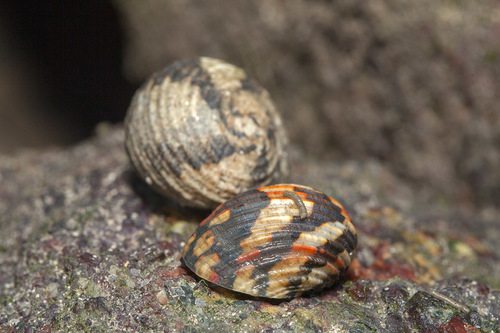
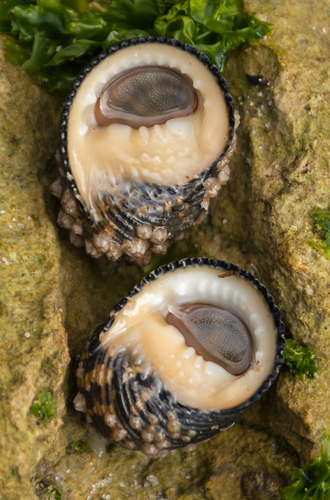
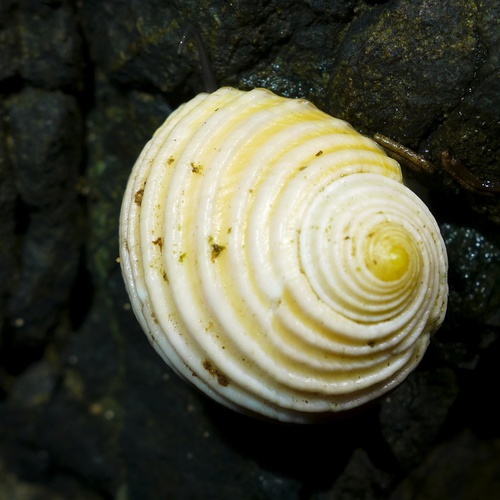
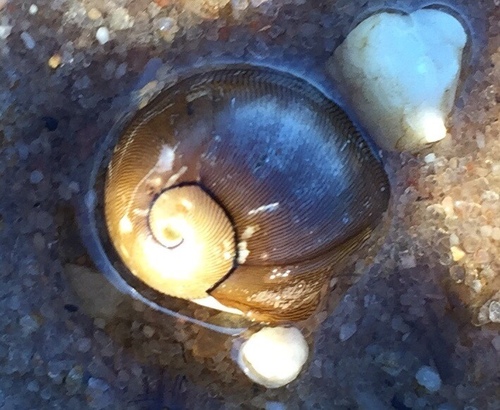
Vitta usnea (Röding, 1798), commonly known as the olive nerite, is a species of operculate freshwater snail, an aquatic gastropod mollusk belonging to the nerite family Neritidae. It is a euryhaline organism that can live in environments with salinities ranging from 0 to 19 ppt, feeding on epiphytic and epibenthic algae. Its natural distribution extends from northern Florida on the Atlantic Coast, through the coastal waters of the Gulf of Mexico and the Caribbean Sea, to Trinidad, as recorded by Russell in 1941. Vitta usnea inhabits shallow protected bays, ranging from just above the high tide line to approximately 1.5 meters in depth. It can be found on sea grasses, emergent marsh plants, rocks, and stumps. This snail is known to climb up the blades of marsh grasses during high tide to avoid predators, one of which is the blue crab, Callinectes sapidus. In aquarium settings, Vitta usnea has a lifespan of 3 to 5 years, and its shell grows to between 1.3 and 2.5 centimeters. This species is used by freshwater aquarium hobbyists as an algae-eating snail, and prefers an aquarium temperature between 22.2 and 25.6 °C.