About Vitis vinifera L.
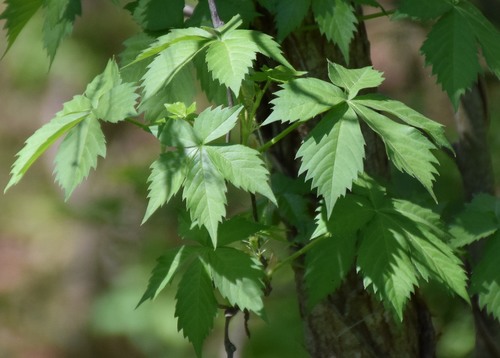
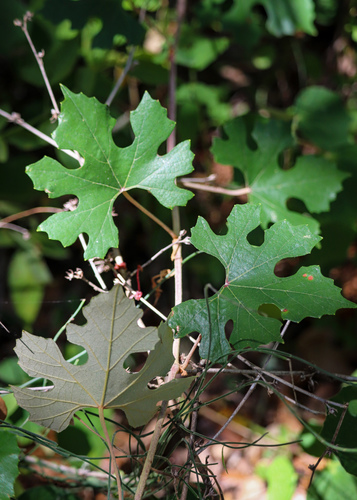
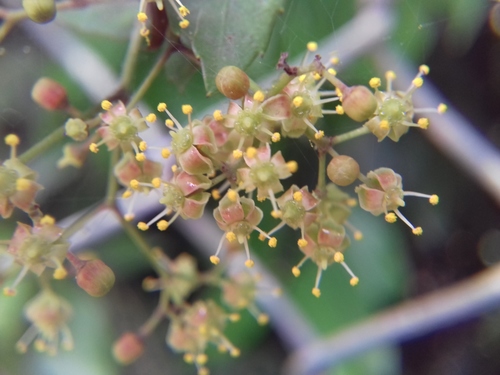
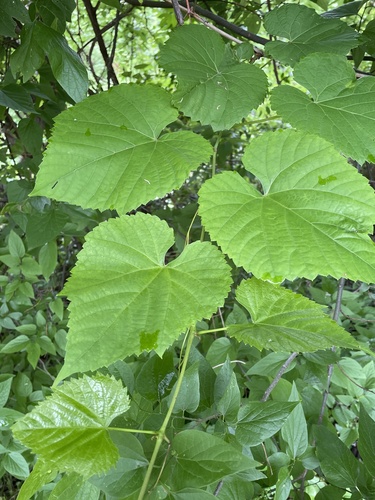
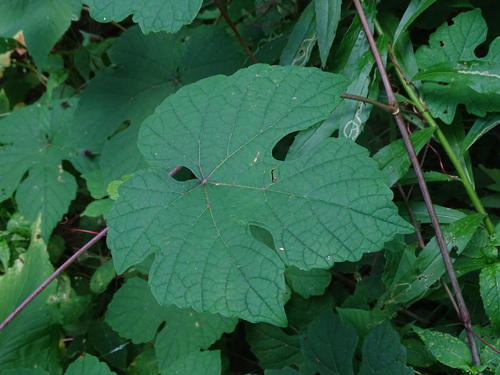
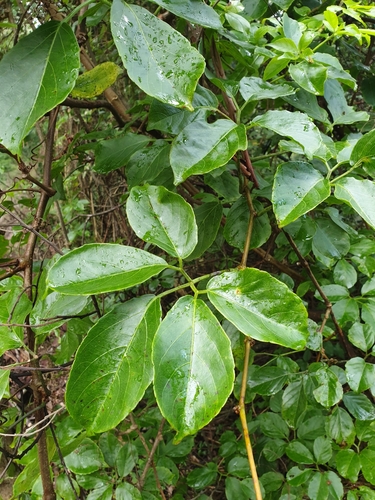
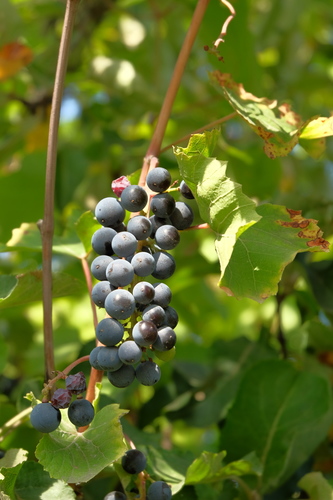
Vitis vinifera L. is a fast-growing liana that reaches 12–15 m (40–50 ft) in height. It has flaky bark, with deciduous alternate palmately lobed leaves that have three to five pointed lobes, coarsely toothed margins, a heart-shaped base, and are 5–20 cm (2–8 in) long and wide. Leaves are glossy dark green on the upper surface, light green on the lower surface, and usually hairless. The vine attaches to supports via tendrils. Its growing stems (called twigs) extend from their apical cauline apex. A branch is formed of several internodes separated by nodes, which produce leaves, flowers, tendrils, and hold future buds. As twigs harden during maturation, they become woody branches that can reach great lengths. The species' roots usually extend 2 to 5 meters deep, and sometimes reach 12–15 meters or even deeper. The species typically grows in humid forests and streamsides. V. vinifera accounts for the majority of world wine production, and all the most familiar wine grape varieties belong to this species. In Europe it is concentrated in central and southern regions; in Asia it is found in western regions including Anatolia, the Caucasus, the Middle East, and China; in Africa it grows along the northern Mediterranean coast and in South Africa; in North America it grows in California, Michigan, New Mexico, New York, Oregon, Virginia, Washington, British Columbia, Baja California, Ontario, and Québec; in South America it is present in Chile, Argentina, Uruguay, Peru, and Brazil; and in Oceania it grows in Australia and New Zealand. Human use of Vitis vinifera grapes dates back to Neolithic times, following the 1996 discovery of 7,000-year-old wine storage jars in modern northern Iran. Further evidence confirms Mesopotamians and Ancient Egyptians had vine plantations and winemaking skills. Greek philosophers praised the healing powers of grapes both whole and as wine. Cultivation of Vitis vinifera and winemaking with it began in China during the 2nd century Han dynasty, when the species was imported from Ta-Yuan (the Syr Darya river valley, Uzbekistan), though wild "mountain grapes" like Vitis thunbergii were already used for winemaking in the region before that time. In traditional Indian medicine, Vitis vinifera is used in prescriptions for cough, respiratory tract catarrh, subacute enlarged liver and spleen, and in alcohol-based tonics (Aasavs). In the Mediterranean Basin, leaves and young stems are traditionally used to feed sheep and goats after grapevine pruning. European folk healers used grapevine sap to treat skin and eye diseases. Other historical uses include leaves to stop bleeding, and relieve pain and inflammation from hemorrhoids; unripe grapes to treat sore throats; raisins to treat consumption (tuberculosis), constipation and thirst; and ripe grapes to treat cancer, cholera, smallpox, nausea, skin and eye infections, and kidney and liver diseases. Seedless grape varieties were developed for consumer preference, but researchers now find many of grapes' healthful properties come from the seeds, which have enriched phytochemical content. In Balkan traditional cooking, grapevine leaves are filled with minced meat (lamb, pork or beef), rice and onions to make dolma. A popular Australian cultivar, Vitis 'Ornamental Grape', derived from Vitis vinifera × Vitis rupestris, is grown in gardens for its impressive foliage that turns brilliant red, scarlet, purple and/or orange in autumn. Originally bred in France, it thrives in climates ranging from hot and dry, to cool moist and subtropical, and grows well in many different soil types. Gradually increasing temperatures are causing a shift in suitable growing regions for Vitis vinifera. It is estimated that the northern boundary of European viticulture will shift 10 to 30 kilometres north per decade up to 2020, with this rate predicted to double between 2020 and 2050. This shift has both positive and negative effects: it allows new cultivars to be grown in newly suitable regions, but causes existing regions to lose suitability for current cultivars, and may risk overall production quality and quantity.