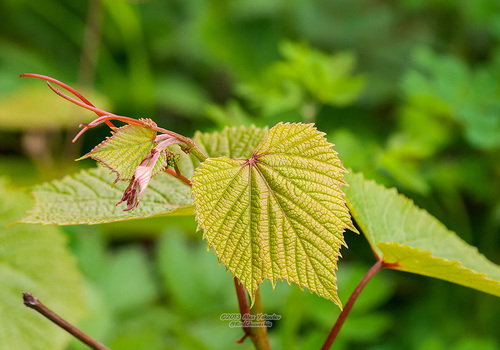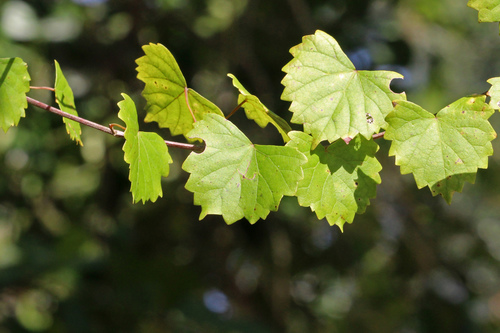
About Vitis rotundifolia Michx.
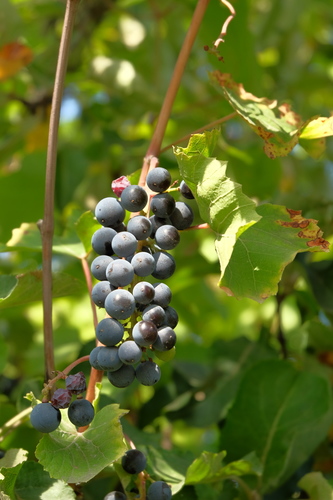
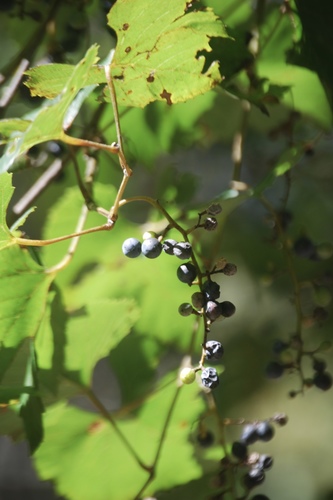
Vitis rotundifolia, commonly known as muscadine, is a species of grapevine native to the southeastern and south-central United States. Its natural growth range extends along the Atlantic coast from Florida to New Jersey, and westward as far as eastern Texas and Oklahoma. It has been extensively cultivated since the 16th century. Muscadine plants are well-adapted to the warm, humid climate of their native range. Compared to more well-known grape varieties, they require fewer chilling hours and grow successfully in summer heat. Ripe muscadine berries can be bronze, dark purple, or black; wild varieties may remain green even when fully mature. Muscadines are most commonly used to make artisan wine, juice, hull pie, and jelly, and they are rich sources of polyphenols. In their natural setting, muscadine vines contribute to wildlife habitat by providing shelter, browse, and food for many birds and other animals. They also act as a larval host plant for two moth species: the Nessus Sphinx Moth (Amphion floridensis) and the Mournful Sphinx Moth (Enyo lugubris).