About Vitis arizonica Engelm.
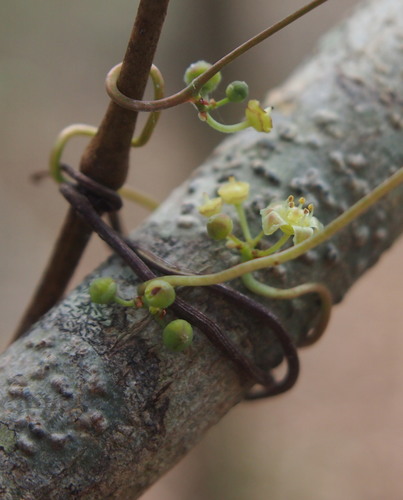
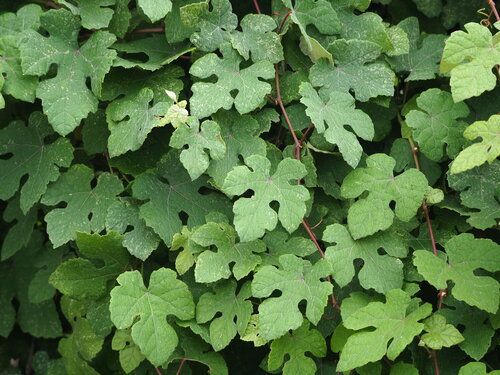
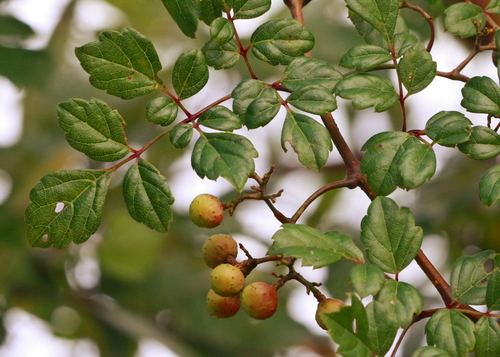
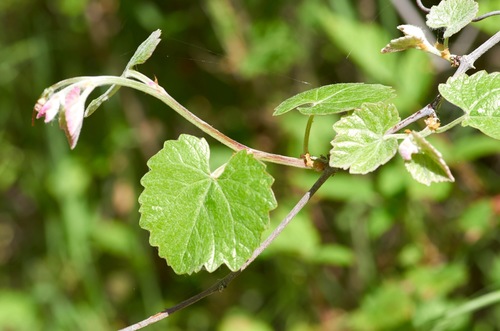
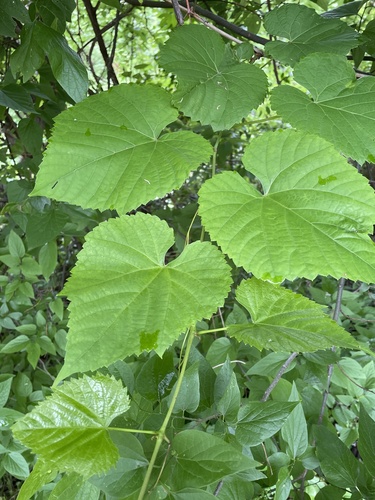
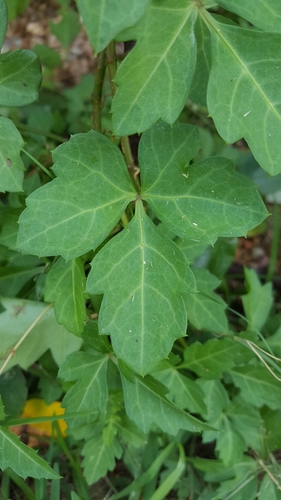
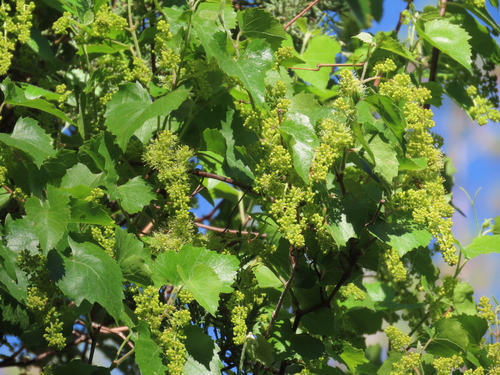
Vitis arizonica Engelm., commonly known as canyon grape or Arizona grape, is a woody vine that grows sprawling or weakly climbing. Stems are generally 2–6 m long, slender, and taper significantly from the base to the apex. Young twigs are densely woolly, but they lose this covering over time as bark becomes shreddy. This species is winter deciduous. Its leaves are broadly cordate, sometimes shallowly 3-lobed, 3–10 cm (around 4 inches) long and roughly as wide, with irregularly toothed edges, and are more-or-less covered in cottony hair. Leaf petioles measure 1–3 cm long. Tendrils grow opposite the leaves; they are bifurcate, lack adhesive discs, and wither quickly if they do not attach to a support. Inflorescences are loose, open, strongly branched panicles 2–10 cm long that emerge opposite the leaves. Flowers are tiny, with five white petals; unopened buds are green and develop in clusters, and open blooms are whitish-green in hue. Fruits are edible grapes that can sometimes be bitter, 8–10 mm (1/3-3/8 inch) thick, with a globe or ovate shape. Immature fruits are green, maturing to deep purple or black, and grow in clusters on red pedicels. This species is distributed across Inyo County, California; Arizona (found in all Arizona counties except La Paz); Nevada; New Mexico; western Texas; southern Utah; and the Mexican states of Sonora, Chihuahua, Coahuila, Durango, and Tamaulipas. Vitis arizonica has been used in breeding grape varieties resistant to Pierce's Disease. Individual plants produce fruit that ranges from sweet to bitter. The fruit can be used for making wine and jams, but it is mainly consumed by wildlife, including both birds and mammals. It has historically been used as a food source by many Indigenous peoples; the Pueblo people historically cultivated it, and ate it both fresh and dried. Other tribes that consumed it include the Chiricahua and Mescalero Apache. Both Native Americans and early European settlers chewed grape leaves to quench thirst. Beyond food uses, the Havasupai used it to make toys, the Navajo used it in courtship rituals, and the Jemez used it to make ritual items.