About Vitis acerifolia Raf.
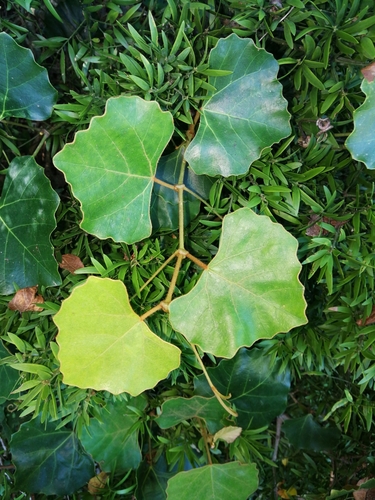
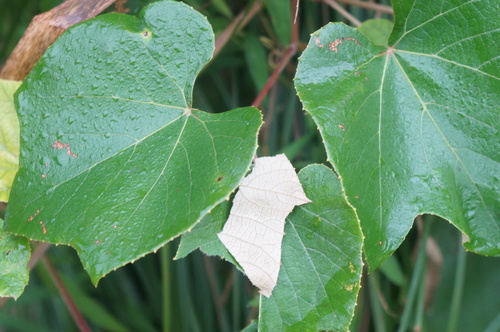
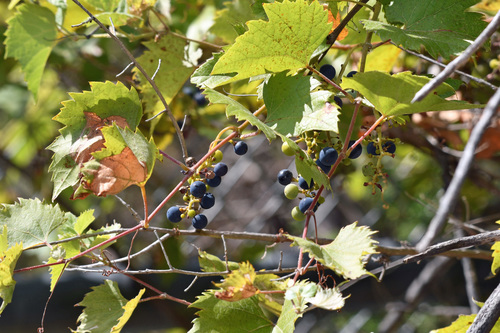
Vitis acerifolia Raf. is a grape species native to the south-central Great Plains of the United States, where it grows in Kansas, Oklahoma, northern Texas, eastern Colorado, and northeastern New Mexico. Its scientific name comes from its leaf shape, and translates from Latin to "maple-leaf grape"; it is also widely referenced in academic literature under the synonym Vitis longii.
Vitis acerifolia offers many potential benefits for breeding hybrid grape varieties. Among all grape species, it ranks second in cold hardiness, with only Vitis riparia hardier than it. Unlike other cold hardy grapes, it will continue growing late into fall when weather is mild, but can harden off very quickly when a sudden cold snap occurs. This adaptation makes it ideally suited for North American winter conditions, which frequently feature sudden temperature fluctuations. In this characteristic, it outperforms Vitis amurensis, its rival for second place in overall grape cold hardiness. Vitis amurensis is well known for breaking hibernation during a warm spell, only to be damaged when a sudden frost follows. In addition to cold hardiness, Vitis acerifolia has strong drought resistance, resistance to phylloxera, easy rooting ability, and seeds that all germinate at the same time, with good to excellent general resistance to other common grape diseases.
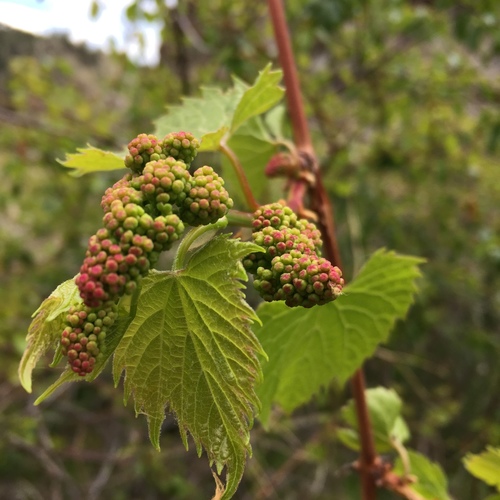
Vitis acerifolia produces strongly colored juice. While its berries and clusters are typically small and seedy, it does not have the off flavors found in many other North American Vitis species. It lacks the harsh aftertaste of Vitis labrusca, the characteristic herbaceous flavor of Vitis riparia, the blackcurrant-like flavor common to post oak grapes, and the harsh peppery taste of many other native Texas grapes. Additional useful characteristics for grape breeders include its low acidity and very early ripening.
One named grape varietal that has Vitis acerifolia as a parent is the Canadian variety 'Vincent'. This cultivar tends to have more anthocyanin than other grape cultivars. Red wines are fermented while in contact with grape skins, which is the source of off flavors in hybrid wines. As a result, producing high-quality cold hardy red wine grape varieties is notoriously difficult, and even fewer varieties can add strong coloration to varieties that naturally produce weaker-colored juice. Hybrids bred with Vitis acerifolia show significant promise for filling this niche. While Vitis acerifolia does not have inherent genetic resistance to Pierce's disease, it seldom develops the disease. This is because it is almost completely unpalatable to Homalodisca vitripennis, the glassy-winged sharpshooter, which is the common insect vector that spreads Pierce's disease. This resistance to vector feeding is apparently caused by leaf pubescence that repels the insect.