About Viscaria vulgaris Röhl.
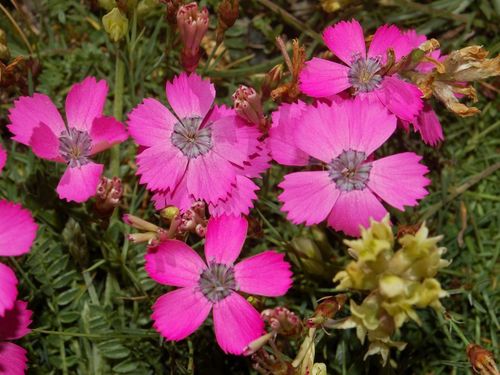
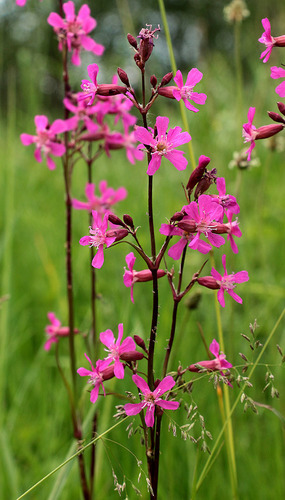
Viscaria vulgaris Röhl., commonly known as sticky catchfly or clammy campion, is a flowering plant belonging to the Caryophyllaceae family. It is an upright perennial that reaches up to 60 cm (24 in) in height. Its leaves are lanceolate in shape. Bright rosy-pink flowers, 20 mm across, grow in long whorled spikes and bloom from May to August. This species grows on cliffs and rocky areas. In Central Europe, it is also found under the synonym Lychnis viscaria across a range of habitats including dry meadows, lush grasslands, stony slopes, rocky outcrops in hilly terrain, and open or sparse-canopied forests. It has become established in vineyards and along roadside vegetation, and it benefits from farming methods that maintain open vegetation. The genus name Viscaria is Latin for "sticky", and it refers to the sticky texture of the stem just below the leaf joints. The plant's English common names also refer to this sticky trait. Viscaria vulgaris is cultivated as an ornamental garden plant. In British horticultural writing, it is often called by its synonym Lychnis viscaria. Bumblebees are the main documented pollinators of this species. The double-flowered cultivar 'Splendens Plena' has received the Royal Horticultural Society's Award of Garden Merit.