About Viscaria alpina (L.) G.Don
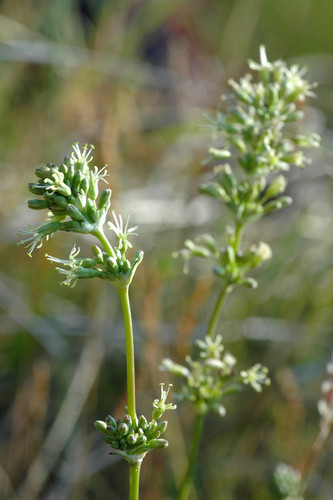
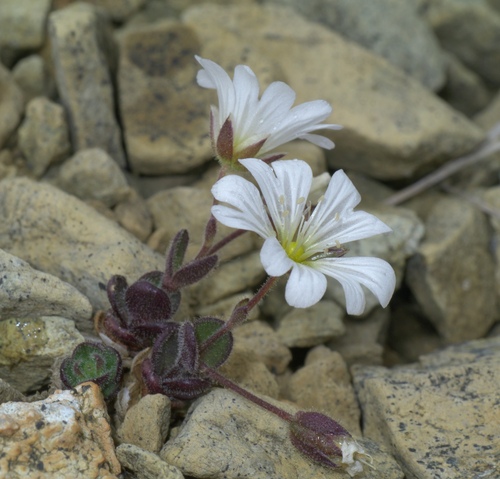
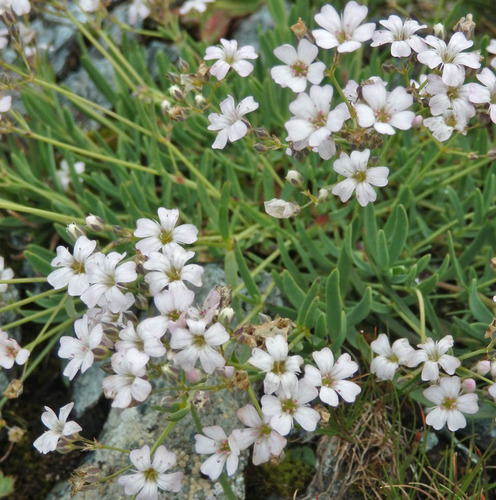
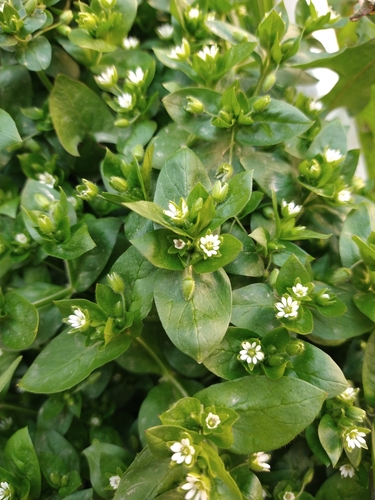
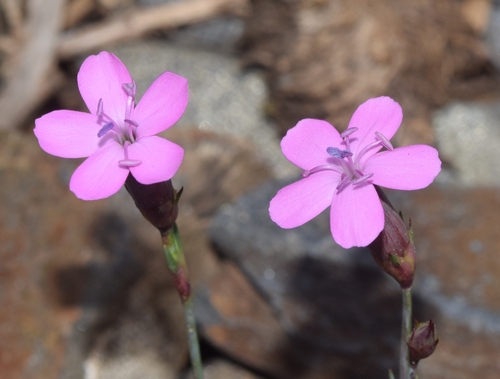
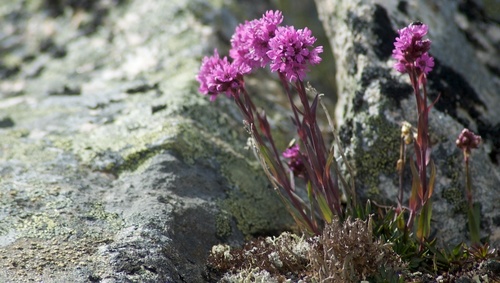
Alpine catchfly, scientifically known as Viscaria alpina (L.) G.Don, is a perennial herb. It reaches a height of 10 to 40 cm (4 to 16 in). It has erect, unbranched stems with a glossy surface that is often tinged red. Its leaves grow in opposite pairs: lower leaves are stalked and form a rosette, while upper leaves are unstalked. All leaves are narrow, lanceolate, and have smooth entire margins. The inflorescence is a small umbel, and the flowers are fragrant. The calyx is tubular, five-lobed, and greenish-purple. The corolla is regular, 1 to 2 cm (0.4 to 0.8 in) in diameter, and bears five pink, deeply notched petals. There are multiple stamens, some of which may be vestigial, plus five styles. The fruit is a five-chambered capsule. This species flowers between June and August. Alpine catchfly is distributed across northern Europe including Norway, Sweden, Finland and Lapland, as well as the Alps, northern Apennines, and the Pyrenees. In these regions, it grows on rocks including extra-alkaline serpentine rocks, river gravel banks, sand banks, sea cliffs, and nutrient-poor stony areas. In Greenland and North America, it occurs on tundra, barren rocky areas, gulleys, riverside shingle, grassy slopes, and sea cliffs. In general, it grows well in locations where other plants cannot tolerate the high concentrations of copper and heavy metals found in the soil. Because of its ability to grow in soils with large amounts of copper, this plant (also referred to as Silene suecica) is used as an indicator of copper content in geobotanical prospecting.